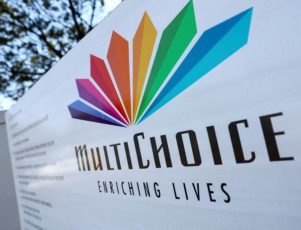
On 10 July 2026, Canal+ officially completed its takeover of MultiChoice Group, bringing the operator of DStv, GOtv and Showmax under full French ownership after a process that stretched more than two years. The deal valued MultiChoice at roughly 55 billion South African rand, or approximately $3 billion, and came with public interest commitments of nearly R26 billion over three years to cover local content investment and support for historically disadvantaged businesses in the audiovisual sector, according to New African Magazine. Canal+ now holds a dominant pay-TV and streaming position across more than 50 African markets.
Yet the transition is already generating turbulence beneath the corporate headline. MultiChoice had launched Showmax in 2015 as an African-born competitor to Netflix, but the platform accumulated losses of $522 million between 2023 and 2025. Canal+ has signaled it will sunset Showmax as part of a broader plan to cut approximately $479 million in costs across the combined business by 2030, per Techpoint Africa. For Nigerian, South African and Kenyan producers who had relied on Showmax commissions, the practical question is immediate: where do their next financing and distribution deals come from?
The answer arrives from two directions at once: locally built streaming platforms and inbound commercial interest from Middle Eastern operators.
Bets on Itself with Kava
The most visible homegrown response to the shifting landscape is Kava, a streaming platform launched in August 2025 by two of Nollywood’s most recognized institutions: Inkblot Studios, behind a string of Nigerian box office hits, and Filmhouse Group, West Africa’s largest cinema chain. The platform debuted with more than 30 premium Nollywood titles, offering subscribers exclusive post-theatrical releases and a schedule of weekly additions.
“Kava is more than a streaming service. It’s a bold new chapter for Nollywood, designed to meet the growing demand for premium, authentic African content,” the founders said in a statement reported by TechCabal. The ambition is to do what no African-led platform has yet managed: turn local storytelling into a globally sustainable streaming business.
The underlying numbers support that aspiration. Nigeria’s over-the-top video market is projected to reach $1.22 billion in 2025, according to data cited by TechCabal, while Africa’s broader subscription video-on-demand sector is forecast to grow from $2.71 billion in 2024 to $3.67 billion by 2027, according to Statista. The challenge Kava faces is that the platforms best placed to monetize that growth have historically been non-African: Netflix and Amazon Prime both poured resources into Nigerian content before scaling back acquisition budgets, citing low subscriber penetration. IrokoTV, an earlier attempt at a dedicated Nollywood platform, exited the Nigerian market entirely.
Kava’s founders argue their advantage lies in owning both production infrastructure and distribution, rather than licensing content from studios that retain leverage. Whether that vertical integration proves durable will be one of the sector’s defining tests over the next two years.
MENA Operators Look South for African Content
While African platforms push outward for global audiences, operators from the Middle East are moving in the opposite direction. Media World, a content aggregator and mobile services platform with client telecoms including Zain Iraq and Jawwal Palestine, has recently opened a Lagos office, its first in sub-Saharan Africa. Speaking at the Telemedia Johannesburg 2026 conference, the company’s content acquisition and partnership manager Samer Al Ramahi described the company as being “on the hunt for partnerships to integrate various services like games, esports, and streaming content” from African providers, with the goal of distributing them as white-label products across its MENA footprint, per Telemedia Magazine.
The broader context for that scouting trip is a MENA streaming market that is growing fast and competing fiercely for differentiated content. MBC Group’s Shahid platform reported a 28.2% year-on-year revenue rise in 2025, boosted partly by a first-of-its-kind bundling deal with Netflix in Saudi Arabia and the wider MENA region, according to Variety. As established MENA players scale up, African genres represent both a new content category and an access point to diaspora communities with purchasing power.
Music offers the clearest proof of that audience appetite. Afrobeats listeners grew 22% globally in 2025, according to Spotify’s annual Wrapped report, cited by Techpoint Africa, with Nigerian and South African artists dominating Africa’s most-streamed lists. Gulf touring and licensing activity by African artists has expanded in parallel, building the audience base that streaming and gaming platforms want to monetize.
Africa’s Cross-Regional Content Market Takes Shape
The convergence of these forces, Canal+’s restructuring of Africa’s legacy pay-TV market, the emergence of African-owned streaming platforms and the commercial scouting of MENA aggregators in Lagos and Johannesburg, points to a realignment that is real but still unresolved. The players are in motion; the rules of the new ecosystem are not yet written.
For African creators, the proliferation of potential distribution channels is genuine progress. For investors, the question of which platform model generates sustainable returns remains open. Fragmentation is a risk: multiple smaller platforms competing for overlapping catalog rights and the same subscriber budgets could dilute rather than build value. For MENA operators, Africa offers differentiation and scale, alongside regulatory complexity and the challenge of building content curation expertise far from home.
What is already clear is that Africa’s screen industry is no longer organized around a single dominant gatekeeper. From Kava’s Nollywood catalog to Media World’s Lagos outpost, the architecture of a new cross-regional content economy is being laid. How quickly it coheres, and whose terms it operates on, will shape the careers of African filmmakers, the strategies of Gulf platforms and the viewing habits of audiences from Accra to Riyadh over the coming decade.