
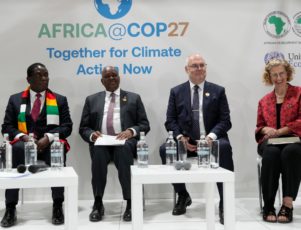
A shared stake in rewriting the rules
For years, climate finance negotiations operated on a familiar transfer logic: wealthy nations would mobilize capital for developing countries to adapt to climate impacts and pursue lower-emissions development paths. The reality proved more complicated. The gap between pledged and delivered climate finance has been a persistent source of friction, with the African Development Bank estimating that the continent alone requires more than $1.3 trillion in climate-related investments annually by 2030, against a fraction of that currently flowing from multilateral and bilateral sources.
What has shifted in recent years is the nature of the African and Middle Eastern response. Rather than limiting themselves to calls for more capital, delegations from both regions are now intervening on the architecture of climate finance itself: how carbon markets are structured, what standards govern carbon credit quality, how loss-and-damage funds are capitalized and distributed, and how concessional lending is designed so as not to compound the debt burdens of climate-vulnerable states. This shift from quantity to quality represents a genuine strategic evolution.
The African Union’s Climate Change and Resilient Development Strategy and the Arab League‘s growing engagement at multilateral climate forums have provided institutional platforms for this repositioning. Regional bodies are increasingly working to coordinate negotiating positions before major sessions, so that African and Middle Eastern representatives arrive with a coherent agenda rather than fragmented national interests that external parties can address bilaterally and piecemeal.
From recipients to rule-setters: the carbon market debate
Nowhere is this shift more apparent than in the debate over international carbon markets, particularly under Article 6 of the Paris Agreement. African and Middle Eastern countries collectively hold a disproportionate share of global renewable energy potential, carbon sink capacity in forests and coastal ecosystems, and the critical minerals underpinning the global clean energy supply chain. This resource base gives them both a material stake in and a legitimate claim to influence how carbon credits are certified, priced and retired.
Concerns about the integrity of early voluntary carbon market projects, many of which delivered questionable emissions reductions, have pushed African and Middle Eastern negotiators to advocate for stronger verification standards. They have also sought a larger share of carbon revenues directed toward host communities and national development priorities, rather than allowing those revenues to function primarily as compliance tools for corporations based elsewhere. Institutions including the African Development Bank and the Arab Monetary Fund have backed calls for multilateral mechanisms that channel carbon proceeds into industrial diversification and green infrastructure.
Local climate-technology firms are increasingly part of this advocacy ecosystem. Startups developing satellite-based measurement, reporting and verification tools, as well as platforms aggregating smallholder carbon projects, are feeding data directly into national negotiating positions. By improving the credibility of African and Middle Eastern carbon projects, these companies expand the revenues available to host governments and communities, closing the loop between local innovation and global rule-setting in a way that rarely makes international headlines.
Capital flows, sovereignty and what comes next
The stakes extend well beyond the negotiating room. If African and Middle Eastern states succeed in shaping more favorable terms in carbon markets and climate finance facilities, the outcome could be substantially larger capital flows into clean energy, adaptation infrastructure and climate-smart agriculture. The African Development Bank has identified green and sustainability-linked bond issuances as one vehicle for mobilizing this capital at scale. Several African sovereigns have already issued such instruments, testing the appetite of international investors for debt tied to verifiable climate outcomes. Proceeds from some of these bonds have been earmarked for renewable energy projects and adaptation measures, demonstrating that the instrument can carry both financial and developmental logic.
For Gulf states pursuing large-scale solar capacity and green hydrogen development, the ability to shape carbon finance tools fitted to their specific transition contexts matters both economically and strategically. These countries are simultaneously managing hydrocarbon revenues and building post-oil industrial bases, while positioning themselves as hubs for global climate finance. Their priorities do not always align perfectly with those of Sub-Saharan African economies, but on the central question of securing Global South leverage over donor-country conditionalities, there is meaningful common ground.
The coming months will test how durable this coordination can be. Preparatory ministerial meetings ahead of major climate summits are the concrete moments where Africa and the Middle East can present joint positions and, where possible, unified language. Debt treatment for climate-vulnerable states, the operationalization of Article 6 carbon markets, and the design of the loss-and-damage fund all remain contested terrain. The deeper question, for investors and observers alike, is whether these regions can translate shared strategic interests into rules that direct real capital toward local actors: a smallholder farmer monetizing a carbon sink in Uganda or a climate-tech startup in Cairo building MRV tools, rather than simply registering symbolic gains in formal declarations.