
A continent-wide financing gap that redefined the opportunity
Africa’s infrastructure needs have long outpaced available capital. According to the African Development Bank (AfDB), the continent faces an annual infrastructure financing gap estimated at between 68 billion and 108 billion US dollars, depending on the methodology and sectors included. The range reflects the breadth of the shortfall: energy generation and transmission, roads and rail, water treatment, healthcare facilities and digital connectivity all figure into the calculation. No single funding source can bridge it.
For years, the dominant narrative framed this gap as a problem for Western donors and multilateral lenders to address. That framing is now giving way to something more complex. A new generation of African sovereign wealth funds has emerged as serious institutional investors, capable of negotiating with Gulf-based counterparts on increasingly equal terms. What is taking shape is a cross-regional co-investment architecture, still young but structurally significant, in which African and Middle Eastern state-backed funds act as co-principals rather than passive recipients.
Nigeria’s Sovereign Investment Authority (NSIA), Morocco’s Ithmar Capital, Egypt’s sovereign fund and regional infrastructure platforms like Africa50 have each built track records in project finance over the past decade. On the Gulf side, Saudi Arabia’s Public Investment Fund (PIF), Abu Dhabi’s Mubadala and ADQ, and Qatar Investment Authority (QIA) have all signaled Africa as a strategic diversification target, with mandates to deploy capital at scale beyond their home markets. The deals being structured between these institutions are becoming more sophisticated with each investment cycle.
How the Afro-Gulf co-investment model works in practice
The architecture of these partnerships typically involves several layers. A framework agreement between two funds establishes shared investment priorities and due diligence protocols. A co-investment vehicle or special purpose platform is then created to pool capital for a defined set of projects, often in a specific sector or geographic corridor. Each partner contributes equity, with debt raised from development finance institutions or commercial lenders alongside. This structure allows African funds to leverage Gulf capital while retaining meaningful roles in project governance and local execution.
Africa50, the pan-African infrastructure platform backed by African states and the AfDB, has been central to this model. It has financed projects spanning power generation, road networks and digital infrastructure across multiple African countries, in several cases alongside Gulf co-investors. Its design as an African-led institution is deliberate: deals are structured to direct procurement and operational contracts toward local firms where possible, and governance arrangements keep African decision-makers at the table from origination through completion.
Gulf funds see the long-term fundamentals in African infrastructure as compelling. Population growth, urbanization rates and rising domestic consumption create sustained demand for exactly the assets these funds want to hold: power plants, water utilities and logistics hubs. Combined with the diversification imperative facing fund managers in Riyadh, Abu Dhabi or Doha as their own economies reduce their hydrocarbon dependency, Africa’s infrastructure landscape represents both a growth bet and a portfolio hedge. Saudi Arabia’s PIF has articulated an explicit Africa strategy, as has Mubadala, whose investments on the continent span fintech and infrastructure.
The deals themselves cover considerable ground. Renewable energy parks in West and East Africa have attracted co-financing from Gulf vehicles alongside national development banks. Transport projects in North Africa have drawn in both Egyptian and Emirati capital. Hospital public-private partnerships in francophone Africa have featured Gulf equity alongside Moroccan and multilateral financing. The common thread is that African sovereign funds are increasingly originating and structuring transactions rather than simply co-signing deals designed elsewhere.
Climate resilience as the new investment thesis
The more recent shift in this co-investment landscape has been the explicit integration of climate criteria into infrastructure deal-making. This matters for two distinct reasons. First, international capital increasingly demands it: development finance institutions, European pension funds and Gulf sovereign co-investors all apply environmental and social governance screens that reward climate-resilient design and penalize assets that ignore long-term physical risk. Second, African and Middle Eastern governments have come to recognize that infrastructure built without climate adaptation provisions is simply bad economics, given the exposure of coastal cities, river basins and agricultural zones to worsening weather patterns.
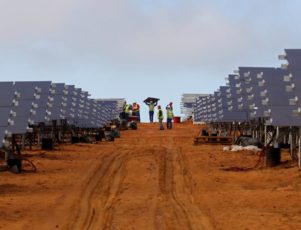
The practical effects are visible in how projects are designed. Solar-plus-storage configurations are replacing diesel backup in power projects. Water treatment plants are engineered to handle more variable rainfall. Transmission networks in climate-exposed corridors are built with redundancy and adaptive capacity. These are not cosmetic additions; they alter capital costs, risk profiles and long-term operational viability. Sovereign funds, which typically have no obligation to return capital within a fixed fund lifecycle, are particularly well-suited to absorbing these upfront costs against decades-long asset returns.
For African governments, the central question is whether Gulf capital and sovereign fund co-investments will translate into local economic value. Discussions at the African Union level and within national investment frameworks increasingly focus on local content requirements, skill transfer provisions and procurement rules that direct infrastructure spending toward African firms. The ambition, articulated in AfDB strategy documents and national development plans from Senegal to Kenya, is that infrastructure finance should function as an industrial policy instrument, not simply as a vehicle for deploying sovereign assets.
The road ahead for Afro-Gulf infrastructure capital
The co-investment corridor being built between African and Gulf sovereign institutions is still in a formative phase, but its structural logic is durable. As long as Africa’s infrastructure gap persists, the appetite of Gulf funds for geographic diversification continues, and climate criteria reshape investment decisions across global markets, this partnership model will keep evolving. The key variable is whether deal structures will deepen local capacity and ownership over successive investment cycles, or settle into patterns that keep African funds as minority partners in externally driven capital deployments. That question will be answered not in communiqués but in the specific terms that sovereign executives negotiate in the years ahead.