
For more than two decades, Dubai has symbolized a certain idea of modern globalization: spectacular architecture, rapid economic growth and an ambition to build a global city in the desert. Today, geopolitical tensions in the Middle East and the uncertainty created by regional conflicts have revived a recurring question: is the Dubai dream slowing down?
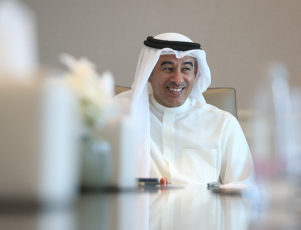
To understand how the city reached this level of global visibility, it is difficult to ignore the role played by Mohamed Alabbar, the entrepreneur who helped shape much of Dubai’s modern skyline.
The entrepreneur who helped invent the “Dubai model”
Mohammed bin Ali Al Abbar was born in Dubai in 1956. He studied finance and business administration in the United States before returning to the United Arab Emirates at a time when Dubai was beginning to redefine its economic model. Early in his career, he worked within the government of Dubai and collaborated with Mohammed bin Rashid Al Maktoum, who was then developing the strategy that would transform the emirate into a global commercial hub.
In the mid-1990s, Alabbar founded Emaar Properties, a company that would become one of the most influential property developers in the Middle East. Through Emaar, he oversaw some of the projects that defined Dubai’s global image. Among them are Burj Khalifa, the tallest tower in the world, Dubai Mall, one of the largest retail complexes globally, and the urban district of Downtown Dubai, which became the symbolic center of the city.
These developments helped turn Dubai into a global destination for tourism, investment and luxury real estate. Under Alabbar’s leadership, Emaar also expanded internationally, launching projects in Asia, Africa and other parts of the Middle East.
The strategy that drove this expansion is often described as the “Dubai model”. It relies on large infrastructure projects, global tourism, financial openness and large-scale real estate developments designed to attract international investors. Within a generation, this model transformed Dubai from a regional trading port into one of the most recognizable urban brands in the world.
Between ambition and criticism: the controversies surrounding Dubai’s growth
However, the model has not been free from criticism. Some analysts argue that Dubai’s economic structure remains strongly dependent on real estate cycles, tourism and foreign capital. During the global financial crisis of 2008, Dubai experienced a severe property market collapse, which led to a temporary slowdown in construction and investment projects. The emirate eventually recovered, but the crisis highlighted the vulnerabilities of its growth model.
Mohamed Alabbar himself has also been involved in several controversies over the years. Some critics have questioned the environmental impact and sustainability of large-scale developments in the Gulf. Others have pointed to the social issues surrounding construction projects in the region, including debates about labor conditions for migrant workers involved in building major infrastructure. In addition, certain urban projects led by Emaar in other countries have sometimes faced criticism from local communities concerned about urban displacement or large-scale privatized developments.
Despite these debates, Alabbar remains one of the most influential figures in the economic transformation of Dubai. His career illustrates how closely the development of the city has been tied to a small group of entrepreneurs working in partnership with the emirate’s leadership.
Today, as regional conflicts and geopolitical uncertainty affect investor confidence, questions about the future of the Dubai model have re-emerged. Yet Dubai has repeatedly shown an ability to adapt after economic shocks or regional crises.
In that sense, the story of Mohamed Alabbar is also the story of Dubai itself: a city built quickly, sometimes controversially, but driven by a persistent ambition to reinvent its future.
Photos : thenationalnews.com –