
Gulf
Tag Archive

Red Sea Crisis Reshapes African & Gulf Logistics

Comments (0) Featured, Politics

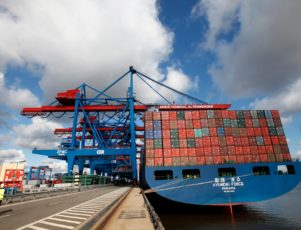
East African container port with cargo vessels at berth

The Red Sea corridor carries a substantial share of global container traffic between Asia, Europe and the Middle East. Since late 2023, security concerns around the Bab el-Mandeb strait have compelled carriers to divert vessels southward, with ripple effects extending far beyond the strait itself. Industry estimates suggest that rerouting around the Cape of Good Hope adds roughly two weeks to transit times and hundreds of thousands of dollars in additional fuel costs per voyage. Those costs translate into higher freight rates and steeper insurance premiums, ultimately squeezing food prices and industrial supply chains in economies along both coasts.

For ports in East Africa and the Gulf, the disruption has been simultaneously a pressure and a strategic opening. Facilities at Mombasa, Dar es Salaam and Djibouti have seen significant shifts in call patterns and cargo volumes as carriers reorganize their networks. Gulf hubs, particularly in the UAE, have had to adapt scheduling and warehousing capacity to accommodate new routing configurations. The question is no longer whether ports can absorb the shock. It is which ones can turn the reconfiguration into lasting competitive advantage.

The scale of the rerouting has been considerable. According to shipping analytics firms cited by Reuters, the share of Asia-Europe container traffic bypassing the Red Sea rose sharply from 2024, with several major liner operators suspending Red Sea transits indefinitely. That volume has to go somewhere, and the ports best positioned to capture it are those already investing in capacity and digital readiness.

How African and Gulf Port Operators Are Adapting

What distinguishes this period from previous disruptions is the pace at which port authorities and logistics firms across Africa and the Middle East have moved to innovate rather than simply react. Port management teams in East Africa have accelerated the digitalization of customs clearance, reducing dwell times and improving berth utilization to handle unpredictable call patterns. Several facilities have also expanded hinterland connectivity, investing in inland container depots and rail links to reduce congestion when vessel surges arrive.

In the Gulf, logistics operators have drawn on existing digital infrastructure to offer dynamic routing and cargo tracking services now in higher demand precisely because of the uncertainty that diversions introduce. Dubai’s position as a transshipment hub has given it particular flexibility: its port authority has adjusted scheduling windows and storage allocations to accommodate carriers rethinking their network designs. Saudi facilities at Jeddah and Dammam have similarly moved to enhance throughput capacity and speed up customs processing.

Logistics technology firms based in Nairobi, Lagos and Dubai are seeing growing interest in their products. Route optimization platforms and real-time cargo visibility tools have found new clients among freight forwarders and importers navigating cost and timeline uncertainty, according to reporting by Disrupt Africa and Wamda covering the regional startup space. This demand has accelerated both product development and fundraising for several of these companies, reinforcing a broader trend of logistics tech maturation across the Africa-Middle East corridor.

Insurance and trade finance present another dimension of the story. Maritime insurance premiums for Red Sea transit rose sharply after disruptions intensified, prompting some African traders to explore alternative risk-sharing arrangements. Regional development finance providers, including the African Development Bank, have examined how to support smaller traders most exposed to freight cost volatility, with some analysts calling for dedicated liquidity facilities linked to route disruption events. Carriers, meanwhile, have split between adding security surcharges and absorbing rerouting costs to retain long-term commercial relationships with African ports.

Long-Term Implications for the Africa-Middle East Corridor

The medium-term implications extend well beyond shipping timetables. African ports that adapt successfully stand to consolidate their roles as regional gateways and transshipment centers. The African Development Bank has argued in its infrastructure publications that port modernization can catalyze broader industrial growth by reducing logistics costs for manufacturers and agribusinesses. A sustained increase in traffic through East African facilities could therefore accelerate investment in adjacent activities such as cold chain logistics, warehousing and light processing.

For Gulf port operators, the disruptions have reinforced the strategic value of their geographic position as connectivity nodes between Asia, Africa and Europe. State-backed operators in the UAE and Saudi Arabia have used the period to deepen partnerships with African port authorities, including concession agreements and technical assistance arrangements that extend Gulf logistics expertise into Africa’s growing markets. These partnerships, when structured equitably, combine Gulf capital with African market access in ways that benefit both sides.

What the Red Sea episode has demonstrated is that the Africa-Middle East maritime corridor is not a passive conduit for global trade. It is a space where port executives, logistics entrepreneurs and trade finance professionals are actively shaping new patterns of connectivity. The disruption has accelerated cross-regional cooperation that calmer periods might have left unresolved, and the infrastructure investments now underway are unlikely to be reversed when the geopolitical situation eventually shifts.

Ports that have used the interval to build digital capacity, diversify their service offerings and lock in new commercial relationships are likely to emerge better positioned regardless of which route ultimately dominates global container flows. The Cape of Good Hope detour may prove temporary; the competitive reshaping of the Africa-Middle East logistics landscape is not.


Read more

Gulf sovereign funds move into African critical minerals

Comments (0) Business

Open-pit copper mine in Zambia's Copperbelt region, southern Africa

In January 2023, Saudi Arabia’s Public Investment Fund (PIF) and national mining company Ma’aden launched Manara Minerals, a joint venture designed to acquire stakes in mining assets worldwide. Africa was named a priority region from the outset, reflecting the continent’s commanding position in several minerals considered critical for the energy transition. The Democratic Republic of Congo alone accounts for roughly 70 percent of global cobalt production, according to US Geological Survey data, while the DRC and Zambia together form one of the world’s largest copper belts. Zimbabwe, Namibia and Guinea hold significant lithium, rare earth and bauxite reserves respectively.

Manara’s creation was not an isolated signal. Emirati sovereign wealth funds, including Mubadala Investment Company and ADQ, have also earmarked capital for African resource sectors over the past several years. The logic is direct: as electric vehicle sales and renewable energy storage scale up globally, demand for cobalt, lithium, nickel and copper is projected to multiply significantly over the coming decade, according to the International Energy Agency’s Critical Minerals Market Review. Gulf states, which built sovereign wealth funds on hydrocarbon revenues, are positioning themselves as indispensable nodes in the new energy supply chain even as oil’s relative centrality shifts.

The scale of the opportunity on the African side is substantial. Africa is estimated to hold around 30 percent of global mineral reserves relevant to battery production when cobalt, manganese and other inputs are combined, per African Development Bank analysis. Gulf capital entering this space therefore meets a continent whose resource endowment is increasingly acknowledged as a strategic geopolitical asset, not merely a raw commodity source.

African governments push back: from extraction to processing

African policymakers have made clear they do not intend to repeat earlier extractive patterns. Zambia and the Democratic Republic of Congo signed a memorandum in 2023 to collaborate on building an electric vehicle battery value chain, targeting local production of precursor chemicals and battery cells. Under this framework, both countries sought investors willing to fund smelting, refining and manufacturing capacity inside their borders, rather than simply shipping unprocessed ore concentrate abroad.

This posture reflects a wider continental debate about beneficiation. The African Union’s Agenda 2063 and the African Continental Free Trade Area both explicitly support industrialization goals that tie resource extraction to downstream manufacturing. Several African governments have moved from rhetoric to concrete policy instruments: export restrictions on raw ores, licensing conditions and fiscal incentives have been deployed to steer investment toward processing facilities. For Gulf investors, this means that securing access to African minerals now requires negotiating over where value is created, not just who extracts it.

How Gulf entities respond to this insistence will shape the quality of Africa-Gulf mineral partnerships. Some have expressed willingness to co-fund refining infrastructure, which would align with African industrial ambitions. Others have focused primarily on equity stakes in upstream operations. African mining ministers and trade negotiators have made it clear that partnerships offering only extraction rights will encounter tougher political conditions than those bringing processing investment and technology transfer.

A competitive field, with African actors asserting leverage

Gulf investment in African minerals does not unfold in isolation. Chinese firms and state entities have built deep relationships across African mining sectors over the past two decades, funding infrastructure and acquiring concessions from the DRC to Guinea. Western governments have also stepped up engagement: the US Minerals Security Partnership and the European Union’s Critical Raw Materials Act both seek to diversify supply chains away from dominant single sources, with Africa as a key partner.

African leaders have shown increasing willingness to use this competitive environment as leverage. The 2023 BRICS expansion, which brought Egypt, Ethiopia, Saudi Arabia and the UAE into the bloc at the Johannesburg summit, created a shared forum where African and Middle Eastern states can align on global economic governance questions, including trade rules for critical minerals. The practical ability to play different investors against each other is still developing, but the intention is clearly articulated by a growing number of African finance and mining officials.

For Gulf states, building durable partnerships in African mining requires more than capital deployment. It requires long-term presence, technical co-investment and a political relationship that survives government changes and commodity price cycles. Saudi Arabia’s PIF and the Manara vehicle face this test as they move from initial deal exploration to actual project development. The quality of these early partnerships will shape how African governments and publics perceive Gulf actors in the sector for years to come.

The trajectory of Africa-Gulf critical minerals cooperation is ultimately an industrial policy story more than a finance story. Whether African cobalt, lithium and copper end up processed locally or exported raw, whether Gulf capital helps build battery factories in Lusaka or Kinshasa or simply adds another layer of foreign ownership to existing mines: these choices will determine how much of the energy transition’s economic value is captured on the continent. As Manara Minerals and comparable vehicles move from exploration to execution over the next few years, they will provide the clearest test yet of whether Gulf-Africa mineral partnerships can deliver on the industrial ambitions both sides have publicly articulated.

Read more

A New Instant Payment Corridor Links Africa and Gulf

Comments (0) Business, Featured

The price of sending money home

Each month, millions of African workers across the Gulf complete a familiar ritual: queuing at exchange bureaus or tapping through remittance apps to send a portion of their wages back to families in Lagos, Nairobi, Accra or Addis Ababa. The financial cost of that ritual remains stubbornly high. According to World Bank data, the average fee for sending 200 US dollars to sub-Saharan Africa consistently exceeds 8 percent, nearly double the 3 percent target set by the United Nations Sustainable Development Goals. Across remittance flows that exceed 50 billion US dollars annually into the sub-Saharan region, that gap translates into billions drained from household budgets every year.

The problem is structural. Africa’s payment landscape is fragmented across dozens of national currencies, incompatible settlement systems and correspondent banking chains that add cost and delay at each link. Small traders importing goods from Dubai or Jeddah face the same friction: converting currencies, navigating trade finance and absorbing fees that erode already thin margins. For many businesses, the informal dollar becomes the default, keeping large swathes of cross-border commerce invisible to regulators and inaccessible to formal credit.

PAPSS and the push for regional infrastructure

A coordinated response has been taking shape since 2022, centered on the Pan-African Payment and Settlement System (PAPSS), an initiative backed by the African Export-Import Bank (Afreximbank) and designed to support the African Continental Free Trade Area (AfCFTA). PAPSS enables cross-border transactions to settle in local African currencies without routing payments through correspondent banks in New York or London, compressing settlement times from days to seconds. By 2024, the system had moved beyond its initial West African pilot, with central banks across multiple regions signing on as settlement agents, per Afreximbank’s official communications.

On the Gulf side, regulators in the UAE, Saudi Arabia and Bahrain have simultaneously opened their fintech markets. Saudi Arabia’s BUNA system, operated by the Arab Monetary Fund, is specifically designed to facilitate Arab and cross-regional currency transfers, offering a potential integration point for African payment corridors. The UAE’s open banking framework and the Central Bank of the UAE’s payment infrastructure modernization program have further lowered barriers for African fintechs seeking access to one of the world’s largest concentrations of African diaspora workers. These two sets of infrastructure, advancing on parallel tracks, create the technical conditions for a durable Afro-Gulf payments corridor.

Startups building the rails

Between the regional platforms, a cohort of African fintech companies is constructing the actual commercial rails. Nigerian, Kenyan, Ghanaian and Egyptian startups have built remittance and business-to-business payment products that allow users to transact across the Red Sea corridor via mobile wallets, bank accounts or prepaid cards. Their competitive pitch rests on speed (near-instant delivery versus one to three banking days), lower fees (targeting two to four percent versus the incumbent eight-plus percent) and last-mile reach through mobile money agents in towns that bank branches do not serve.

African fintech funding stood at roughly 2 to 4 billion US dollars annually in the 2022 to 2024 period, according to data compiled by Disrupt Africa, with payments platforms consistently claiming the largest share of that capital. Gulf investors have participated in several of the larger funding rounds, drawn by both financial return potential and strategic access to fast-growing consumer markets. The African Development Bank estimates Africa’s infrastructure financing gap at around 100 billion US dollars per year across sectors; digital financial infrastructure is increasingly treated as part of that gap rather than a secondary consideration.

Regulatory coordination: the corridor’s remaining bottleneck

Despite the momentum, one structural obstacle stands out. Differing capital controls, know-your-customer requirements, anti-money-laundering standards and foreign-exchange restrictions mean that a fintech authorized in Dubai is not automatically permitted to collect or disburse funds in Lagos or Nairobi. Each corridor requires bilateral engagement between central banks, creating a negotiation overhead that larger incumbents absorb far more easily than early-stage startups.

Conversations at multilateral forums, including sessions held on the sidelines of African Development Bank annual meetings and Gulf fintech summits, have begun to address this friction, with proposals for mutual recognition agreements between central banks and regulatory sandboxes covering cross-border products. Progress is gradual. The political logic, however, is clear: African and Gulf states both gain from formalizing payment corridors that currently operate partly in the shadow economy.

From migrant remittances to trade finance

The longer-term prize extends well beyond migrant remittances. African small and medium enterprises that import from Gulf free zones or export agricultural and manufactured goods into Gulf retail markets need affordable, fast settlement and trade finance tools. If PAPSS and its Gulf-side counterparts extend their reach into trade payments, the effect on intra-South commerce could be substantial. The World Bank has estimated that reducing trade costs across Africa by even a modest margin would add tens of billions of dollars in annual trade value under AfCFTA.

The architecture for an Afro-Gulf instant payments corridor is no longer hypothetical. The infrastructure exists in outline, the regulatory conversations are underway, and private capital is flowing into the startups that will carry the traffic. Whether the corridor scales to its potential will depend on whether central banks on both sides of the Red Sea choose to prioritize interoperability, and whether African fintech founders receive the sustained backing they need to outlast the negotiations.

Read more