The ‘Morocco Offer’: A State-Led Bet on Clean Energy Export
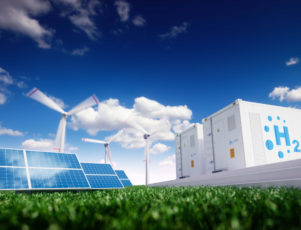
Morocco has been developing a national green hydrogen strategy since 2021, positioning the kingdom as a future exporter of hydrogen derivatives to European markets. The strategy rests on the country’s considerable solar and wind resources: according to the International Renewable Energy Agency (IRENA), Morocco is on course to achieve the third lowest green hydrogen production costs in the world by 2050, with projected costs ranging between roughly $0.7 and $1.4 per kilogram, placing it alongside a handful of resource-rich nations in the most competitive tier.
The centrepiece of that strategy is what Rabat calls the ‘Morocco Offer,’ a state-led initiative launched in 2024 to channel large-scale foreign investment into hydrogen production and derivative industries, offering preferential access to public land and associated infrastructure. In March 2025, Prime Minister Aziz Akhannouch chaired a steering committee that selected five investor groups for six specific projects, together valued at approximately $32 to $35 billion, according to AGBI and Morocco World News. The selected projects target production of green ammonia, e-fuels and clean steel, all within the kingdom’s southern provinces.
By February 2026, the programme moved from project selection to concrete land commitments. On 5 February, Akhannouch met in Rabat with representatives of all five investor groups to sign preliminary land reservation agreements. Each project gained access to up to 30,000 hectares, according to Ecofin Agency, enabling consortia to formally launch feasibility studies and move into active development.
Gulf Energy Companies Make Their Commitments Concrete
Two of the five selected investor groups carry direct Gulf capital, and their participation illustrates how the programme has become a practical Africa-Gulf energy partnership.
TAQA Morocco, a subsidiary of Abu Dhabi National Energy Company, joined forces with Spain’s Moeve in a consortium focused on green ammonia and industrial e-fuels. Under the arrangement, TAQA Morocco is responsible for renewable energy generation underpinning the project, while Moeve leads e-fuels production and marketing. In its initial phase, the consortium expects to produce around 100,000 tonnes of hydrogen per year, converting that output into approximately 560,000 tonnes of green ammonia for both domestic use and export, according to a Moeve press release issued in February 2026.
Saudi Arabia’s ACWA Power entered the programme with its ‘Green Pearl’ project. The company is not a newcomer to Morocco: its total investments in the kingdom’s renewable energy sector already stand at close to $3 billion, making it one of the country’s largest foreign energy investors. As of late June 2026, ACWA Power’s management in Morocco confirmed to Asharq Business that the company is actively seeking to expand into green hydrogen, seawater desalination and energy storage, per Morocco World News. That statement, made during a visit to its Khalladi wind farm, signals a deepening commercial relationship rather than a one-off transaction.
The logic driving Gulf participation is strategic as well as financial. Saudi Arabia and the UAE are both diversifying their portfolios into clean-energy value chains expected to define the post-oil economy. Morocco, positioned at the western edge of North Africa with Atlantic deep-water ports and close proximity to European markets, offers geography well suited to that ambition. For Gulf energy majors, co-developing projects in Morocco is also a way to secure off-take relationships and supply chain positions before competitors do.
Local Stakes and the Industrialisation Imperative
The scale of the programme raises a question that runs through nearly every large infrastructure initiative on the continent: who captures the value?
Morocco’s government has framed the ‘Morocco Offer’ as more than an export platform. The kingdom’s hydrogen strategy envisions a domestic market of 4 terawatt hours alongside an export market of 10 TWh by 2030, requiring the construction of 6 gigawatts of new renewable capacity, as outlined by the Green Hydrogen Organisation. That production base is intended to feed domestic industries: green ammonia substituting for costly fertiliser imports, and clean hydrogen eventually feeding emerging steelmaking capacity. Morocco’s target of reaching 52% renewable electricity by 2030 adds domestic demand that reduces the risk of projects becoming purely export-oriented enclaves.
The feasibility study phase now under way will be critical in determining whether local industrialisation ambitions are written into binding contractual terms, including local content requirements, workforce development obligations and technology transfer commitments. Morocco’s Ministry of Energy Transition, led by Leïla Benali, has consistently stressed these conditions in parliamentary statements, though the detailed terms of individual project agreements remain commercially confidential.
The timeline is also demanding. Most projects target first exports by the late 2020s or early 2030s, coinciding with when the European Union’s hydrogen import strategy is expected to generate significant commercial pull. For Gulf investors experienced in financing long-horizon energy infrastructure in complex regulatory environments, such timelines are familiar terrain. For Morocco, the stakes reach further: the programme’s credibility as a global investment destination depends on whether the first projects are delivered on schedule and on the terms originally promised to investors and citizens alike.
What has changed in 2026 is that ambitions long confined to policy documents have been backed by signed land agreements, launched feasibility studies and companies committing capital on the record. ACWA Power’s latest signal of expanded ambitions in Morocco suggests that the Africa-Gulf green hydrogen axis is moving beyond the era of strategic announcements into one of practical implementation.