
mena
Tag Archive

African GovTech Crosses Borders: Digital ID Systems Eye MENA Markets

Comments (0) Business

Biometric ID enrollment process at an African government service centre

The scale of Africa’s digital identity infrastructure push is often underestimated outside the continent. Nigeria’s National Identity Management Commission had enrolled more than 100 million citizens in its National Identification Number (NIN) system by 2023, according to official government statements. Ghana’s biometric national identity card scheme, managed by the National Identification Authority, has reached near-universal coverage among adults in the country’s urban centres. Rwanda, consistently cited in World Bank and African Development Bank assessments as a regional benchmark for e-government, has integrated its national ID system with the Irembo platform, which allows citizens to access over a hundred public services online.

Morocco sits at the geographic and institutional intersection of this story. Its electronic national identity card (CNIE) has been operational since 2008 and progressively upgraded to function as an authentication layer for digital services. That track record of deployment and refinement places Morocco at the crossroads between sub-Saharan innovation and MENA market realities.

Underpinning many of these national efforts is sustained international institutional support. The World Bank’s Identification for Development (ID4D) initiative, launched in 2014, has committed over one billion dollars across more than forty countries, with a significant share directed at African and Middle Eastern states, according to the initiative’s own reporting. The African Development Bank’s Digital Infrastructure for Africa program similarly finances connectivity and digital public goods projects across the continent. Their involvement has helped establish technical standards around biometric formats, cryptographic security and data interoperability that align African national systems with globally recognized practices.

MENA Governments Turn to African GovTech for Digital Infrastructure

The idea that a Nigerian, Rwandan or Ghanaian GovTech provider could supply digital identity infrastructure to a Gulf or Levantine government would have seemed improbable a decade ago. Today it reflects a convergence of practical pressures.

Several MENA governments face variants of the same challenge that drove African countries to build their own systems: large informal or underserved populations, fragmented legacy databases, and the need to integrate social protection, tax administration and financial services into a single identity layer. The engineering requirements often overlap more than the surface differences in income level or institutional context might suggest. African platforms, designed to handle unreliable connectivity, diverse linguistic contexts and high transaction volumes in resource-constrained environments, offer a kind of practical flexibility that generic Western enterprise software rarely provides.

Cost is also a material factor. International software vendors typically price GovTech solutions for governments with large procurement budgets. African providers, whose platforms were frequently co-developed with donor co-funding and priced for emerging-market clients, can present more competitive terms. Smile Identity, the Nigeria-and-Kenya-rooted identity verification company founded in 2017 and now operating across more than thirty African markets, has publicly described its pricing model as designed for high-volume, low-margin environments that global incumbents are not set up to serve efficiently.

Beyond pricing, there is the logic of shared institutional experience. African nations that have navigated the political complexity of population registration, biometric governance and civil registration reform have developed direct operational expertise that Gulf states pursuing rapid e-government transformations can draw on. The African Union’s Digital Transformation Strategy for Africa, adopted in 2020 with a horizon to 2030, explicitly frames digital public infrastructure as an exportable asset and calls for partnerships extending beyond the continent’s borders.

Data Sovereignty and Interoperability: Obstacles to Cross-Regional Scale

The structural opportunity is real. The obstacles are, too. Cross-border deployment of identity systems raises immediate questions about data sovereignty: which jurisdiction retains custody of the biometric data, and under what legal framework can it be shared or accessed? Without a clear bilateral or multilateral legal architecture, governments on both sides face legitimate governance risks that can delay or block partnerships, regardless of their technical merits. This is not a hypothetical concern: several African digital ID rollouts have already faced domestic legal challenges over data storage and access rights, providing cautionary precedent for cross-border arrangements.

Interoperability  presents a second challenge. African national ID systems vary in underlying architecture, data models and security protocols. A platform built for Nigeria’s scale and federal structure does not translate automatically into one suited to a smaller, centrally governed Gulf state. Successful cross-regional deployments require investment in adaptation layers and, typically, sustained technical assistance well beyond the initial contract period.

These obstacles explain why the World Bank’s ID4D initiative and the African Development Bank have been exploring common technical standards and model legal frameworks applicable across Africa and MENA. Sub-regional discussions at the COMESA and ECOWAS levels around mutual recognition of digital credentials offer one potential template for a wider Africa-MENA framework, though translating sub-regional precedents into cross-continental arrangements requires political will alongside technical alignment.

The commercial and institutional momentum behind African GovTech shows no sign of reversing. African identity technology companies have attracted growing venture capital, and governments across the continent have invested steadily in the public-sector infrastructure that underpins private digital services. As these systems mature, the primary barrier to cross-regional deployment will be less about whether the technology performs and more about whether policymakers in Addis Ababa, Cairo, Riyadh and Nairobi can build the legal and diplomatic scaffolding to support it. That is a task for institutions as much as for the engineers and founders who built the platforms themselves.

Read more

How African and MENA Leaders Are Rewriting the Rules of Global Finance

Comments (0) Politics

For much of the past three decades, African finance ministers arrived at IMF and World Bank annual meetings primarily with requests. That posture is changing. A growing number of African and Middle Eastern states now enter these forums with joint communiqués, technical papers and coalition strategies designed to shape, rather than merely respond to, the rules governing global capital flows.

This shift has clear institutional roots. The African Union coordinates common positions on financial governance ahead of major multilateral meetings, while the African Development Bank (AfDB) provides the analytical backbone for the argument that Africa’s sovereign borrowing costs do not reflect the actual creditworthiness of African states. The disparity between perceived risk and real default history has driven up the cost of borrowing for governments seeking to finance infrastructure and energy projects, restricting fiscal space precisely where spending needs are greatest.

The numbers make the case. According to AfDB data, several African countries now spend more than 20 percent of government revenue on external debt servicing. For some, the share approaches 40 percent. Those figures translate into deferred health facilities and stalled electricity projects. Agricultural support programs are among the first line items cut when debt servicing crowds out other spending, affecting tens of millions of people across the continent.

The Climate Finance Gap and MENA’s Energy Dilemma

Climate finance is a second front where Africa and the Middle East have found common purpose, even if the logic differs on each side. African states, particularly in sub-Saharan and East Africa, contribute a negligible share of global greenhouse gas emissions but carry a disproportionate share of climate-related economic losses, through droughts, flooding, coastal erosion and disruptions to food systems. Their demand, articulated at successive COP negotiations and UN high-level weeks, is that the global climate finance architecture consistently underdelivers.

The AfDB has estimated that Africa needs approximately 250 billion dollars per year in climate finance by 2030. Actual flows remain far below that level, with a significant portion arriving as loans rather than grants, adding to the very debt burden that African governments are simultaneously trying to reduce. The gap is embedded not only in total volume but in the design of multilateral funds and the complexity of accreditation processes that smaller national institutions struggle to navigate.

Middle Eastern states occupy a distinct but related position. Gulf economies are channeling hundreds of billions of dollars into renewable energy, green hydrogen and digital infrastructure as part of their diversification strategies. Their concern is that ESG standards and green finance frameworks, largely shaped in Europe, do not recognize the scale or pace of these transitions, making it harder to access international green capital on competitive terms. Saudi Arabia, the UAE and Qatar have each made this argument explicitly at recent climate and finance forums.

What connects both positions is a shared critique: financial rules not designed with African development trajectories or Gulf transition timelines in mind are now constraining governments responsible for some of the world’s fastest-growing populations and most strategically positioned energy resources.

From Advocacy to Architecture

The shift from grievance to governance proposal is visible in the specific reform demands that African and Middle Eastern leaders are advancing. African finance ministers, coordinating through the African Union and the G24 group of developing-country finance officials, have pushed for expanded IMF Special Drawing Rights allocations to low-income and climate-vulnerable countries. They have also backed the inclusion of climate-resilient debt clauses in sovereign bonds, a mechanism that would automatically suspend debt payments when a country suffers a major climate event, removing the difficult choice between servicing creditors and rebuilding after a cyclone or drought.

On multilateral development banks, the case centers on capital increases that preserve concessional lending windows and reduce financing costs for African governments. The G20 Common Framework for debt restructuring, launched in 2020, has drawn consistent criticism for its slow implementation. Ethiopian officials, among others, have called publicly for a faster process capable of keeping up with the number of countries in acute fiscal distress.

Gulf sovereign wealth funds introduce a different variable into this equation. Collectively managing assets estimated in the trillions of dollars, they are positioned to act as co-investors alongside multilateral institutions in African energy and infrastructure projects, potentially reducing the risk premiums that raise borrowing costs for the continent. Several co-investment platforms linking African and Gulf sovereign funds have been announced over the past two years. Translating those frameworks into projects at the scale and speed both regions require remains the central implementation challenge.

Whether the G7 shareholders of the Bretton Woods institutions will move beyond acknowledging these demands to incorporating them into binding governance changes is the open question. What is no longer in doubt is that Africa and the Middle East are arriving at these negotiations with more preparation, more data and more coordinated institutional strategy than at any previous moment in the postwar financial order. The architecture they are pushing to reshape was built without them at the table; the current generation of leaders intends that the next version will not be.

Photo : economist.com

Read more

Beyond VC: Africa and MENA Startups Find New Capital

Comments (0) Business, Featured

African and MENA startup funding: the 2021 peak and the 2022-2023 decline

In 2021, African tech startups raised a record volume of venture capital, propelled by a global surge in risk appetite and historically low interest rates. Partech Africa’s annual reports documented this wave in detail, tracking total funding across the continent at levels that had been difficult to imagine just a few years earlier. Nigeria, Kenya, South Africa, and Egypt absorbed the bulk of those inflows, together accounting for the majority of deals by both count and capital. In MENA, platforms such as Magnitt documented a parallel boom, with the UAE and Saudi Arabia attracting significant capital into fintech, logistics, and health services.

The contraction that followed was equally pronounced. As global interest rates rose and investor risk sentiment shifted through 2022, venture funds tightened their criteria, extended due diligence timelines, and repriced valuations. Partech Africa’s 2023 report recorded a substantial year-on-year decline in total funding across the continent, a pattern replicated across MENA according to Magnitt’s regional data. Early-stage deals proved more resilient than later rounds, but even seed-level funding became more competitive. Some smaller ecosystem markets in West and East Africa that had attracted first-time investors during the boom saw deal flow dry up more quickly. Established hubs retained a base of activity, partly because they had built local angel networks and a generation of repeat founders capable of navigating tighter conditions.

Revenue-based financing, venture debt, and corporate investors reshape deal flow

The funding reset pushed founders to look beyond conventional term sheets. Revenue-based financing arrangements, under which companies repay capital as a percentage of monthly revenues rather than ceding equity, drew interest from founders in sectors with predictable cash flows: B2B software, logistics platforms, and subscription services. While this instrument is not new globally, its adoption in African and MENA markets accelerated as traditional venture rounds became harder to close on acceptable terms.

Venture debt also became more common, extended by specialist lenders as an adjunct to equity funding for companies that had cleared an initial round but needed non-dilutive capital to reach their next milestone. In markets with more mature financial infrastructure, such as the UAE or South Africa, certain commercial banks began offering tailored products to startups with demonstrable revenue, reducing reliance on offshore lenders.

Corporate investors became a more visible presence in regional deal tables. Telecom operators, financial institutions, and large retail conglomerates across Africa and the Middle East increased their strategic investment activity, targeting startups that could integrate into their own digital transformation programs. For founders, this brought capital alongside distribution reach and regulatory familiarity, though it also introduced questions about long-term alignment of incentives and exit options.

Development finance institutions shifted their programs in parallel. The International Finance Corporation, entities within the African Development Bank Group, and various bilateral funds expanded blended finance structures, combining grants with equity or quasi-equity to lower risk for private co-investors. Climate tech and financial inclusion startups were particular beneficiaries, given their alignment with institutional mandates. In a number of cases, these structures provided the first institutional ticket into a company, which then unlocked subsequent private capital.

Gulf capital, blended finance, and the limits of alternative funding instruments

The emergence of alternative financing instruments reflects a broader shift in how African and Middle Eastern ecosystems are developing. Founders who built companies during the boom on growth metrics and deferred profitability are now, in many cases, managing leaner operations with sharper attention to unit economics. This recalibration has produced a generation of operators with a clearer grasp of their financial fundamentals.

The cross-regional dimension adds a further layer. Gulf sovereign wealth funds, including Saudi Arabia’s Public Investment Fund and Abu Dhabi-based entities, have shown growing interest in African tech through direct investments and as limited partners in Africa-focused venture funds. This creates a new axis of capital for African founders who can demonstrate regional scalability, particularly in payments, logistics, and health services that operate across Arabic and Anglophone Africa. Gulf-based startups seeking to expand into Africa, meanwhile, increasingly look for local equity partners rather than wholly-owned subsidiaries, motivated partly by regulatory requirements and partly by recognition that local knowledge is a competitive advantage.

Open questions persist. Revenue-based financing and venture debt serve revenue-generating companies reasonably well, but they do not work for pre-revenue or deep-tech startups that require patient capital over long investment horizons. Development finance addresses part of that gap, though its processes are often too slow for fast-moving sectors.

The annual funding reports due from Partech Africa, Magnitt, and Briter Bridges for the 2025 cycle will offer the clearest empirical test of whether alternative financing has genuinely compensated for the decline in venture capital, or whether a structural funding gap has taken hold. Founders, local investors, and institutional actors have reorganized around available instruments and, in doing so, appear to be building a more diversified financial architecture than the one that existed at the height of the 2021 surge.

Read more

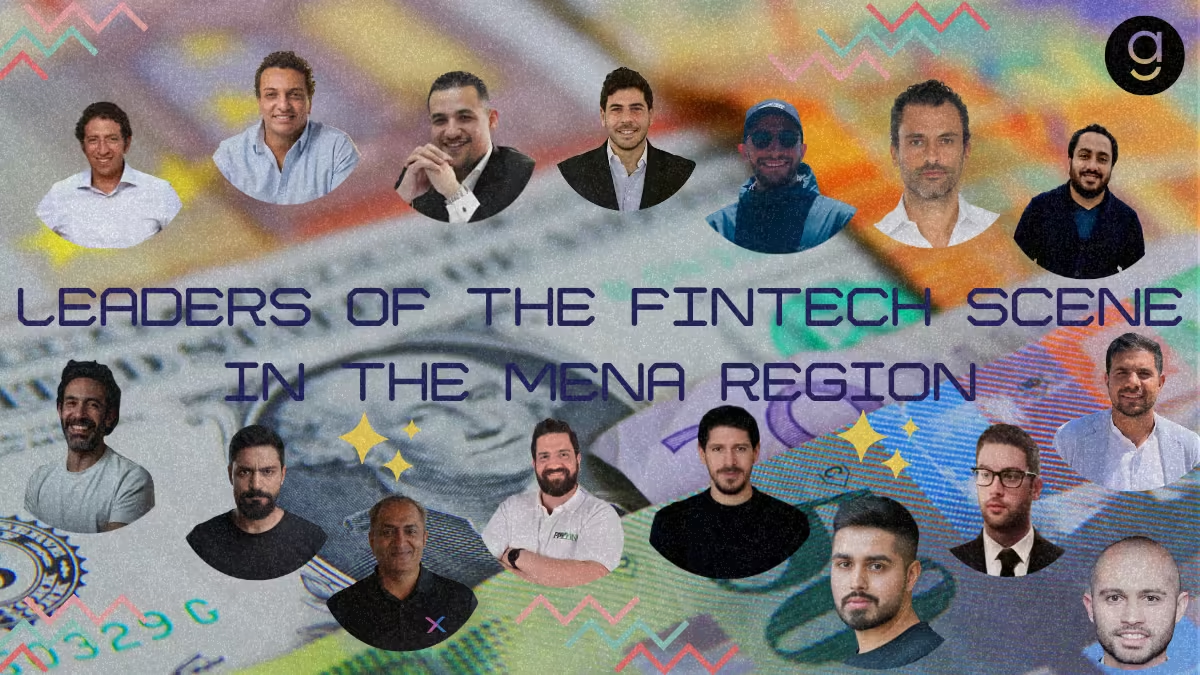
Fintech Pioneers Shaping MENA’s Digital Economy: Between Innovation and Controversy

Comments (0) Leaders

Over the past decade, the Middle East and North Africa (MENA) region has witnessed a dramatic rise in financial technology startups. These companies are redefining the way individuals and businesses interact with money, from mobile wallets to cryptocurrency exchanges and instant credit services. With growing smartphone usage, increasing internet penetration, and government support, fintechs are playing a vital role in driving financial inclusion and modernizing the economy across countries such as the United Arab Emirates, Saudi Arabia, Bahrain, Egypt, and Jordan.

One of the key players in this digital shift is Ziina, a UAE-based app that enables peer-to-peer payments without traditional bank account details. It caters to a younger, mobile-first generation seeking fast and intuitive money transfer solutions. In Saudi Arabia, Tamara has become one of the fastest-growing Buy Now, Pay Later platforms in the region, partnering with major brands and attracting international investment. Bahrain’s Rain, one of the first licensed cryptocurrency exchanges in the Gulf, is pioneering digital asset adoption in a region traditionally cautious about decentralized finance.

Egypt has emerged as a fintech powerhouse in North Africa. Companies such as Fawry, Paymob, and Khazna are offering everything from mobile payments to microloans, targeting both consumers and small businesses. With more than 60 percent of its population still outside the formal banking system, Egypt presents massive growth potential for fintech. The government has also been supportive, implementing new policies to accelerate digital financial inclusion.

Regional venture capital investment reflects the enthusiasm. In 2024, MENA-based fintech startups raised over 3 billion dollars, marking a significant rise from previous years. Public initiatives like Saudi Arabia’s Vision 2030 or the UAE’s financial innovation hubs in Abu Dhabi and Dubai are also reinforcing this ecosystem, attracting both local and international startups to test and scale their products.

Controversies and Regulatory Risks in the MENA Fintech Sector

Despite the success stories, the fintech boom in MENA is not without its critics. Key concerns revolve around data privacy, regulatory gaps, and financial ethics. As fintech platforms handle increasingly large volumes of sensitive personal and financial data, experts warn of potential misuse, especially in jurisdictions where data protection laws are weak or inconsistently enforced. Questions about who has access to user data, how it is stored, and what third parties are involved remain largely unanswered in many cases.

The Buy Now, Pay Later model has come under growing scrutiny as well. While it provides accessible short-term credit, consumer protection advocates in the region have raised alarms about unclear terms, hidden fees, and a rising number of defaults. There are fears that BNPL could encourage overspending and indebtedness, particularly among young users with limited financial literacy. Several regulators are considering tighter oversight or new licensing requirements to mitigate these risks.

Another challenge is ensuring that fintech actually benefits the financially excluded. Many apps and services remain urban-focused, requiring access to smartphones, stable internet, and a minimum level of tech literacy. As a result, rural populations, older adults, and women in conservative areas may still face barriers, reinforcing rather than reducing inequality.

The MENA region’s fintech revolution is at a critical juncture. While its potential to reshape the financial landscape is undeniable, its future will depend on how well it addresses concerns around privacy, regulation, and inclusivity. A sustainable ecosystem must balance innovation with accountability and access for all.

Photos : arageek.com

Read more

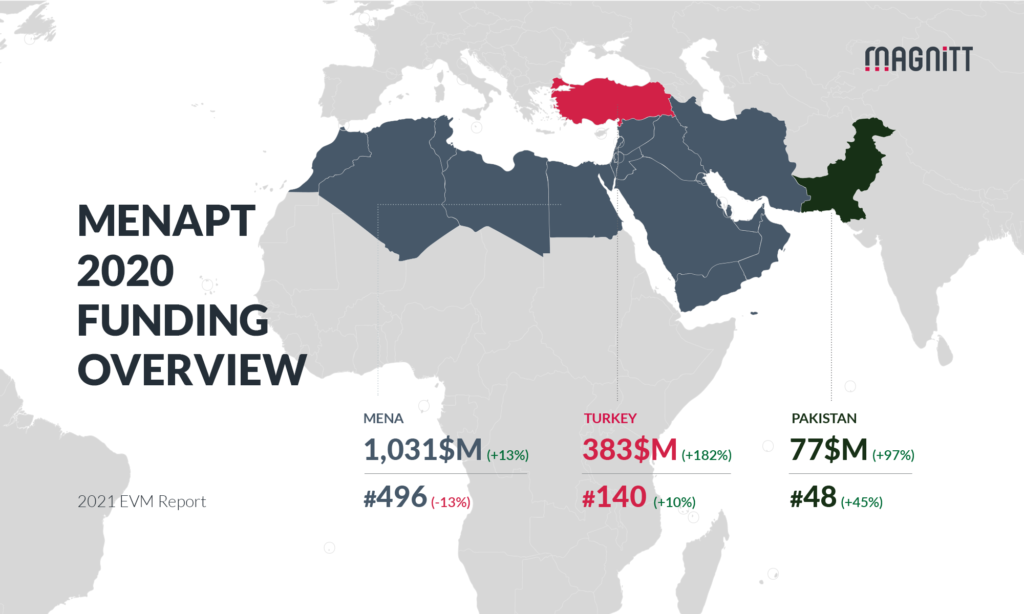
Innovation and flexibility allowed MENA startups to raise over $1 billion in 2020

Comments (0) Business, Featured

Innovation and flexibility allowed North African and Middle Eastern startups to raise over $1 billion in 2020

Despite the ongoing Covid-19 pandemic, investors continued to believe in the potential of North African and Middle Eastern tech start-ups. The growth in venture capital investments in MENA countries in the latter portion of 2020 speaks volumes about the expected high returns in the coming years. While the total number of investment transactions in 2020 decreased 13% overall from numbers in 2019, a record breaking first half of 2020 and a rebound in late Q3 led to a year that, despite a global pandemic, shattered expectations for investment numbers.

The sectors benefiting most from high investment

While the total number of deals may have dropped, several key industries have experienced major growth throughout 2020:

  • Fintech, or financial tech did very well. Despite losing 19% of the number of deals, total funding for this industry shot up to $162 million.
  • eCommerce was a sector that lost 23% in deals but managed to come out with 24% more funding than the sector received in 2019.
  • Healthcare and Healthtech was an obvious winner given the public health crisis, and investment in Healthcare start-ups soared by 280% compared to 2019 for a total of $72 million in funding

Big winners of the year included the digital healthcare agency Vezeeta, securing a staggering $40 million in series D funding in early 2020, shortly after moving their headquarters to Dubai, and Dubai-based used car marketplace, Sellanycar.com that raised $35 million to expand the number of branches across the country.

United Arab Emirates takes the lion’s share of investment funding

The UAE maintained its powerful lead in total funding, taking 56% of the total of venture capital funding raised within the Middle East and North Africa for the year of 2020. Egypt and the Kingdom of Saudi Arabia follow with 17% and 15% of the total funding, respectively. As a percentage of the deal share, very little changed compared to 2019. Most changes were only 1 or 2% of the deal share, with the exception of Saudi Arabia. The Kingdom of Saudi Arabia increased the share of the number of deals by 6%, likely because of the large shift towards ecommerce and Fintech within Sauda Arabia during 2020.

Seed rounds and series A receiving the biggest boost in funding

Despite the increase in funding overall, the investment landscape does seem to have been altered by the Covid-19 pandemic. Pre-seed and early stage venture funding decreased in 2020, while Seed funding and Series A investments exploded, potentially reaching up to $3 million of funding. While exact numbers are still being confirmed, it suggests investors are less willing to expose themselves to risk on companies that are yet to bring a product to market, and instead focused on those with a promising outlook for rapid growth. Given the impact the global economy has seen from Covid-19 and the many countries facing a harsh recession, this change of tactics could be seen as a more cautious approach from investors.

A promising outlook for tech start-ups in the Middle East and North Africa

Although Covid-19 is far from over and many of the long-term economic impacts are still to hit home, raising over $1 billion of funding in 2020 is an incredible achievement for MENA start-ups. Chief Operating Officer at 500 Startups Courtney Powell, among others, have said that the outlook for 2021 is positive, and if the Fintech, eCommerce and Healthtech industries can innovate and succeed through the challenging year of 2020, then there is every reason to expect they will succeed in 2021.

Sources: ventureburn.com – gccbusinessnews.com

Read more

MIT in MENA: Bringing Arab Minds Together for Change

Comments (0) Business, Featured, Middle East

MIT brings MENA’s smartest minds together for a universally beneficial competition.

On April 14, the smartest technology-oriented minds from the Middle East and North Africa (MENA) will meet in the Kingdom of Saudi Arabia for the third and final round of the MIT Enterprise Forum Pan Arab competition. Organized by the renowned Massachusetts Institute of Technology (MIT), this forum brings together innovative minds from 21 Arab countries to change the way we think, learn and access services.

In its 9th year, this competition brings together MENA’s smartest innovators in four tracks: ideas, social entrepreneurship, start-ups and The Silicon Valley Program. This year, more than 5,000 applications were received from 21 countries in French, English and Arabic. All finalist teams will receive top tier coaching from leaders in their respective fields; networking opportunities with budding and well-known specialists and the opportunity to learn from others in their category. The top three finalists will receive, in order, US$15,000, US$10,000 and US$5,000 to turn their ideas into tangible reality.

Ideas Track

20 teams are short-listed for the “ideas” track. In order to be eligible, candidates must form a team of at least two people including at least one Arab national; are not required to have a working prototype of their invention; are forbidden from having any current sales; and are not required to be registered or incorporated in any way, but are required to incorporate a company in one of the Arab countries in order to win prize money; applicants may not have received any previous funding for their idea; and the idea can be in any industry–technology, food security, health delivery or otherwise.

Since the goal of this competition is to bring fresh ideas into the global marketplace, much of the judging criteria for this track is based on the feasibility of an idea. Teams are judged on three criteria.

Experience: the value each member adds to the team and the relevance of each team member to the incubation and development of the idea

Innovation: the creativity of the idea and whether or not it improves upon an existing solution/business process or introduces a new solution to a current challenge in any field

Scalability: the relevance of the idea to the global marketplace is judged on whether markets outside of team’s community would find the product useful. At a minimum, teams are expected to be relevant on a national scale, and should be replicable on a global scale.

Social Entrepreneurship Track

The Social Entrepreneurship track is similarly judged for eligibility. Teams must have a minimum of two members with at least one Arab national, the team must have a registered social enterprise either for or non-profit, the core product/service must address a specific social challenge faced by marginalized/disadvantaged peoples, and the enterprise can be in any industry.

The 20 finalist teams are judged on similar criteria as above, but with different details.

Innovation: the product/service must provide a new way to tackle the specific social challenge the team is addressing

Scalability: the social enterprise should not be limited to a local market, but should be scalable to the national level at a minimum. Preferably, the model could be expanded and replicated as the enterprise grows, where relevant.

Social Impact: the team will be judged on the efficacy of the project, and the extent to which it benefits the targeted population

Financial Sustainability: the team must prove that their enterprise is financially sustainable in the long-term for both for-profit and non-profit enterprises

Startups Track

30 teams will be selected for the second and final round of the Startups Track competition. These teams must be comprised of a minimum of two members, one of whom must be Arab, must have a working prototype of their startup, must already generate more than $500,000 in revenue, must have been in operation for no more than 5 years, must be legally registered in any Arab country and the start-up may be in any industry.

The teams will be judged on the following:

Team: judges score teams based on their individual experience, the value added by each person and the relevance of each role

Innovation: the start-up will be assessed for creativity, and whether it replicates an existing product/service

Scalability: the start-up must be relevant outside of the local context and should be easily replicable in other relevant fields, regardless of location.

The Silicon Valley Program

Unlike the above tracks, the Silicon Valley Program competition will finish in September, when finalists receive a much more comprehensive and hands on package than the other finalists. The Silicon Valley Program brings entrepreneurs from 20 start-ups to Silicon Valley (in northern California, United States) for a week-long immersive program. Finalists will attend and participate in conferences and workshops with some of Silicon Valley’s most successful start-ups and learn how to successfully “pitch” ideas to funders. Mentors include current industry leaders as well as members of the Arab diaspora who are better able to speak to the specific challenges entrepreneurs from the MENA region face.

This program accepts a higher-level of start-up teams than the other tracks. Start-ups must have been in operation for more than two years, must have global or regional reach/presence, must have successfully completed one round of fundraising and must have more than $500,000 in revenue per annum.

The Rising Tide

Competitions like this provide an incredible opportunity for young, successful and intelligent people to gather and share ideas. Not only do they have the potential to receive funding to scale up their operations to the global level, but they receive invaluable exposure and mentorship opportunities. Previous winners include Visualizing Impact, a Lebanese social enterprise that operates a citizen data laboratory to share science, design and technology data for social justice outside of formal channels; Kotobna, an Egyptian team that provides alternate means for young Arab authors to publish and monetize their written work and Screen DY, a Moroccan team that created a platform for users to quickly build complex, culturally relevant apps for all mobile technology platforms.

This competition is an important hallmark for young Arab entrepreneurs. Benefitting from the experience of others while gaining exposure to other like-minded people can invaluably change the way people in the MENA region and beyond access knowledge, share information and obtain products.

Read more