Author

How African and MENA Leaders Are Rewriting the Rules of Global Finance

Comments (0) Politics

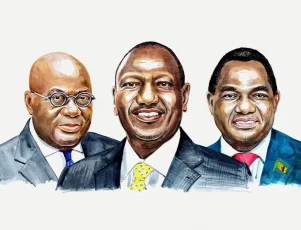
For much of the past three decades, African finance ministers arrived at IMF and World Bank annual meetings primarily with requests. That posture is changing. A growing number of African and Middle Eastern states now enter these forums with joint communiqués, technical papers and coalition strategies designed to shape, rather than merely respond to, the rules governing global capital flows.

This shift has clear institutional roots. The African Union coordinates common positions on financial governance ahead of major multilateral meetings, while the African Development Bank (AfDB) provides the analytical backbone for the argument that Africa’s sovereign borrowing costs do not reflect the actual creditworthiness of African states. The disparity between perceived risk and real default history has driven up the cost of borrowing for governments seeking to finance infrastructure and energy projects, restricting fiscal space precisely where spending needs are greatest.

The numbers make the case. According to AfDB data, several African countries now spend more than 20 percent of government revenue on external debt servicing. For some, the share approaches 40 percent. Those figures translate into deferred health facilities and stalled electricity projects. Agricultural support programs are among the first line items cut when debt servicing crowds out other spending, affecting tens of millions of people across the continent.

The Climate Finance Gap and MENA’s Energy Dilemma

Climate finance is a second front where Africa and the Middle East have found common purpose, even if the logic differs on each side. African states, particularly in sub-Saharan and East Africa, contribute a negligible share of global greenhouse gas emissions but carry a disproportionate share of climate-related economic losses, through droughts, flooding, coastal erosion and disruptions to food systems. Their demand, articulated at successive COP negotiations and UN high-level weeks, is that the global climate finance architecture consistently underdelivers.

The AfDB has estimated that Africa needs approximately 250 billion dollars per year in climate finance by 2030. Actual flows remain far below that level, with a significant portion arriving as loans rather than grants, adding to the very debt burden that African governments are simultaneously trying to reduce. The gap is embedded not only in total volume but in the design of multilateral funds and the complexity of accreditation processes that smaller national institutions struggle to navigate.

Middle Eastern states occupy a distinct but related position. Gulf economies are channeling hundreds of billions of dollars into renewable energy, green hydrogen and digital infrastructure as part of their diversification strategies. Their concern is that ESG standards and green finance frameworks, largely shaped in Europe, do not recognize the scale or pace of these transitions, making it harder to access international green capital on competitive terms. Saudi Arabia, the UAE and Qatar have each made this argument explicitly at recent climate and finance forums.

What connects both positions is a shared critique: financial rules not designed with African development trajectories or Gulf transition timelines in mind are now constraining governments responsible for some of the world’s fastest-growing populations and most strategically positioned energy resources.

From Advocacy to Architecture

The shift from grievance to governance proposal is visible in the specific reform demands that African and Middle Eastern leaders are advancing. African finance ministers, coordinating through the African Union and the G24 group of developing-country finance officials, have pushed for expanded IMF Special Drawing Rights allocations to low-income and climate-vulnerable countries. They have also backed the inclusion of climate-resilient debt clauses in sovereign bonds, a mechanism that would automatically suspend debt payments when a country suffers a major climate event, removing the difficult choice between servicing creditors and rebuilding after a cyclone or drought.

On multilateral development banks, the case centers on capital increases that preserve concessional lending windows and reduce financing costs for African governments. The G20 Common Framework for debt restructuring, launched in 2020, has drawn consistent criticism for its slow implementation. Ethiopian officials, among others, have called publicly for a faster process capable of keeping up with the number of countries in acute fiscal distress.

Gulf sovereign wealth funds introduce a different variable into this equation. Collectively managing assets estimated in the trillions of dollars, they are positioned to act as co-investors alongside multilateral institutions in African energy and infrastructure projects, potentially reducing the risk premiums that raise borrowing costs for the continent. Several co-investment platforms linking African and Gulf sovereign funds have been announced over the past two years. Translating those frameworks into projects at the scale and speed both regions require remains the central implementation challenge.

Whether the G7 shareholders of the Bretton Woods institutions will move beyond acknowledging these demands to incorporating them into binding governance changes is the open question. What is no longer in doubt is that Africa and the Middle East are arriving at these negotiations with more preparation, more data and more coordinated institutional strategy than at any previous moment in the postwar financial order. The architecture they are pushing to reshape was built without them at the table; the current generation of leaders intends that the next version will not be.

Photo : economist.com
Read more

Red Sea Crisis Reshapes African & Gulf Logistics

Comments (0) Featured, Politics

East African container port with cargo vessels at berth

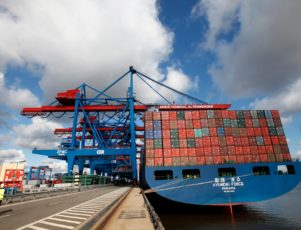
The Red Sea corridor carries a substantial share of global container traffic between Asia, Europe and the Middle East. Since late 2023, security concerns around the Bab el-Mandeb strait have compelled carriers to divert vessels southward, with ripple effects extending far beyond the strait itself. Industry estimates suggest that rerouting around the Cape of Good Hope adds roughly two weeks to transit times and hundreds of thousands of dollars in additional fuel costs per voyage. Those costs translate into higher freight rates and steeper insurance premiums, ultimately squeezing food prices and industrial supply chains in economies along both coasts.

For ports in East Africa and the Gulf, the disruption has been simultaneously a pressure and a strategic opening. Facilities at Mombasa, Dar es Salaam and Djibouti have seen significant shifts in call patterns and cargo volumes as carriers reorganize their networks. Gulf hubs, particularly in the UAE, have had to adapt scheduling and warehousing capacity to accommodate new routing configurations. The question is no longer whether ports can absorb the shock. It is which ones can turn the reconfiguration into lasting competitive advantage.

The scale of the rerouting has been considerable. According to shipping analytics firms cited by Reuters, the share of Asia-Europe container traffic bypassing the Red Sea rose sharply from 2024, with several major liner operators suspending Red Sea transits indefinitely. That volume has to go somewhere, and the ports best positioned to capture it are those already investing in capacity and digital readiness.

How African and Gulf Port Operators Are Adapting

What distinguishes this period from previous disruptions is the pace at which port authorities and logistics firms across Africa and the Middle East have moved to innovate rather than simply react. Port management teams in East Africa have accelerated the digitalization of customs clearance, reducing dwell times and improving berth utilization to handle unpredictable call patterns. Several facilities have also expanded hinterland connectivity, investing in inland container depots and rail links to reduce congestion when vessel surges arrive.

In the Gulf, logistics operators have drawn on existing digital infrastructure to offer dynamic routing and cargo tracking services now in higher demand precisely because of the uncertainty that diversions introduce. Dubai’s position as a transshipment hub has given it particular flexibility: its port authority has adjusted scheduling windows and storage allocations to accommodate carriers rethinking their network designs. Saudi facilities at Jeddah and Dammam have similarly moved to enhance throughput capacity and speed up customs processing.

Logistics technology firms based in Nairobi, Lagos and Dubai are seeing growing interest in their products. Route optimization platforms and real-time cargo visibility tools have found new clients among freight forwarders and importers navigating cost and timeline uncertainty, according to reporting by Disrupt Africa and Wamda covering the regional startup space. This demand has accelerated both product development and fundraising for several of these companies, reinforcing a broader trend of logistics tech maturation across the Africa-Middle East corridor.

Insurance and trade finance present another dimension of the story. Maritime insurance premiums for Red Sea transit rose sharply after disruptions intensified, prompting some African traders to explore alternative risk-sharing arrangements. Regional development finance providers, including the African Development Bank, have examined how to support smaller traders most exposed to freight cost volatility, with some analysts calling for dedicated liquidity facilities linked to route disruption events. Carriers, meanwhile, have split between adding security surcharges and absorbing rerouting costs to retain long-term commercial relationships with African ports.

Long-Term Implications for the Africa-Middle East Corridor

The medium-term implications extend well beyond shipping timetables. African ports that adapt successfully stand to consolidate their roles as regional gateways and transshipment centers. The African Development Bank has argued in its infrastructure publications that port modernization can catalyze broader industrial growth by reducing logistics costs for manufacturers and agribusinesses. A sustained increase in traffic through East African facilities could therefore accelerate investment in adjacent activities such as cold chain logistics, warehousing and light processing.

For Gulf port operators, the disruptions have reinforced the strategic value of their geographic position as connectivity nodes between Asia, Africa and Europe. State-backed operators in the UAE and Saudi Arabia have used the period to deepen partnerships with African port authorities, including concession agreements and technical assistance arrangements that extend Gulf logistics expertise into Africa’s growing markets. These partnerships, when structured equitably, combine Gulf capital with African market access in ways that benefit both sides.

What the Red Sea episode has demonstrated is that the Africa-Middle East maritime corridor is not a passive conduit for global trade. It is a space where port executives, logistics entrepreneurs and trade finance professionals are actively shaping new patterns of connectivity. The disruption has accelerated cross-regional cooperation that calmer periods might have left unresolved, and the infrastructure investments now underway are unlikely to be reversed when the geopolitical situation eventually shifts.

Ports that have used the interval to build digital capacity, diversify their service offerings and lock in new commercial relationships are likely to emerge better positioned regardless of which route ultimately dominates global container flows. The Cape of Good Hope detour may prove temporary; the competitive reshaping of the Africa-Middle East logistics landscape is not.

Read more

After Canal+ Takes MultiChoice, African Creators and MENA Platforms Seize Their Moment

Comments (0) Business, Featured

On 10 July 2026, Canal+ officially completed its takeover of MultiChoice Group, bringing the operator of DStv, GOtv and Showmax under full French ownership after a process that stretched more than two years. The deal valued MultiChoice at roughly 55 billion South African rand, or approximately $3 billion, and came with public interest commitments of nearly R26 billion over three years to cover local content investment and support for historically disadvantaged businesses in the audiovisual sector, according to New African Magazine. Canal+ now holds a dominant pay-TV and streaming position across more than 50 African markets.

Yet the transition is already generating turbulence beneath the corporate headline. MultiChoice had launched Showmax in 2015 as an African-born competitor to Netflix, but the platform accumulated losses of $522 million between 2023 and 2025. Canal+ has signaled it will sunset Showmax as part of a broader plan to cut approximately $479 million in costs across the combined business by 2030, per Techpoint Africa. For Nigerian, South African and Kenyan producers who had relied on Showmax commissions, the practical question is immediate: where do their next financing and distribution deals come from?

The answer arrives from two directions at once: locally built streaming platforms and inbound commercial interest from Middle Eastern operators.

 Bets on Itself with Kava

The most visible homegrown response to the shifting landscape is Kava, a streaming platform launched in August 2025 by two of Nollywood’s most recognized institutions: Inkblot Studios, behind a string of Nigerian box office hits, and Filmhouse Group, West Africa’s largest cinema chain. The platform debuted with more than 30 premium Nollywood titles, offering subscribers exclusive post-theatrical releases and a schedule of weekly additions.

“Kava is more than a streaming service. It’s a bold new chapter for Nollywood, designed to meet the growing demand for premium, authentic African content,” the founders said in a statement reported by TechCabal. The ambition is to do what no African-led platform has yet managed: turn local storytelling into a globally sustainable streaming business.

The underlying numbers support that aspiration. Nigeria’s over-the-top video market is projected to reach $1.22 billion in 2025, according to data cited by TechCabal, while Africa’s broader subscription video-on-demand sector is forecast to grow from $2.71 billion in 2024 to $3.67 billion by 2027, according to Statista. The challenge Kava faces is that the platforms best placed to monetize that growth have historically been non-African: Netflix and Amazon Prime both poured resources into Nigerian content before scaling back acquisition budgets, citing low subscriber penetration. IrokoTV, an earlier attempt at a dedicated Nollywood platform, exited the Nigerian market entirely.

Kava’s founders argue their advantage lies in owning both production infrastructure and distribution, rather than licensing content from studios that retain leverage. Whether that vertical integration proves durable will be one of the sector’s defining tests over the next two years.

MENA Operators Look South for African Content

While African platforms push outward for global audiences, operators from the Middle East are moving in the opposite direction. Media World, a content aggregator and mobile services platform with client telecoms including Zain Iraq and Jawwal Palestine, has recently opened a Lagos office, its first in sub-Saharan Africa. Speaking at the Telemedia Johannesburg 2026 conference, the company’s content acquisition and partnership manager Samer Al Ramahi described the company as being “on the hunt for partnerships to integrate various services like games, esports, and streaming content” from African providers, with the goal of distributing them as white-label products across its MENA footprint, per Telemedia Magazine.

The broader context for that scouting trip is a MENA streaming market that is growing fast and competing fiercely for differentiated content. MBC Group’s Shahid platform reported a 28.2% year-on-year revenue rise in 2025, boosted partly by a first-of-its-kind bundling deal with Netflix in Saudi Arabia and the wider MENA region, according to Variety. As established MENA players scale up, African genres represent both a new content category and an access point to diaspora communities with purchasing power.

Music offers the clearest proof of that audience appetite. Afrobeats listeners grew 22% globally in 2025, according to Spotify’s annual Wrapped report, cited by Techpoint Africa, with Nigerian and South African artists dominating Africa’s most-streamed lists. Gulf touring and licensing activity by African artists has expanded in parallel, building the audience base that streaming and gaming platforms want to monetize.

Africa’s Cross-Regional Content Market Takes Shape

The convergence of these forces, Canal+’s restructuring of Africa’s legacy pay-TV market, the emergence of African-owned streaming platforms and the commercial scouting of MENA aggregators in Lagos and Johannesburg, points to a realignment that is real but still unresolved. The players are in motion; the rules of the new ecosystem are not yet written.

For African creators, the proliferation of potential distribution channels is genuine progress. For investors, the question of which platform model generates sustainable returns remains open. Fragmentation is a risk: multiple smaller platforms competing for overlapping catalog rights and the same subscriber budgets could dilute rather than build value. For MENA operators, Africa offers differentiation and scale, alongside regulatory complexity and the challenge of building content curation expertise far from home.

What is already clear is that Africa’s screen industry is no longer organized around a single dominant gatekeeper. From Kava’s Nollywood catalog to Media World’s Lagos outpost, the architecture of a new cross-regional content economy is being laid. How quickly it coheres, and whose terms it operates on, will shape the careers of African filmmakers, the strategies of Gulf platforms and the viewing habits of audiences from Accra to Riyadh over the coming decade.

Read more

African AI startups tap Gulf cloud and capital to scale regionally

Comments (0) Business, Featured

Africa’s AI Boom Runs Into a Compute Wall

Africa’s artificial intelligence sector has expanded sharply over the past five years. Startups in Nigeria, Kenya, South Africa and Egypt are applying machine learning to healthcare diagnostics, agricultural yield prediction, credit scoring and logistics optimization, reaching users across multiple African markets from relatively modest bases.

Yet growth has run into a practical ceiling: compute power. Training and deploying AI models demands access to graphics processing units and large-scale cloud infrastructure, which remains expensive, scarce or high-latency across most of the continent. A 2023 report by the International Finance Corporation noted that inadequate digital infrastructure, including unreliable power supply and limited local data center capacity, continues to be a primary constraint on the competitiveness of African technology firms. This is not a peripheral concern. It directly shapes what kinds of AI products are feasible to build, operate and scale locally.

The result is a gap that African founders know well. Their applications are often among the most contextually relevant anywhere, designed around smallholder farmers, informal traders and populations with no formal credit history. But many of the most compute-intensive workloads still run on infrastructure in Europe or North America, adding latency and cost while raising questions about where user data actually resides.

Gulf States Build the Infrastructure Africa Needs

While African AI companies have searched for alternatives, the Gulf has become one of the world’s most active builders of AI-ready infrastructure. The United Arab Emirates launched its National AI Strategy 2031, committing to becoming a global hub for AI talent, research and deployment. Abu Dhabi-based G42, one of the most prominent AI holding companies in the Global South, has secured major partnerships with Microsoft and OpenAI, while positioning itself as a bridge between Gulf capital and emerging-market applications. Saudi Arabia established its Saudi Data and Artificial Intelligence Authority, known as SDAIA, in 2019 as a cornerstone of Vision 2030, and the kingdom now hosts cloud regions from major hyperscalers including Amazon Web Services and Microsoft Azure.

The scale of these investments is substantial. Both the UAE and Saudi Arabia have committed or attracted tens of billions of dollars to AI and cloud infrastructure over the past three years, according to official government communications from their respective AI and investment authorities. Critically, neither government frames this purely as a domestic modernization project. Official strategies explicitly reference the broader Global South as a partner market, an acknowledgment that Gulf AI ambitions require use cases, data sets and talent ecosystems that extend well beyond their own relatively small domestic populations.

For African startups, this creates a genuine opening. Gulf cloud regions offer lower latency than European equivalents for workloads routed through East or North Africa. Gulf-based venture vehicles and sovereign funds are actively seeking exposure to high-growth but still under-served markets. And Gulf governments are establishing accelerator programs and co-investment frameworks that bring African founders into direct contact with regional infrastructure partners. The Africa-Gulf digital corridor, still in its early stages, is beginning to function as a practical alternative to the transatlantic infrastructure dependency that has defined African tech since the sector emerged.

Data Sovereignty and Investment Terms in the Africa-Gulf Corridor

The emergence of this corridor raises issues that African founders, regulators and civil society actors are only beginning to address. Data sovereignty is the most immediate. When an African healthtech company stores patient records in a data center in Abu Dhabi or Riyadh, it enters a different legal jurisdiction, one whose data protection frameworks may not align with the legislation being developed in Nigeria, Kenya or South Africa. Several African countries have passed or are drafting data protection laws inspired by the European Union’s General Data Protection Regulation, but cross-border enforcement mechanisms remain underdeveloped.

Equity in investment terms is another layer of complexity. Gulf capital is often patient and comes with strategic rather than purely financial objectives, which can suit African startups that struggle with the short exit timelines demanded by some venture funds. But it also introduces governance considerations around board composition, founder dilution and exit conditions that require careful negotiation. African startup associations have begun calling for standardized term sheets and greater investor education to ensure that cross-regional capital flows on balanced terms.

On the Gulf side, fund managers are learning to assess African market risks, regulatory complexity and currency dynamics. Knowledge that transfers readily within the Middle East does not always apply in Lagos, Nairobi or Accra. Several Gulf-based accelerators have responded by embedding Africa-focused programs and partnering with established African tech hubs to build this expertise from the ground up.

The underlying logic of the corridor is coherent: African markets supply use cases, talent and demographic reach, while Gulf partners bring infrastructure, institutional capital and access to global technology alliances. Translating that logic into durable, equitable commercial arrangements is the practical work now underway. How well African and Gulf actors manage it will shape not only the competitiveness of individual companies, but the terms on which both regions contribute to the global AI economy in the years ahead.

Read more

Gulf sovereign funds move into African critical minerals

Comments (0) Business

Open-pit copper mine in Zambia's Copperbelt region, southern Africa

In January 2023, Saudi Arabia’s Public Investment Fund (PIF) and national mining company Ma’aden launched Manara Minerals, a joint venture designed to acquire stakes in mining assets worldwide. Africa was named a priority region from the outset, reflecting the continent’s commanding position in several minerals considered critical for the energy transition. The Democratic Republic of Congo alone accounts for roughly 70 percent of global cobalt production, according to US Geological Survey data, while the DRC and Zambia together form one of the world’s largest copper belts. Zimbabwe, Namibia and Guinea hold significant lithium, rare earth and bauxite reserves respectively.

Manara’s creation was not an isolated signal. Emirati sovereign wealth funds, including Mubadala Investment Company and ADQ, have also earmarked capital for African resource sectors over the past several years. The logic is direct: as electric vehicle sales and renewable energy storage scale up globally, demand for cobalt, lithium, nickel and copper is projected to multiply significantly over the coming decade, according to the International Energy Agency’s Critical Minerals Market Review. Gulf states, which built sovereign wealth funds on hydrocarbon revenues, are positioning themselves as indispensable nodes in the new energy supply chain even as oil’s relative centrality shifts.

The scale of the opportunity on the African side is substantial. Africa is estimated to hold around 30 percent of global mineral reserves relevant to battery production when cobalt, manganese and other inputs are combined, per African Development Bank analysis. Gulf capital entering this space therefore meets a continent whose resource endowment is increasingly acknowledged as a strategic geopolitical asset, not merely a raw commodity source.

African governments push back: from extraction to processing

African policymakers have made clear they do not intend to repeat earlier extractive patterns. Zambia and the Democratic Republic of Congo signed a memorandum in 2023 to collaborate on building an electric vehicle battery value chain, targeting local production of precursor chemicals and battery cells. Under this framework, both countries sought investors willing to fund smelting, refining and manufacturing capacity inside their borders, rather than simply shipping unprocessed ore concentrate abroad.

This posture reflects a wider continental debate about beneficiation. The African Union’s Agenda 2063 and the African Continental Free Trade Area both explicitly support industrialization goals that tie resource extraction to downstream manufacturing. Several African governments have moved from rhetoric to concrete policy instruments: export restrictions on raw ores, licensing conditions and fiscal incentives have been deployed to steer investment toward processing facilities. For Gulf investors, this means that securing access to African minerals now requires negotiating over where value is created, not just who extracts it.

How Gulf entities respond to this insistence will shape the quality of Africa-Gulf mineral partnerships. Some have expressed willingness to co-fund refining infrastructure, which would align with African industrial ambitions. Others have focused primarily on equity stakes in upstream operations. African mining ministers and trade negotiators have made it clear that partnerships offering only extraction rights will encounter tougher political conditions than those bringing processing investment and technology transfer.

A competitive field, with African actors asserting leverage

Gulf investment in African minerals does not unfold in isolation. Chinese firms and state entities have built deep relationships across African mining sectors over the past two decades, funding infrastructure and acquiring concessions from the DRC to Guinea. Western governments have also stepped up engagement: the US Minerals Security Partnership and the European Union’s Critical Raw Materials Act both seek to diversify supply chains away from dominant single sources, with Africa as a key partner.

African leaders have shown increasing willingness to use this competitive environment as leverage. The 2023 BRICS expansion, which brought Egypt, Ethiopia, Saudi Arabia and the UAE into the bloc at the Johannesburg summit, created a shared forum where African and Middle Eastern states can align on global economic governance questions, including trade rules for critical minerals. The practical ability to play different investors against each other is still developing, but the intention is clearly articulated by a growing number of African finance and mining officials.

For Gulf states, building durable partnerships in African mining requires more than capital deployment. It requires long-term presence, technical co-investment and a political relationship that survives government changes and commodity price cycles. Saudi Arabia’s PIF and the Manara vehicle face this test as they move from initial deal exploration to actual project development. The quality of these early partnerships will shape how African governments and publics perceive Gulf actors in the sector for years to come.

The trajectory of Africa-Gulf critical minerals cooperation is ultimately an industrial policy story more than a finance story. Whether African cobalt, lithium and copper end up processed locally or exported raw, whether Gulf capital helps build battery factories in Lusaka or Kinshasa or simply adds another layer of foreign ownership to existing mines: these choices will determine how much of the energy transition’s economic value is captured on the continent. As Manara Minerals and comparable vehicles move from exploration to execution over the next few years, they will provide the clearest test yet of whether Gulf-Africa mineral partnerships can deliver on the industrial ambitions both sides have publicly articulated.

Read more

African Agritech Startups Reshape How the Gulf Secures Its Food Supply

Comments (0) Business, Featured

Kenyan smallholder farmer using mobile agritech platform in field

A Strategic Rethink of Food Import Dependency

Gulf states import between 80 and 90 percent of their food, according to the Food and Agriculture Organization of the United Nations, making them acutely sensitive to disruptions in global supply chains. The pressures of recent years, from the COVID-19 pandemic to the war in Ukraine and its cascading effects on grain exports, have pushed food security to the top of policy agendas in Riyadh, Abu Dhabi and Doha. Traditional responses centered on securing land abroad or locking in long-term commodity contracts with established agricultural exporters. That approach is now giving way to technology-driven partnerships with African agritech companies.

Sovereign investors and state food security agencies across the Gulf Cooperation Council are increasingly directing attention toward African agritech, where startups are building digital infrastructure for farm finance and supply-chain traceability. The African Development Bank estimates that the financing gap for smallholder farmers across Africa exceeds 100 billion dollars annually, a structural deficit that digital platforms are beginning to address by connecting producers to credit and direct market access. For Gulf importers seeking resilient supply chains, these platforms offer not just commodity access but embedded relationships with agricultural ecosystems that are still expanding.

How African Founders Are Positioning Their Companies

The agritech sector across sub-Saharan and North Africa has expanded substantially over the past decade. Startups operating in Kenya, Nigeria, Morocco and Ghana have built platforms that aggregate smallholder supply, deliver mobile-based advisory services, and link farmers directly to export buyers through digitized logistics. African Development Bank data on agricultural finance indicates that digital tools measurably improve access to credit and reduce post-harvest losses in the markets where they have scaled. These are precisely the metrics that attract Gulf food security planners looking for supply partners capable of guaranteeing volume and provenance.

What is changing now is the nature of the capital entering the sector. Gulf sovereign wealth funds have historically invested in African infrastructure, real estate and energy. Their move toward agritech represents a more nuanced calculation: rather than owning farmland outright, they are backing the digital layers that sit above it, funding platforms that improve productivity and logistics without requiring direct land management. For African founders, this shift carries measurable commercial consequences. Access to Gulf distribution networks and government procurement contracts can transform a regional platform into a continental export hub.

Morocco offers a useful illustration of how this dynamic plays out in practice. Its position as a net agricultural exporter with a developed agro-processing sector, anchored by the government’s long-running Green Morocco Plan, has made it an early point of engagement for Gulf food investors. Moroccan producer networks supplying citrus, tomatoes and olives to Gulf markets have progressively adopted traceability and quality management systems, partly in response to import standards set by Gulf state food agencies. The digital infrastructure underlying that compliance was largely built by domestic and pan-African technology firms, not external contractors.

Capital and Governance: Data Sovereignty in Africa-Gulf Agritech Partnerships

The economic logic of these partnerships is clear enough. Less obvious, but equally significant, are the governance questions they carry. When a Gulf sovereign fund takes a stake in an African agritech platform, it acquires both a financial interest and a degree of influence over how that platform develops its services, sets pricing and manages farmer data. African founders and cooperative leaders are increasingly aware of this dimension. Some are structuring deals with explicit protections for local decision-making and data sovereignty, framing those clauses not as obstacles to investment but as conditions for long-term sustainability.

The African Continental Free Trade Area, which entered its operational phase in 2021, adds another layer of opportunity to this equation. As intra-African trade in agricultural goods deepens, the agritech platforms being built today may serve as the connective tissue of a new regional food system, one that links producers in East Africa to processors in West Africa and export hubs in North Africa before reaching Gulf markets. Gulf investment that funds this infrastructure now could gain privileged access to supply chains considerably larger in scale within a decade.

For smallholder cooperatives, the value of these partnerships ultimately depends on terms. Price transparency and data access rights are as consequential as the headline investment figure. Several African agritech companies have publicly emphasized co-ownership models and revenue-sharing structures as a way to distinguish their approach from platforms that capture data without redistributing value. Whether Gulf investors accept those terms at scale will be a defining question for the sector over the next few years.

The trajectory of African agritech and Gulf food security is, in the end, a story about two sets of actors each managing structural vulnerabilities through technology and negotiated partnership. African founders and their farmer networks are building systems designed to outlast any single investor relationship. Gulf food security agencies are seeking supply-chain resilience that no single commodity contract can provide. Where those interests align with equitable terms, the partnerships forming now may prove among the most durable economic ties linking the two regions.

Read more

Gulf Capital Goes Green in Africa

Comments (0) Featured, Politics

African climate startup founders at a Gulf investment forum in Dubai

The adaptation finance gap at the heart of African development

Africa’s climate paradox is well documented, but its economic consequences remain underestimated outside the region. The continent produces less than 4 percent of global greenhouse gas emissions, according to the Intergovernmental Panel on Climate Change, yet it absorbs a disproportionate share of climate-related costs. Drought patterns in the Horn of Africa and recurrent flooding across West and Central Africa translate into direct losses in agricultural output and eroded infrastructure investment. The African Development Bank (AfDB) has estimated that Africa requires roughly $1.3 trillion in climate finance between 2020 and 2030, or about $130 billion annually, to adequately address adaptation and mitigation combined. Actual flows remain far below that figure.

This gap has defined African negotiating positions at successive UN climate conferences. Delegations at COP27 in Sharm el-Sheikh and COP28 in Dubai consistently argued that existing mechanisms favour mitigation over adaptation and that pledges from wealthier nations have not materialized on schedule. The loss-and-damage fund agreed at COP27 represents a partial response, but its initial capitalization is limited relative to need. For many African governments and innovators, the political conclusion is clear: depending solely on traditional development finance channels is not sufficient.

Gulf capital and African climate needs: a convergence under way

Gulf states, driven by large-scale economic diversification programs, are redirecting sovereign wealth toward sectors with long-term returns. Climate-relevant infrastructure and technology increasingly fit that profile. Saudi Arabia’s Public Investment Fund, which manages assets exceeding $700 billion, has stated public commitments to sustainability and clean energy. Abu Dhabi’s Mubadala Investment Company and ADQ have pursued Africa-facing strategies in infrastructure and food security, two areas directly intersected by climate risk. The Abu Dhabi Fund for Development, a bilateral development institution, has financed adaptation-related agricultural and water projects across the continent.

The UAE’s hosting of COP28 in Dubai in December 2023 added institutional weight to this orientation. The conference produced a pledge of $30 billion for the ALTÉRRA climate fund, anchored in Abu Dhabi, with a stated aim of mobilizing up to $250 billion in global climate finance by 2030. A portion of ALTÉRRA’s mandate explicitly targets investments in climate solutions in emerging markets, Africa included. While full deployment depends on deal flow and institutional capacity, the fund’s creation is a concrete new vehicle through which Gulf resources could reach African climate innovators, rather than simply circulating within established Northern finance networks.

The African side is not passive. The AfDB and the Global Center on Adaptation jointly launched the Africa Adaptation Acceleration Program, targeting $25 billion by 2025. Startups working in climate-smart agriculture and off-grid renewable energy have grown across hubs in Nairobi and Lagos. Several are not executing donor-funded pilots but building revenue-generating businesses that need growth capital, not grants.

What South-South finance means in practice

The convergence of Gulf capital and African adaptation demand does not happen automatically. It requires institutional intermediaries and governance frameworks attuned to local conditions, as well as tools to bridge very different expectations about risk and return.

Blended finance structures, in which a development institution de-risks an initial tranche to attract private capital, have become a standard tool in this space. Gulf and African development banks are collaborating on such facilities in agriculture and water infrastructure. Co-investment between Gulf family offices and African venture funds is also growing in agritech and climate data services, driven partly by diaspora networks connecting the two regions. Dubai and Abu Dhabi, which have attracted a significant number of African startup founders and executives, serve as informal nodes where relationships form before they become formal transactions.

The logic of this South-South axis differs from that of traditional Western climate donors. Gulf investors are commercial actors with explicit return expectations, which means African climate startups must demonstrate revenue models and scalability rather than simply qualifying under humanitarian criteria. That pressure can sharpen business thinking. It also risks sidelining adaptation projects whose returns are social and systemic rather than directly financial, a tension that African policymakers and regional institutions will need to manage deliberately.

Building durable structures for Africa-Gulf climate finance

The Africa-Gulf climate finance relationship is still being structured, and several governance questions remain open. How will African governments and civil society shape the allocation of Gulf-backed climate capital? What norms will govern procurement and local employment? How will technology transfer be structured so that domestic private sectors capture lasting economic value?

These questions carry particular weight given the scale of sovereign assets involved. African regional institutions, from the AfDB to bodies under the African Union’s development agenda, have a role in setting frameworks that maximize local benefit. Without that architecture, even substantial capital flows can pass through without building the adaptation capacity the continent needs.

For African climate innovators, the opportunity is tangible. The combination of Gulf capital and growing diaspora networks creates a genuine opening that did not exist a decade ago. Whether it consolidates into a durable South-South finance axis or remains a series of disconnected deals will depend on the institutional bridges that African and Gulf stakeholders are prepared to build together, and on who holds the pen when those frameworks are written.

Read more

Gulf Capital Reshapes Africa’s Alliances

Comments (0) Business, Featured

Africa’s Debt Mountain and the Gulf’s Growing Role

Over the past decade, African sovereign debt expanded significantly. Public debt ratios climbed above 60 percent of GDP in a number of sub-Saharan countries by the early 2020s, according to IMF Regional Economic Outlook data, driven by infrastructure borrowing, pandemic response spending, and the rising cost of refinancing older loans. Several countries found themselves in debt distress or at high risk of it.

Ghana suspended external debt payments in late 2022 and entered formal restructuring; Zambia had defaulted in 2020, the first African country to do so during the pandemic; Ethiopia followed in 2023. Each case triggered negotiations under the G20’s Common Framework, a mechanism designed to coordinate debt treatment across official bilateral creditors, including Chinese policy banks and Gulf development funds, alongside multilateral lenders such as the IMF and World Bank.

What distinguishes the current cycle from earlier African debt crises is the breadth of the creditor base. Traditional Paris Club lenders now sit alongside Gulf development funds and private bondholders at the same negotiating tables. This fragmentation has slowed restructuring timelines considerably. The Zambian process took several years to reach a preliminary creditor agreement, partly because aligning Chinese and Western creditors on comparable terms proved far more complex than previous rounds of Club negotiations.

Gulf States as Creditors and Strategic Investors in Africa

Gulf involvement in African sovereign finance takes multiple forms. The Saudi Fund for Development and the Abu Dhabi Fund for Development have extended bilateral loans to African governments for infrastructure projects, energy installations, and budget support. These loans, while often concessional, do not always fall under the Common Framework’s umbrella, creating ambiguity about how they factor into restructuring scenarios. More recently, Gulf sovereign wealth funds, including the Abu Dhabi Investment Authority and Saudi Arabia’s Public Investment Fund, have moved into equity-style investments, acquiring stakes in African ports, energy projects, and agribusiness assets.

This dual role, as both creditor and investor, gives Gulf states a distinctive position in African debt diplomacy. When an African government seeks a debt standstill or reduced repayment schedule, it must negotiate not only with private bond committees and the IMF but also with bilateral partners whose cooperation can unlock or block a deal. Gulf states, meanwhile, have an interest in maintaining access to African markets and strategic infrastructure, which means they often prefer restructuring over default. The result is a calculus in which debt relief and new investment become intertwined: a restructuring agreement may arrive packaged with a fresh infrastructure commitment or a port concession, effectively converting debt exposure into long-term physical presence.

This pattern was documented across several African countries by 2024, as reported by The Africa Report and Reuters Africa. For African governments, such arrangements can mobilize capital that domestic budgets are unable to provide. The trade-offs involve questions of transparency, governance quality, and the long-term terms under which strategic assets are managed.

African Negotiators Building Leverage in Debt Talks

A common misconception frames these negotiations as inherently one-sided. Research by economists at the African Development Bank and the Overseas Development Institute points to a more layered reality. African finance ministries have built substantial technical capacity over the past decade, supported by IMF technical assistance and regional peer learning. Countries like Ghana and Zambia entered restructuring with clearly stated fiscal targets, domestic debt exchange programs, and structured public communications designed to manage market expectations while maintaining political legitimacy at home.

The growth of local-currency bond markets adds another dimension of leverage. Several African countries have deepened domestic debt markets, issuing bonds purchased largely by domestic banks and pension funds. This reduces, though does not eliminate, exposure to external creditor pressure. The African Development Bank’s 2023 African Economic Outlook noted that domestic resource mobilization was gaining traction in markets from Kenya to Côte d’Ivoire, as governments sought to diversify away from expensive Eurobond issuances subject to global rate volatility.

At the multilateral level, African governments have increasingly coordinated positions through the African Union and regional economic communities. Calls for accelerated Common Framework timelines and clearer rules on comparability of treatment across creditor classes have come directly from African finance ministers, who have pointed to the economic cost of prolonged restructuring uncertainty. This assertiveness signals a broader shift: a move from reactive accommodation toward deliberate positioning in global financial governance debates.

Development Stakes and the Long-Term Regional Balance

The resolution, or prolonged absence of resolution, of Africa’s sovereign debt challenges has direct consequences for the continent’s development capacity. With more than 60 percent of Africa’s population under the age of 25, according to African Union data, the need for public investment in education, health, and transport infrastructure is pressing. The IMF has documented cases in which African countries spend more on external debt servicing than on health budgets, a fiscal reality that limits governments’ ability to act as engines of social investment and long-term growth.

For Gulf states, the stakes run differently. Their African debt and investment portfolios are embedded in broader strategic visions: Saudi Arabia’s Vision 2030 and the UAE’s economic diversification roadmap both treat African markets as significant long-term frontiers for capital. Maintaining a reputation as credible, transparent partners is not merely a reputational consideration; it is a precondition for the commercial access and political relationships those visions require.

The architecture of African debt diplomacy now taking shape, in which Gulf capital, Chinese lending, multilateral conditionality, and African negotiating capacity all interact, will likely influence the continent’s development trajectory well into the 2030s. For investors, policymakers, and citizens across both regions, understanding who holds leverage, how it is exercised, and how African leaders navigate the resulting constraints is a practical question. It shapes what infrastructure gets financed, what fiscal space governments retain, and how resilient economies prove when the next global shock arrives.

Photo : modeldiplomat.com

Read more

Kinshasa to host a major GSAD Africa session in August 2026

Comments (0) Business, Featured

Africa’s agricultural sector is undergoing a profound transformation. Digital tools, innovative startups and new investment models are changing how farmers produce, manage and sell their crops. In this context, the Grand Salon de l’Agribusiness et du Digital en Afrique (GSAD Africa) has become a key platform bringing together the actors shaping the future of agriculture on the continent.

The next major session will take place 20–21 August 2026 in Kinshasa, Democratic Republic of Congo. This edition is expected to attract a wide range of participants from across Africa and beyond, including entrepreneurs, farmers, agribusiness companies, investors, policymakers, researchers and technology experts.

Kinshasa, one of Africa’s largest cities and an important economic hub in Central Africa, provides a strategic location for discussions on agricultural development and digital transformation. The event aims to highlight the opportunities offered by technology to improve agricultural productivity, strengthen food security and develop competitive agricultural value chains.

The GSAD Africa sessions are known for their strong focus on collaboration. By bringing together public institutions, private companies and startups, the event creates a space where ideas, partnerships and investment opportunities can emerge. Young innovators developing AgriTech solutions will have the opportunity to present their projects alongside established agribusiness leaders.
International organizations, development institutions and financial actors are also expected to participate, reflecting the growing global interest in African agriculture as a sector with enormous economic potential.

A dynamic program for innovation, startups and investment

Over two days, the Kinshasa edition of GSAD Africa will feature a rich and dynamic program designed to encourage dialogue and collaboration.

The event will include conferences and roundtable discussions focused on major themes shaping the future of agriculture. Topics are expected to include digital platforms for agricultural markets, the role of artificial intelligence and satellite data in crop monitoring, climate-resilient agriculture, and innovative financing models for farmers and agricultural entrepreneurs.

Another highlight of the program will be the startup and innovation sessions. These sessions will showcase young African entrepreneurs developing technological solutions for agriculture, from mobile applications providing market information to digital tools for farm management, traceability and logistics.

Pitch sessions will give startups the opportunity to present their projects to investors, accelerators and potential partners. For many early-stage companies, this type of exposure can be crucial for securing funding and building strategic collaborations.

The exhibition space will also allow companies and organizations to present new agricultural technologies, digital services and innovative equipment. Participants will be able to discover tools designed to improve productivity, reduce post-harvest losses and strengthen agricultural supply chains.

Networking will play a central role throughout the event. Informal meetings, business sessions and collaborative workshops will help participants connect, exchange ideas and explore potential partnerships.

How to participate

Participation in the GSAD Africa Kinshasa session (20–21 August 2026) is open to entrepreneurs, investors, farmers, researchers, students and professionals interested in agribusiness and digital innovation.

Registration details, partnership opportunities and program updates are available through the official GSAD Africa platform and event organizers. Early registration is recommended, as the event is expected to attract a large number of participants from across the African agribusiness ecosystem.

With its focus on innovation, entrepreneurship and investment, the Kinshasa session of GSAD Africa promises to be one of the key gatherings for anyone interested in the future of agriculture on the continent.

Photos : facebook.com/GSAD2024

Read more

Beyond VC: Africa and MENA Startups Find New Capital

Comments (0) Business, Featured

African and MENA startup funding: the 2021 peak and the 2022-2023 decline

In 2021, African tech startups raised a record volume of venture capital, propelled by a global surge in risk appetite and historically low interest rates. Partech Africa’s annual reports documented this wave in detail, tracking total funding across the continent at levels that had been difficult to imagine just a few years earlier. Nigeria, Kenya, South Africa, and Egypt absorbed the bulk of those inflows, together accounting for the majority of deals by both count and capital. In MENA, platforms such as Magnitt documented a parallel boom, with the UAE and Saudi Arabia attracting significant capital into fintech, logistics, and health services.

The contraction that followed was equally pronounced. As global interest rates rose and investor risk sentiment shifted through 2022, venture funds tightened their criteria, extended due diligence timelines, and repriced valuations. Partech Africa’s 2023 report recorded a substantial year-on-year decline in total funding across the continent, a pattern replicated across MENA according to Magnitt’s regional data. Early-stage deals proved more resilient than later rounds, but even seed-level funding became more competitive. Some smaller ecosystem markets in West and East Africa that had attracted first-time investors during the boom saw deal flow dry up more quickly. Established hubs retained a base of activity, partly because they had built local angel networks and a generation of repeat founders capable of navigating tighter conditions.

Revenue-based financing, venture debt, and corporate investors reshape deal flow

The funding reset pushed founders to look beyond conventional term sheets. Revenue-based financing arrangements, under which companies repay capital as a percentage of monthly revenues rather than ceding equity, drew interest from founders in sectors with predictable cash flows: B2B software, logistics platforms, and subscription services. While this instrument is not new globally, its adoption in African and MENA markets accelerated as traditional venture rounds became harder to close on acceptable terms.

Venture debt also became more common, extended by specialist lenders as an adjunct to equity funding for companies that had cleared an initial round but needed non-dilutive capital to reach their next milestone. In markets with more mature financial infrastructure, such as the UAE or South Africa, certain commercial banks began offering tailored products to startups with demonstrable revenue, reducing reliance on offshore lenders.

Corporate investors became a more visible presence in regional deal tables. Telecom operators, financial institutions, and large retail conglomerates across Africa and the Middle East increased their strategic investment activity, targeting startups that could integrate into their own digital transformation programs. For founders, this brought capital alongside distribution reach and regulatory familiarity, though it also introduced questions about long-term alignment of incentives and exit options.

Development finance institutions shifted their programs in parallel. The International Finance Corporation, entities within the African Development Bank Group, and various bilateral funds expanded blended finance structures, combining grants with equity or quasi-equity to lower risk for private co-investors. Climate tech and financial inclusion startups were particular beneficiaries, given their alignment with institutional mandates. In a number of cases, these structures provided the first institutional ticket into a company, which then unlocked subsequent private capital.

Gulf capital, blended finance, and the limits of alternative funding instruments

The emergence of alternative financing instruments reflects a broader shift in how African and Middle Eastern ecosystems are developing. Founders who built companies during the boom on growth metrics and deferred profitability are now, in many cases, managing leaner operations with sharper attention to unit economics. This recalibration has produced a generation of operators with a clearer grasp of their financial fundamentals.

The cross-regional dimension adds a further layer. Gulf sovereign wealth funds, including Saudi Arabia’s Public Investment Fund and Abu Dhabi-based entities, have shown growing interest in African tech through direct investments and as limited partners in Africa-focused venture funds. This creates a new axis of capital for African founders who can demonstrate regional scalability, particularly in payments, logistics, and health services that operate across Arabic and Anglophone Africa. Gulf-based startups seeking to expand into Africa, meanwhile, increasingly look for local equity partners rather than wholly-owned subsidiaries, motivated partly by regulatory requirements and partly by recognition that local knowledge is a competitive advantage.

Open questions persist. Revenue-based financing and venture debt serve revenue-generating companies reasonably well, but they do not work for pre-revenue or deep-tech startups that require patient capital over long investment horizons. Development finance addresses part of that gap, though its processes are often too slow for fast-moving sectors.

The annual funding reports due from Partech Africa, Magnitt, and Briter Bridges for the 2025 cycle will offer the clearest empirical test of whether alternative financing has genuinely compensated for the decline in venture capital, or whether a structural funding gap has taken hold. Founders, local investors, and institutional actors have reorganized around available instruments and, in doing so, appear to be building a more diversified financial architecture than the one that existed at the height of the 2021 surge.

Read more