
African
Tag Archive

Red Sea Crisis Reshapes African & Gulf Logistics

Comments (0) Featured, Politics

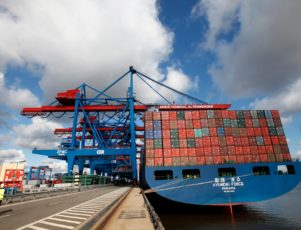
East African container port with cargo vessels at berth

The Red Sea corridor carries a substantial share of global container traffic between Asia, Europe and the Middle East. Since late 2023, security concerns around the Bab el-Mandeb strait have compelled carriers to divert vessels southward, with ripple effects extending far beyond the strait itself. Industry estimates suggest that rerouting around the Cape of Good Hope adds roughly two weeks to transit times and hundreds of thousands of dollars in additional fuel costs per voyage. Those costs translate into higher freight rates and steeper insurance premiums, ultimately squeezing food prices and industrial supply chains in economies along both coasts.

For ports in East Africa and the Gulf, the disruption has been simultaneously a pressure and a strategic opening. Facilities at Mombasa, Dar es Salaam and Djibouti have seen significant shifts in call patterns and cargo volumes as carriers reorganize their networks. Gulf hubs, particularly in the UAE, have had to adapt scheduling and warehousing capacity to accommodate new routing configurations. The question is no longer whether ports can absorb the shock. It is which ones can turn the reconfiguration into lasting competitive advantage.

The scale of the rerouting has been considerable. According to shipping analytics firms cited by Reuters, the share of Asia-Europe container traffic bypassing the Red Sea rose sharply from 2024, with several major liner operators suspending Red Sea transits indefinitely. That volume has to go somewhere, and the ports best positioned to capture it are those already investing in capacity and digital readiness.

How African and Gulf Port Operators Are Adapting

What distinguishes this period from previous disruptions is the pace at which port authorities and logistics firms across Africa and the Middle East have moved to innovate rather than simply react. Port management teams in East Africa have accelerated the digitalization of customs clearance, reducing dwell times and improving berth utilization to handle unpredictable call patterns. Several facilities have also expanded hinterland connectivity, investing in inland container depots and rail links to reduce congestion when vessel surges arrive.

In the Gulf, logistics operators have drawn on existing digital infrastructure to offer dynamic routing and cargo tracking services now in higher demand precisely because of the uncertainty that diversions introduce. Dubai’s position as a transshipment hub has given it particular flexibility: its port authority has adjusted scheduling windows and storage allocations to accommodate carriers rethinking their network designs. Saudi facilities at Jeddah and Dammam have similarly moved to enhance throughput capacity and speed up customs processing.

Logistics technology firms based in Nairobi, Lagos and Dubai are seeing growing interest in their products. Route optimization platforms and real-time cargo visibility tools have found new clients among freight forwarders and importers navigating cost and timeline uncertainty, according to reporting by Disrupt Africa and Wamda covering the regional startup space. This demand has accelerated both product development and fundraising for several of these companies, reinforcing a broader trend of logistics tech maturation across the Africa-Middle East corridor.

Insurance and trade finance present another dimension of the story. Maritime insurance premiums for Red Sea transit rose sharply after disruptions intensified, prompting some African traders to explore alternative risk-sharing arrangements. Regional development finance providers, including the African Development Bank, have examined how to support smaller traders most exposed to freight cost volatility, with some analysts calling for dedicated liquidity facilities linked to route disruption events. Carriers, meanwhile, have split between adding security surcharges and absorbing rerouting costs to retain long-term commercial relationships with African ports.

Long-Term Implications for the Africa-Middle East Corridor

The medium-term implications extend well beyond shipping timetables. African ports that adapt successfully stand to consolidate their roles as regional gateways and transshipment centers. The African Development Bank has argued in its infrastructure publications that port modernization can catalyze broader industrial growth by reducing logistics costs for manufacturers and agribusinesses. A sustained increase in traffic through East African facilities could therefore accelerate investment in adjacent activities such as cold chain logistics, warehousing and light processing.

For Gulf port operators, the disruptions have reinforced the strategic value of their geographic position as connectivity nodes between Asia, Africa and Europe. State-backed operators in the UAE and Saudi Arabia have used the period to deepen partnerships with African port authorities, including concession agreements and technical assistance arrangements that extend Gulf logistics expertise into Africa’s growing markets. These partnerships, when structured equitably, combine Gulf capital with African market access in ways that benefit both sides.

What the Red Sea episode has demonstrated is that the Africa-Middle East maritime corridor is not a passive conduit for global trade. It is a space where port executives, logistics entrepreneurs and trade finance professionals are actively shaping new patterns of connectivity. The disruption has accelerated cross-regional cooperation that calmer periods might have left unresolved, and the infrastructure investments now underway are unlikely to be reversed when the geopolitical situation eventually shifts.

Ports that have used the interval to build digital capacity, diversify their service offerings and lock in new commercial relationships are likely to emerge better positioned regardless of which route ultimately dominates global container flows. The Cape of Good Hope detour may prove temporary; the competitive reshaping of the Africa-Middle East logistics landscape is not.

Read more

African Agritech Startups Reshape How the Gulf Secures Its Food Supply

Comments (0) Business, Featured

Kenyan smallholder farmer using mobile agritech platform in field

A Strategic Rethink of Food Import Dependency

Gulf states import between 80 and 90 percent of their food, according to the Food and Agriculture Organization of the United Nations, making them acutely sensitive to disruptions in global supply chains. The pressures of recent years, from the COVID-19 pandemic to the war in Ukraine and its cascading effects on grain exports, have pushed food security to the top of policy agendas in Riyadh, Abu Dhabi and Doha. Traditional responses centered on securing land abroad or locking in long-term commodity contracts with established agricultural exporters. That approach is now giving way to technology-driven partnerships with African agritech companies.

Sovereign investors and state food security agencies across the Gulf Cooperation Council are increasingly directing attention toward African agritech, where startups are building digital infrastructure for farm finance and supply-chain traceability. The African Development Bank estimates that the financing gap for smallholder farmers across Africa exceeds 100 billion dollars annually, a structural deficit that digital platforms are beginning to address by connecting producers to credit and direct market access. For Gulf importers seeking resilient supply chains, these platforms offer not just commodity access but embedded relationships with agricultural ecosystems that are still expanding.

How African Founders Are Positioning Their Companies

The agritech sector across sub-Saharan and North Africa has expanded substantially over the past decade. Startups operating in Kenya, Nigeria, Morocco and Ghana have built platforms that aggregate smallholder supply, deliver mobile-based advisory services, and link farmers directly to export buyers through digitized logistics. African Development Bank data on agricultural finance indicates that digital tools measurably improve access to credit and reduce post-harvest losses in the markets where they have scaled. These are precisely the metrics that attract Gulf food security planners looking for supply partners capable of guaranteeing volume and provenance.

What is changing now is the nature of the capital entering the sector. Gulf sovereign wealth funds have historically invested in African infrastructure, real estate and energy. Their move toward agritech represents a more nuanced calculation: rather than owning farmland outright, they are backing the digital layers that sit above it, funding platforms that improve productivity and logistics without requiring direct land management. For African founders, this shift carries measurable commercial consequences. Access to Gulf distribution networks and government procurement contracts can transform a regional platform into a continental export hub.

Morocco offers a useful illustration of how this dynamic plays out in practice. Its position as a net agricultural exporter with a developed agro-processing sector, anchored by the government’s long-running Green Morocco Plan, has made it an early point of engagement for Gulf food investors. Moroccan producer networks supplying citrus, tomatoes and olives to Gulf markets have progressively adopted traceability and quality management systems, partly in response to import standards set by Gulf state food agencies. The digital infrastructure underlying that compliance was largely built by domestic and pan-African technology firms, not external contractors.

Capital and Governance: Data Sovereignty in Africa-Gulf Agritech Partnerships

The economic logic of these partnerships is clear enough. Less obvious, but equally significant, are the governance questions they carry. When a Gulf sovereign fund takes a stake in an African agritech platform, it acquires both a financial interest and a degree of influence over how that platform develops its services, sets pricing and manages farmer data. African founders and cooperative leaders are increasingly aware of this dimension. Some are structuring deals with explicit protections for local decision-making and data sovereignty, framing those clauses not as obstacles to investment but as conditions for long-term sustainability.

The African Continental Free Trade Area, which entered its operational phase in 2021, adds another layer of opportunity to this equation. As intra-African trade in agricultural goods deepens, the agritech platforms being built today may serve as the connective tissue of a new regional food system, one that links producers in East Africa to processors in West Africa and export hubs in North Africa before reaching Gulf markets. Gulf investment that funds this infrastructure now could gain privileged access to supply chains considerably larger in scale within a decade.

For smallholder cooperatives, the value of these partnerships ultimately depends on terms. Price transparency and data access rights are as consequential as the headline investment figure. Several African agritech companies have publicly emphasized co-ownership models and revenue-sharing structures as a way to distinguish their approach from platforms that capture data without redistributing value. Whether Gulf investors accept those terms at scale will be a defining question for the sector over the next few years.

The trajectory of African agritech and Gulf food security is, in the end, a story about two sets of actors each managing structural vulnerabilities through technology and negotiated partnership. African founders and their farmer networks are building systems designed to outlast any single investor relationship. Gulf food security agencies are seeking supply-chain resilience that no single commodity contract can provide. Where those interests align with equitable terms, the partnerships forming now may prove among the most durable economic ties linking the two regions.

Read more