
Gulf states have long understood that food is a strategic vulnerability. The UAE imports more than 80 percent of its caloric needs, according to figures cited under the country’s National Food Security Strategy. Saudi Arabia, whose non-renewable groundwater reserves are being rapidly depleted, has set explicit targets under Vision 2030 to reduce domestic agricultural water use and diversify international food supply chains. Qatar and Kuwait face structurally similar constraints. For all of them, the question is not whether to depend on imports, but how to make those imports more resilient and, over time, anchored in durable investment positions.
For much of the past two decades, the dominant Gulf response to this challenge was land. Sovereign funds and state-backed companies secured long-term leases on agricultural territory in Sudan, Ethiopia, Tanzania and elsewhere in Africa, directing production toward Gulf markets. Those arrangements generated sustained controversy in host countries, where critics argued that local food sovereignty was being traded for foreign capital with limited technology transfer or smallholder benefit. Several deals collapsed under political pressure. The model was not discredited outright, but it had clearly run up against its limits.
The pivot now underway is toward a different kind of partnership: investing in the technology layer that sits between African farmers and global markets.
African Agritech at the Center of a New Corridor
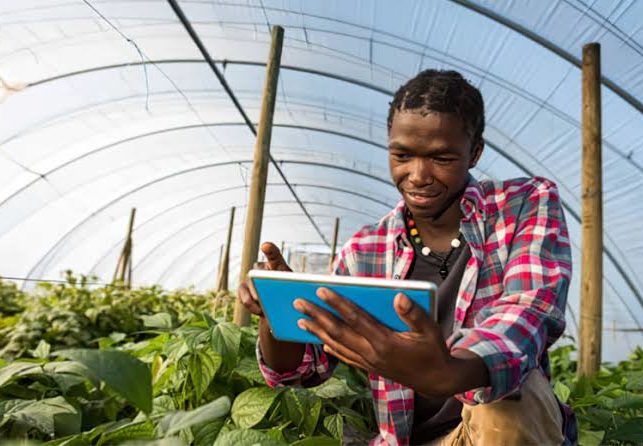
African agritech has grown substantially as a sector over the past five years. According to research compiled by Disrupt Africa, the number of agritech startups operating on the continent has increased year on year, with East and West Africa accounting for the largest share of activity. These companies range from input marketplaces and satellite-based advisory services to cold-chain logistics networks connecting smallholders to urban buyers. The problems they address are well-documented: the Food and Agriculture Organization estimates that post-harvest losses in many African markets reach 30 to 40 percent of total production, driven by poor storage infrastructure and fragmented supply chains, compounded by limited access to credit.
Kenya’s Apollo Agriculture, which uses satellite imagery and machine learning to extend bundled credit, fertiliser and crop insurance to smallholders, raised a $40 million Series B round in 2022, attracting investors drawn to both its financial model and its measurable impact on farm productivity. Twiga Foods, also Kenya-based, has built a digital marketplace and cold chain connecting smallholder producers to retailers in Nairobi, cutting out multiple layers of intermediaries. In Ghana, Complete Farmer operates a managed farming model that links vetted international buyers directly to local producers through a digital platform. Egypt has developed a cluster of agritech firms focused on water-efficient precision irrigation and controlled-environment agriculture, technologies with direct relevance to Gulf buyers managing their own water-constrained food systems.
It is in this landscape that Gulf capital is finding a new rationale. Abu Dhabi’s ADQ, one of the emirate’s sovereign wealth funds with an explicit mandate around food and agriculture, has positioned itself as an active investor in global food supply chain assets. Its interest in African agritech aligns with a broader UAE strategy of building stakes in companies that can eventually channel produce into Gulf supply chains while generating commercial returns. Saudi Arabia’s Public Investment Fund has similarly expanded its food sector portfolio, with international agricultural partnerships a growing component. These are not philanthropic gestures. They reflect a calculated recalibration of how Gulf states manage food system risk.
What the Corridor Means for Farmers and Policymakers
The emergence of this corridor raises questions that go beyond deal flow. The most important is who captures value, and on what terms. When Gulf capital backs an African agritech platform, benefits can flow in multiple directions: founders gain growth capital and farmers gain access to inputs and markets; Gulf investors, for their part, gain a stake in future food supply infrastructure. But those benefits are not automatic. Platform design, pricing structures and export orientation all shape whether smallholders see real income gains or simply become inputs in a supply chain that extracts value upward.
African policymakers are increasingly attentive to this dynamic. Kenya, Ghana and Egypt have established or are developing regulatory frameworks for agritech operations that include provisions on data ownership, farmer contract terms and local content requirements. The African Development Bank, through its Feed Africa strategy, has advocated for financing models that blend private capital with public safeguards, aiming to ensure that foreign investment in agriculture reinforces rather than displaces domestic food systems.
The governance question extends to cross-border data management. As agritech platforms accumulate granular data on soil conditions, crop yields and farmer behaviour, how that data is stored and monetised, and with whom it is shared, becomes a legitimate policy concern. Frameworks for agricultural data governance, analogous to the open banking standards being developed in fintech, are beginning to surface in discussions at the African Union and within regional economic communities.
For Gulf investors and African entrepreneurs alike, the corridor is real and expanding. The deals being made today, whether a venture round into a Kenyan input marketplace or a supply agreement between a Ghanaian managed-farm platform and a UAE-based food distributor, will set precedents for how this partnership operates over the long term. Getting the terms right matters not only for individual companies, but for the food security of two regions that share a compelling mutual interest in making agriculture work better.