
Africa’s AI Boom Runs Into a Compute Wall
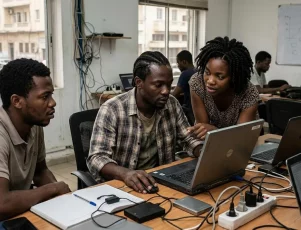
Africa’s artificial intelligence sector has expanded sharply over the past five years. Startups in Nigeria, Kenya, South Africa and Egypt are applying machine learning to healthcare diagnostics, agricultural yield prediction, credit scoring and logistics optimization, reaching users across multiple African markets from relatively modest bases.
Yet growth has run into a practical ceiling: compute power. Training and deploying AI models demands access to graphics processing units and large-scale cloud infrastructure, which remains expensive, scarce or high-latency across most of the continent. A 2023 report by the International Finance Corporation noted that inadequate digital infrastructure, including unreliable power supply and limited local data center capacity, continues to be a primary constraint on the competitiveness of African technology firms. This is not a peripheral concern. It directly shapes what kinds of AI products are feasible to build, operate and scale locally.
The result is a gap that African founders know well. Their applications are often among the most contextually relevant anywhere, designed around smallholder farmers, informal traders and populations with no formal credit history. But many of the most compute-intensive workloads still run on infrastructure in Europe or North America, adding latency and cost while raising questions about where user data actually resides.
Gulf States Build the Infrastructure Africa Needs
While African AI companies have searched for alternatives, the Gulf has become one of the world’s most active builders of AI-ready infrastructure. The United Arab Emirates launched its National AI Strategy 2031, committing to becoming a global hub for AI talent, research and deployment. Abu Dhabi-based G42, one of the most prominent AI holding companies in the Global South, has secured major partnerships with Microsoft and OpenAI, while positioning itself as a bridge between Gulf capital and emerging-market applications. Saudi Arabia established its Saudi Data and Artificial Intelligence Authority, known as SDAIA, in 2019 as a cornerstone of Vision 2030, and the kingdom now hosts cloud regions from major hyperscalers including Amazon Web Services and Microsoft Azure.
The scale of these investments is substantial. Both the UAE and Saudi Arabia have committed or attracted tens of billions of dollars to AI and cloud infrastructure over the past three years, according to official government communications from their respective AI and investment authorities. Critically, neither government frames this purely as a domestic modernization project. Official strategies explicitly reference the broader Global South as a partner market, an acknowledgment that Gulf AI ambitions require use cases, data sets and talent ecosystems that extend well beyond their own relatively small domestic populations.
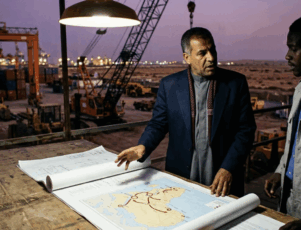
For African startups, this creates a genuine opening. Gulf cloud regions offer lower latency than European equivalents for workloads routed through East or North Africa. Gulf-based venture vehicles and sovereign funds are actively seeking exposure to high-growth but still under-served markets. And Gulf governments are establishing accelerator programs and co-investment frameworks that bring African founders into direct contact with regional infrastructure partners. The Africa-Gulf digital corridor, still in its early stages, is beginning to function as a practical alternative to the transatlantic infrastructure dependency that has defined African tech since the sector emerged.
Data Sovereignty and Investment Terms in the Africa-Gulf Corridor
The emergence of this corridor raises issues that African founders, regulators and civil society actors are only beginning to address. Data sovereignty is the most immediate. When an African healthtech company stores patient records in a data center in Abu Dhabi or Riyadh, it enters a different legal jurisdiction, one whose data protection frameworks may not align with the legislation being developed in Nigeria, Kenya or South Africa. Several African countries have passed or are drafting data protection laws inspired by the European Union’s General Data Protection Regulation, but cross-border enforcement mechanisms remain underdeveloped.
Equity in investment terms is another layer of complexity. Gulf capital is often patient and comes with strategic rather than purely financial objectives, which can suit African startups that struggle with the short exit timelines demanded by some venture funds. But it also introduces governance considerations around board composition, founder dilution and exit conditions that require careful negotiation. African startup associations have begun calling for standardized term sheets and greater investor education to ensure that cross-regional capital flows on balanced terms.
On the Gulf side, fund managers are learning to assess African market risks, regulatory complexity and currency dynamics. Knowledge that transfers readily within the Middle East does not always apply in Lagos, Nairobi or Accra. Several Gulf-based accelerators have responded by embedding Africa-focused programs and partnering with established African tech hubs to build this expertise from the ground up.
The underlying logic of the corridor is coherent: African markets supply use cases, talent and demographic reach, while Gulf partners bring infrastructure, institutional capital and access to global technology alliances. Translating that logic into durable, equitable commercial arrangements is the practical work now underway. How well African and Gulf actors manage it will shape not only the competitiveness of individual companies, but the terms on which both regions contribute to the global AI economy in the years ahead.




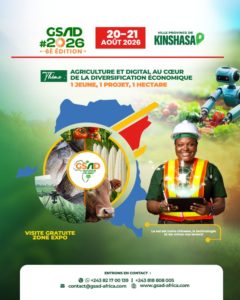 The GSAD Africa sessions are known for their strong focus on collaboration. By bringing together public institutions, private companies and startups, the event creates a space where ideas, partnerships and investment opportunities can emerge. Young innovators developing AgriTech solutions will have the opportunity to present their projects alongside established agribusiness leaders.