
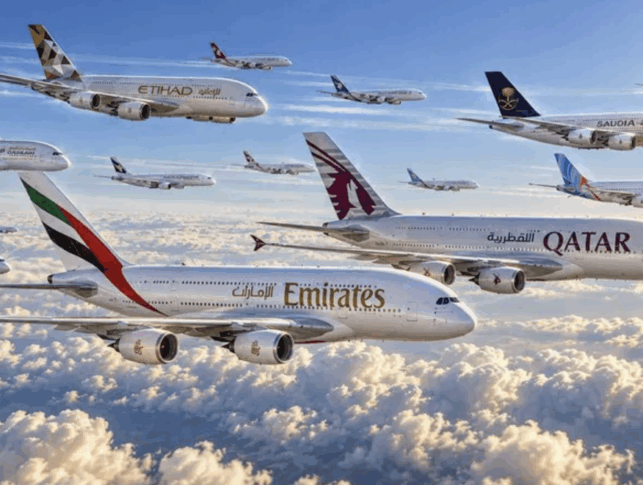
For most of the past two decades, the Africa-Gulf aviation relationship was largely a story of stopovers. Dubai, Doha and Abu Dhabi became indispensable hubs for passengers transiting between African cities and European or Asian destinations, with Gulf carriers building formidable networks across the continent. Emirates serves more than 20 African countries; Qatar Airways operates routes to over 30 African destinations. But the character of these flows is changing. Increasingly, African travelers and Gulf visitors make direct bilateral trips for purposes beyond transit: business, leisure, medical care or family visits within diaspora communities.
This shift reflects structural changes on both sides. Gulf states, particularly Saudi Arabia and the UAE, have invested heavily in domestic tourism infrastructure as part of broader economic transformation programs. Saudi Vision 2030 set an explicit target of attracting 150 million visitors annually by 2030, a figure cited by the Saudi Tourism Authority, and African source markets represent a largely untapped opportunity. The UAE has long drawn West and East African business communities to Dubai, and that foundation is now being extended to leisure and hospitality. On the African side, tourism ministers from Kenya to Morocco have recognized that Gulf visitors, who tend to record higher per-capita spending than many other source markets, merit deliberate policy attention.
Visa Reform and Route Openings as Strategic Moves
The clearest expression of this strategic intent is the wave of visa liberalization that has advanced across the continent. Kenya’s decision to abolish visa requirements for all nationalities, implemented in January 2024, is among the most sweeping examples. The Kenyan government framed the move as an explicit economic measure, anticipating higher tourist volumes and increased business travel. Rwanda’s policy of visa-free entry for all African nationals, in place since 2018, has contributed to positioning Kigali as a preferred conference and business travel destination, supported by investment in convention infrastructure and direct international services.
Airline route decisions track closely alongside these policy shifts. Low-cost Gulf carriers, including flydubai and Air Arabia, have extended their African footprints to cities beyond the established hubs of Lagos, Nairobi and Johannesburg. New or expanded services to Accra, Dar es Salaam, Kigali and other secondary cities reduce travel time and cost, broadening the pool of potential travelers in both directions. Ethiopian Airlines, Africa’s largest carrier by revenue and network, has simultaneously reinforced its Gulf services, using Addis Ababa as a competing hub. The result is a route map with more options and greater downward pressure on fares.
Gulf-based hospitality investment reinforces the same momentum. Regional sovereign wealth funds and hotel groups have gradually increased their exposure to African markets, from high-end lodges in East Africa to business hotels in North African capitals. Abu Dhabi’s ADQ holding company has built a portfolio of investments across African infrastructure and services, signaling a pattern that other Gulf vehicles are beginning to follow in the hospitality and real estate segments.
Local Entrepreneurs Navigate Opportunity and Concentration Risk
Behind the policy announcements and airline route maps, a more granular story is developing at the level of individual businesses and communities. African tour operators, hotel managers, restaurateurs and event organizers who serve international visitors are recalibrating their offerings to Gulf traveler habits, including language, dietary requirements and seasonal preferences. In Marrakech, Nairobi and Kigali, hospitality entrepreneurs report a measurable increase in Gulf visitors over the past two years and are adapting accordingly.
For local actors, the opportunity carries tangible economic weight. Tourism is a labor-intensive sector with documented multiplier effects across accommodation, food service, transport and cultural activities. The United Nations World Tourism Organization consistently ranks African tourism as one of the continent’s most accessible paths to foreign exchange earnings and formal employment. According to UNWTO data, Africa welcomed approximately 70 million international arrivals in 2019 before the pandemic disrupted travel; recovery has been uneven since then but generally stronger in markets that have combined visa liberalization with proactive marketing to new source countries.
The risks deserve clear-eyed attention. A high degree of dependence on a narrow set of source markets exposes destinations to volatility: a geopolitical rupture, a currency shift or a health crisis can rapidly suppress arrivals from a single country. African tourism boards and destination management organizations are increasingly aware of this, and many pursue multi-corridor strategies that treat Gulf visitor growth as a complement to intra-African and European demand rather than a replacement. Environmental sustainability and equitable benefit distribution remain live concerns, particularly in ecologically sensitive areas or wherever large hospitality investments bypass local ownership structures.
The Africa-Gulf Corridor at an Inflection Point
The Africa-Gulf tourism corridor is at an early but accelerating stage of development. Policy conditions are improving, aviation infrastructure is widening, and investment flows are beginning to reflect a genuinely bilateral logic rather than a one-way transit relationship. Whether these gains translate into broad-based economic benefit will depend on decisions made at national and local level: how governments reinvest tourism revenues and whether local businesses can position themselves to capture a meaningful share of visitor spending beyond the large hospitality groups. The potential of the corridor is real; its returns remain a matter of deliberate choice.