regional integration
Tag Archive

Success Stories from the African Continental Free Trade Area

Comments (0) Business, Featured

The African Continental Free Trade Area (AfCFTA) is often described as one of the most ambitious economic projects in the world. By creating a single market that connects more than 1.4 billion people across the continent, the agreement aims to reduce trade barriers, encourage investment, and strengthen economic ties between African nations.

While the initiative is still in its early stages, several success stories are already demonstrating its potential to transform Africa’s economic landscape.

Growing Opportunities for African Businesses

One of the most visible achievements of the AfCFTA has been the increased visibility of African products in neighboring markets. Small and medium-sized enterprises (SMEs), which represent the backbone of many African economies, are finding new customers beyond their national borders.

Food producers, textile manufacturers, and consumer goods companies are increasingly exploring regional export opportunities. Instead of relying solely on markets outside Africa, many businesses are discovering the benefits of trading within the continent, where demand is growing rapidly.

This shift is helping local companies scale their operations and become more competitive.

Strengthening Regional Value Chains

Another positive development is the emergence of regional value chains. Manufacturers are beginning to source raw materials, components, and services from neighboring countries rather than importing them from distant markets.

For example, agricultural products can be processed in one country, packaged in another, and distributed throughout the region. This creates jobs, encourages industrial development, and keeps more economic value within Africa.

By strengthening cooperation among countries, the AfCFTA is helping businesses build more resilient supply chains and reduce their dependence on external markets.

Encouraging Investment and Innovation

Investors are paying close attention to the opportunities created by the free trade area. A larger integrated market is attracting interest from both African and international investors who see long-term growth potential.

Technology startups are particularly well positioned to benefit. Digital payment platforms, logistics companies, and e-commerce businesses are developing solutions that make cross-border trade easier and more efficient.

As a result, innovation is becoming a key driver of economic integration across the continent.

Empowering Africa’s Entrepreneurs

Young entrepreneurs are among the biggest beneficiaries of the AfCFTA. With fewer trade barriers and access to larger markets, they can expand their businesses beyond national borders from an earlier stage.

This is especially important in a continent where a significant share of the population is under the age of 25. The free trade area offers a platform for ambitious founders to create businesses capable of serving millions of consumers across multiple countries.

Their success is helping to shape a more connected and dynamic African economy.

Looking Ahead

Challenges remain, including infrastructure gaps, customs procedures, and regulatory differences. However, the early results suggest that the AfCFTA is moving Africa in the right direction.

By promoting trade, encouraging entrepreneurship, and attracting investment, the agreement is creating new opportunities for businesses of all sizes. As implementation continues, the AfCFTA has the potential to become one of the most important drivers of economic growth and prosperity on the continent.

The success stories emerging today may be only the beginning of a much larger transformation for Africa’s future.

Photo : polity.org.za
Read more

Magreb Bank launches to drive regional economic integration

Comments (0) Featured, Middle East, Politics

Maghreb

The new Maghreb Bank for Investment and Foreign Trade is a significant step in efforts to create a regional economy.

The economic integration of five countries of the Maghreb region of Northern Africa took a step forward with the launch of the Maghreb Bank for Investment and Foreign Trade.

The bank will finance joint projects of the five member nations of the Arab Maghreb Union – Algeria, Libya, Mauritania, Morocco and Tunisia. It launched with $150 million in capital contributed by the member countries.

The bank will invest in projects including infrastructure, transportation, telecommunications and electrical power. It will also work to strengthen intra-Maghreb trade.

The bank, based in Tunis, was launched December 21. Nouerddine Zekri, former Tunisian Secretary of State for Development and International Cooperation, was named Senior General Manager of the bank.

A step towards integrating regional economies

The launch marks a significant step in the long-delayed effort to boost trade within the region by integrating the economies of the five countries, which together represent a market of about 100 million consumers.

Despite decades of regional political tensions, the economic appeal of the integration effort has remained strong.

Exports from and to countries within the region are extremely low and the integration promises to increase those. At the same time, most of the countries are highly dependent on trade with the European Union and more intra-region trade will reduce that vulnerability.

Integration promises to grow GDP

Economic integration would increase growth in GDP by an estimated 2-3 percent and increase job creation, according to one study, which called it a potential “game changer’’ for a region that is the least integrated in the world. On average, trade between the five countries represents only three percent of their global trade.

“The benefits would be significant. It could increase intra-regional commerce by 5-12% and stimulate job growth and help anchor stability,” the report from the Tunis Conference on Regional Economic Integration said.

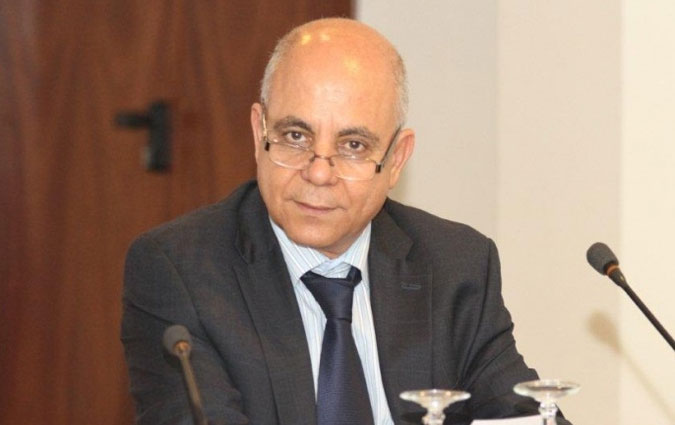
Nouerddine Zekri

Nouerddine Zekri, the first General Manager of the new Maghreb Bank

Boosting trade within the region

The report said trade within the region could grow by 5 to 12 percent with integration.

“This growth could in turn translate to significant job creation particularly if enhanced trade encompasses both goods and services,” the report said, noting that a consumer market of about 100 million would attract greater foreign and local investment and offer smaller businesses opportunities to expand.

National economies struggle

The growth would help economies that have struggled.

Since 2011, growth of GDP in the region has averaged only 2 percent, compared to 5 percent during the six years prior to the financial crisis of 2008. Economic growth has failed to keep pace with population growth. Unemployment is high, averaging 12 percent in Algeria, Morocco and Tunisia, according to the European Commission.

At the same time, the Maghreb countries are highly dependent on trade with the European Union, which proved to be vulnerability during the euro crisis.

Algeria, Libya, Morocco and Tunisia export as much as 70 percent of their products to the EU and those exports represent 20 to 30 percent of their GDP. Morocco and Tunisia also depend heavily on European tourists, which make up about 40 percent of their arrivals.

While one goal is to reduce dependence on exports to Europe, an integrated regional economy might create a more effective bargaining bloc to negotiate in with the European Union.

Political tensions, unrest stall progress

The five countries first signed the Treaty of Marrakesh agreeing to integrate in 1989. The framework for forming a bank was signed in 1991 but the actual bank was not approved until 2006.

Political tensions stalled the economic integration effort for more than two decades. Initially, disagreements between Morocco and Algeria over territory in the Western Sahara contributed to delays. More recently, political disruption and war created uncertainty about economic stability in the region.

The differing economic structures of the countries have also posed a challenge to integration. Morocco and Tunisia have relatively liberal market economies while Algeria and Libya economies were more tightly controlled. Mauritania’s economy is largely based on subsistence agriculture.

Among the five countries, Algeria and Morocco have the largest economies with $552 billion and $250 billion GDP respectively. The GDP of Mauritania, totals an estimated $8 billion.

Read more