

Vision 2030
Tag Archive

Dream of the Desert: Saudi Arabia’s Bold Bet on Luxury Rail

Comments (0) Business, Featured

Saudi Arabia is betting on a slower, more exclusive way to travel. With Dream of the Desert, the Kingdom is launching its first luxury tourist train, a project that blends hospitality, mobility and nation branding into a single moving experience. Far from being a nostalgic nod to old-school rail travel, this train is a strategic business tool designed to attract high-value tourism and reinforce Saudi Arabia’s Vision 2030 ambitions.

Developed in partnership with Italian luxury brand Arsenale Group and operated on the Saudi rail network, Dream of the Desert is expected to run across the country’s northern routes, notably between Riyadh, AlUla and Qurayyat. The train will feature around 40 luxury cabins, including suites, lounges and dining cars, accommodating roughly 80 to 90 passengers per journey. This is not mass transport. It is scarcity by design.

A moving luxury asset in the middle of the desert

Dream of the Desert is conceived as a five-star hotel on rails. Interiors are inspired by Saudi architectural heritage, with contemporary design, panoramic windows and bespoke furnishings. Onboard services are expected to include fine dining, curated cultural content and guided off-train excursions, particularly in destinations like AlUla, one of Saudi Arabia’s flagship tourism projects.

From a business standpoint, the numbers are telling. Luxury train journeys elsewhere in the world often sell for between 2,000 and 5,000 dollars per person for multi-day experiences. Saudi Arabia is positioning itself in this premium bracket, targeting international travelers who are willing to pay for exclusivity, storytelling and comfort rather than speed. With limited capacity and high price points, profitability relies on margins, not volume.

The train also capitalizes on existing infrastructure. By upgrading and reimagining rail assets instead of building entirely new ones, the project limits capital expenditure while increasing the value generated per kilometer traveled. It is a classic example of asset optimization, applied to tourism.

Why this train fits Saudi Arabia’s long-term strategy

Dream of the Desert is more than a tourism product. It is a narrative device. For decades, Saudi Arabia has been associated with oil, aviation and road transport. A luxury train crossing the desert sends a different message: one of openness, refinement and experiential travel.

Tourism is expected to contribute 10 percent of Saudi Arabia’s GDP by 2030, up from around 3 percent a decade ago. The country aims to attract 150 million visitors per year by the end of the decade. While Dream of the Desert will only host a fraction of those travelers, its symbolic impact is disproportionate to its size. It helps position Saudi Arabia as a premium destination, not just a new one.

There is also a sustainability angle. Rail travel produces significantly lower CO₂ emissions per passenger than short-haul flights, especially for domestic routes. For a country under increasing pressure to demonstrate environmental responsibility, promoting luxury rail fits the growing global demand for slower, more conscious travel without sacrificing comfort.

The project has not been without controversy. Critics point to the optics of launching a luxury train in a country where questions around human rights, freedom of expression and labor conditions remain central in international debates. Others question the relevance of ultra-premium tourism in a region facing water scarcity and extreme climate constraints, arguing that luxury infrastructure in the desert risks amplifying environmental pressures rather than alleviating them.

There is also skepticism about demand sustainability: with limited global precedent for profitable luxury rail in harsh climates, some analysts wonder whether the project will attract enough repeat international travelers to justify long-term operating costs

In the end, Dream of the Desert is not about getting from point A to point B. It is about redefining what the journey itself is worth. By combining luxury hospitality, cultural storytelling and strategic restraint, Saudi Arabia is testing a simple but powerful idea: in a world obsessed with speed, slowing down can be a premium business.

Photos : cnn.com
Read more

Kenyan Geothermal power continues its expansion

Comments (0) Africa, Business, Featured

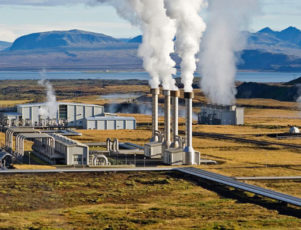
Kenya Geothermal Energy Project

Kenya continues to attract interest with its extensive geothermal energy schemes.

In the space of only a few years, Kenya has shifted its entire focus on energy, and created unprecedented growth in geothermal production. While hydro-electricity has long been the nation’s main source of power, the Kenyan government now hopes that by 2030 only 4% of the country’s energy will be hydro-electric. The notoriously unreliable rains of East Africa make a shift to geothermal power a sensible choice, and Kenya’s Great Rift Valley is proving to be a giant source of energy.

Power from within

It was back in the 1950’s when the first exploratory wells were dug in the Rift Valley. The Olkaria region of the area was quickly ascertained to have serious potential for energy creation. Under the surface there is a seething mass of geothermal activity that blanketsthe area with hot springs and bubbling, sulfuric fissures. It is no surprise that the national park in which Olkaria is found is known as “Hell’s Gate.”

Within 10 years of the first drilling, the Kenyan government, working alongside the UN, began more in-depth assessments of the energy potential that bubbled beneath the ground. By 1981, the first geothermal power plant had opened in Olkaria, with an initial output of 45 MW.

Kenya geothermal energy

Kenya geothermal energy

Harnessing this natural energy became a large project, with over $1 billion of investment over the next 20 years. However, it was an investment worth making, as Kenya’s energy demands have rocketed as the nation develops. Considering that in 2008 only 25% of the population had access to electricity, this demand was only going to increase. As such, the government developed its Vision 2030 program.

A bolder vision

Vision 2030 was launched in 2008 to outline Kenya’s plans for energy expansion that would facilitate rapid economic growth. However, droughts highlighted the unreliable nature of Kenya’s hydro-electric dependency, and in 2013 the project was updated with Olkaria’s geothermal plants the priority.

Olkaria expanded rapidly in the 21st century, with Olkaria II opening in 2003 and expanding its production in 2013. Olkaria III hosts a 110 MW generator to add to the combined power of 290 MW coming from Olkaria sites I and II.

As recently as 2014, Olkaria opened up site IV that hosts a further 140 MW of power, as the company KenGen has worked closely with multinational companies to further its production.

KenGen is the company responsible for Kenya’s geothermal production, and as a majority government owned body it has made massive inroads into expanding the energy supplied by the Rift Valley’s activity. Alongside companies like Toyota and Toshiba, KenGen has created a huge increase in the energy produced from Olkaria.

The financiers supporting its growth include the World Bank and the European Investment Bank, which hope that affordable, green energy will have even more far reaching effects. Diarietou Gaye, the World Bank’s country director for Kenya, said, “That’s why we are investing in the energy sector… [it] is a key infrastructure investment in the fight against poverty.”

This is borne out by figures quoted from KenGen CEO, Albert Mugo, who stated that the increased production from Olkaria had seen a 30% drop in energy costs for consumers since 2014.

Continued Growth

The expansion of Kenya’s geothermal power base is far from complete. The development of Olkaria V is already underway, and there are plans for an Olkaria VI site. Moreover, the fact that Kenya is now the 8th largest producer of geothermal energy in the world has attracted interest from neighboring nations. Ethiopian president Hailemariam Desalegn recently visited Olkaria, and the two nations have agreed to work side by side in the development of renewable energy.

Geothermal energy looks set to be at the forefront of Kenya’s energy revolution, and will surely play a vital role in the country’s continuing development.

Read more