Business
Category

Gauteng Emerging as South Africa’s App Development Hub

Comments (0) Africa, Business, Featured

South Africa app

Gauteng province in South Africa is fast emerging as a center for app development on the continent.

It wasn’t long ago that finding an Internet connection in Sub-Saharan Africa was next to impossible. Today, the scene couldn’t be more different: millions of young Africans are as connected to the Internet as their European or American counterparts. Through mobile phones and devices, many of the logistical challenges surrounding Internet infrastructure have been avoided. African businesses have been particularly aware of the potential of the Internet. Many small businesses are taking full advantage of the options available to them through app creation, and certain areas are fast emerging as app development hubs. According to Cassie Lessing, the Managing Director of the Strato IT Group, Gauteng Province, where both Pretoria and Johannesburg lie, is leading the way in app development.

In the Middle of it All

It comes as no surprise, then, that the province that is home to South Africa’s de facto and legal capitals should be a hub for innovation. As new businesses make their way into the market, app developers are highly sought after: the app economy is expected to create trillions of dollars of direct and indirect opportunities around the world, and Africa is no exception. The African Internet population is so mobile that they are poised to leapfrog directly into the era of apps, bypassing the cumbersome online experience. There are numerous websites where businesses can look for app development companies and individual developers, a fascinating look at the truly online nature of the future.

Already the country’s economic powerhouse, Gauteng provides app developers with more resources than they would have elsewhere. With a plethora of cool hang-outs and co-working spaces, young thinkers are able to learn from one another in informal environments, thus enriching each individual’s skill set. The apps that are being developed are varied and seem to span across nearly every field: news, government information, entertainment, healthcare services, mining, logistics, shopping and banking are just a few of the numerous industries in which apps have recently emerged.  “Economies rely on information to function effectively and the app economy represents a leap forward towards the goal of an informed and efficient knowledge-based society. Organizations that do not adopt and utilize the emerging technologies like mobility, digitization and cloud will be disadvantaged and lose out to the early adopters,” Lessing says.

Piloting the Future

Lessing’s company, the Strato IT Group, has been quick to capitalize upon the growing app market. Strato boasts an impressive “satisfied clients” portfolio, with big names such as Toyota, Deloitte and Babcock, to name a few. Unlike other companies in their field, Strato claims it prioritizes face-to-face relationships rather than the faceless services provided by mainstream IT companies. Ironic, given that a common side effect of mobile apps is to reduce the time users spend making face-to-face interactions with the world around them.

With a reputation built upon excellence, Strato has long been the go-to company for businesses looking to enhance their online presence. They now provide clients with app management, app development and consulting, as well as the newer “Application Management Outsourcing” (AMO) whereby Strato finds developers with the required “scarce skills” to handle a client’s needs.

The Strato IT Group has begun a pilot project whereby consumers (companies in need of apps) are able to connect with developers and be a part of the app creation process. This allows consumers to access experts while maintaining their company’s identity. “This approach not only serves to test and enhance product, but also provides valuable raw material for proof of concept and proof of value exercises,” says Lessing of the project.

The Future is Now

Strato exemplifies the opportunities available for businesses from any sector: connecting businesses with app developers not only increases the visibility of both parties, but provides users with services that increase ease of access. Apps developed through the Strato IT Group and elsewhere have already increased the efficiency with which South Africans can go about their daily lives: the recent launch of an app-accessible stock market, the creation of cheap fuel finding apps and app-based coupons have all made life a little easier and a little cheaper for South Africans.

Read more

Mauritius raises 2016 tourism earnings forecast by 1.8%

Comments (0) Africa, Business, Latest Updates from Reuters

PORT LOUIS (Reuters) – Mauritius said on Friday that tourism revenue in 2016 will be 1.8 percent higher than it had previously forecast, after a surge in visitors during the first half.

Tourism is a valuable source of foreign exchange for the tiny Indian Ocean country known for its luxury spas and beaches.

Earnings from the sector are now expected to reach 56 billion rupees this year, up from an earlier forecast of 55 billion in May, according to Statistics Mauritius, an official body.

Last year, tourism earnings totalled 50.2 billion rupees.

The statistics agency also raised its forecast for 2016 arrivals to 1,250,000 tourists from 1,240,000. Visitors in 2015 numbered 1,151,723.

In the first half of 2016, Mauritius attracted 586,464 tourists, up 9.9 percent from a year earlier.


(Reporting by Jean Paul Arouff; Editing by Aaron Maasho and Dominic Evans)

Read more

Beijing Automobile Intl Corp to invest $800 mil in S.African industrial zone

Comments (0) Africa, Business, Latest Updates from Reuters

JOHANNESBURG (Reuters) – Chinese state-owned Beijing Automobile International Corporation (BAIC) has signed a deal to invest 11 billion rand ($823.30 million) in an industrial zone in South Africa’s Eastern Cape province, the operator of the zone said on Thursday.

The deal will see BAIC open an automotive manufacturing plant in the Coega Industrial Development Zone near South Africa’s Nelson Mandela Bay, the Coega Development Corporation said in a statement.

($1 = 13.3608 rand)


(Reporting by TJ Strydom; Editing by Alexandra Hudson)

Read more

South Africa’s Truworths posts 12% rise in FY profit

Comments (0) Africa, Business, Latest Updates from Reuters

(Reuters) – South African clothing retailer Truworths International reported a 12 percent increase in full-year profit on Thursday, boosted by cash sales at its British unit Office Holdings, but falling short of estimates.

* Group retail sales for the 52-week period ended 26 June2016 increased by 46.1 percent to 17.0 billion rand ($1 billion)versus comparable period. * Headline and fully diluted headline earnings per share for52 weeks ended June 26 up 12 percent to 667 cents, but short of702 cents estimate by Thomson Reuters Smart Estimates. * Shares in Truworths down 6.7 percent at 85.34 rand by 1450GMT. * Cash sales outpaced sales on in-store credit as Britishfootwear chain Office sells only in cash and new rules in SouthAfrica hamper credit extension. * “Credit retail sales were significantly impacted by theintroduction of new affordability assessment regulations inSeptember 2015, which management estimates resulted in a loss ofbetween 200 million rand to 250 million rand in sales,” thecompany said. * Annual dividend per share up 12 percent. * “We expect the South African trading environment to remainchallenging during the 2017 financial period, with slow economicgrowth and rising inflation putting pressure on consumers,” thecompany said. * The trading environment in United Kingdom is also facedwith uncertainty after decision to withdraw from European Union,but is likely to be less uncertain as more clarity regardingBrexit emerges, the company said.


($1 = 13.3300 rand)


(Reporting by TJ Strydom; Editing by James Macharia)

Read more

Three-week South African fuel strike ends as union signs new pay offer

Comments (0) Africa, Business, Latest Updates from Reuters

CAPE TOWN (Reuters) – South Africa’s petroleum industry and striking workers agreed to a new two-year wage deal on Wednesday, ending a three-week strike that caused limited supply disruptions, an official representing employers said.

Around 15,000 striking workers affiliated to Chemical, Energy, Paper, Printing, Wood and Allied Workers union (CEPPWAWU) agreed a 7 percent wage increase this year and an April CPI plus 1.5 percent hike in the second year, said Zimisele Majamane, the deputy chairman of the National Petroleum Employer’s Association.


(Reporting by Wendell Roelf; Editing by James Macharia)

Read more

Egypt’s telecom regulator approves revised terms for 4G licences

Comments (0) Business, Latest Updates from Reuters, Middle East

CAIRO (Reuters) – Egypt’s telecoms regulator has approved revised terms for 4G mobile broadband network licences, and said it will send them out to operators on Sunday.

The government offered four 4G telecom licences in June, to Telecom Egypt and to the country’s three mobile services providers – Orange Egypt, Vodafone Egypt and Etisalat – but only Telecom Egypt accepted the terms. The regulator, keen to prioritise existing carriers, decided to revise them.

A senior official at the Telecommunications Ministry told Reuters on Wednesday that the revised terms include additional frequencies but there is no change in the pricing or the condition that 50 percent of the payment for the licences must be made in U.S. dollars.

“The telecom regulator approved the final terms of the 4G licences yesterday,” the official said, adding that companies would have until midday on Sept. 22 to accept them.

The National Telecom Regulatory Authority later issued a statement confirming it approved the final terms and that the companies had until Sept. 22 to accept.

The government, which is grappling with a shortage of hard currency as economic and political turmoil in Egypt in the past few years has deterred foreign investment, has said it hopes to raise 22.3 billion Egyptian pounds ($2.5 bln) in total in licence fees.


(Reporting by Ehab Farouk; Writing by Ola Noureldin; Editing by Greg Mahlich and Susan Fenton)

Read more

South African court sets aside Eskom’s electricity tariff hikes

Comments (0) Africa, Business, Latest Updates from Reuters

JOHANNESBURG (Reuters) – A South African court on Tuesday struck down some of the tariff increases granted to Eskom this year, saying the power utility had not followed the correct procedure when applying for a special claw-back, local media reported.

National energy regulator (Nersa) in March allowed Eskom a total tariff hike of 9.4 percent, of which part was an interim increase for running expensive diesel generators to keep the lights on in Africa’s most industrialised economy.

A court in Johannesburg on Tuesday granted the application by business organisations to set the regulator’s decision aside.

Had the interim increase not been granted, the tariffs would have risen by 3.5 percent from April 1, Moneyweb reported.

Eskom would not comment on the court’s decision directly, saying in a statement it would await a decision by the regulator.


(Reporting by TJ Strydom)

Read more

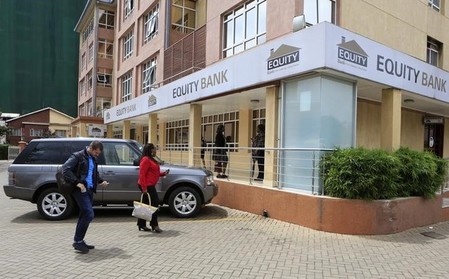
Kenya’s finance minister opposes capping of banks’ lending rates

Comments (0) Africa, Business, Latest Updates from Reuters

NAIROBI (Reuters) – Kenya’s Treasury opposes a move by parliament to cap commercial lending rates because other measures being put in place will help bring down borrowing costs over time, the finance minister said on Tuesday.

Parliament passed changes to the banking law two weeks ago to cap commercial interest rates at 400 basis points above the central bank’s policy rate, now 10.5 percent. The changes are awaiting presidential approval.

Henry Rotich, the finance minister, told Reuters his ministry preferred to improve the transmission of monetary policy signals to commercial rates and the creation of a central registry for collateral to cut rates, rather than capping them.

“Our approach in this issue is to deal with the root cause of why interest rates are where they are in Kenya,” he said.

The average lending rate was 18.2 percent last month, compared with 15.8 percent in July last year, the central bank said. The central bank cut its policy rate to 10.5 percent in May, having left it at 11.5 percent since July 2015.

Rotich said they were working to improve the Kenya Banks Reference Rate (KBRR) to ensure banks were pricing loans correctly.

Introduced by the government in 2014 to help rein in high costs of loans by offering a benchmark for banks to price their loans, the KBRR has been criticised widely for failing to help bring down interest rates.

“There is more room for refining the KBRR and banks are working on ensuring that the margins reflect the best pricing of loans,” the minister said without offering details.

He said a law to establish a central registry of collateral would be taken to parliament soon, enabling borrowers to transfer their loans between different banks easily and cutting costs of securing collateral once it is passed.

“We think these measures are going to help to bring down rates over a period of time,” Rotich said.

Kenyan banks have reported rising profits in the last decade, attracting foreign investors. Rotich said the growth of the sector had helped to boost the share of the population with access to formal financial services to 70 percent.

“We don’t want to rock that boat … Anything that reverses that would not be a good way to go,” he said.

The central bank also opposes capping interest rates saying it could restrict lending. It however wants banks to lower their rates.

Rotich said the government’s budget deficit for the fiscal year starting last month would be lower than the 9.3 percent approved by parliament, adding they would also raise money in capital markets abroad to avoid putting pressure on local rates by borrowing too much in the domestic market.

“Our strategy is to diversify our sources of funding so that we don’t borrow heavily domestically,” the minister said.

(By Duncan Miriri, Editing by Richard Balmforth)


Read more

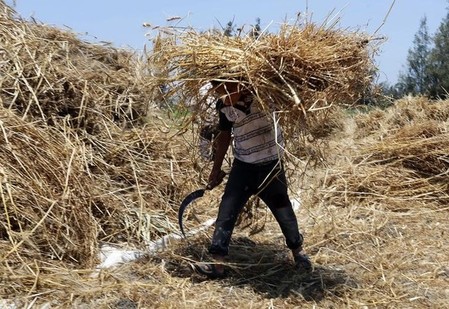
Congo copper output falls 14% in H1 on lower prices

Comments (0) Africa, Business, Latest Updates from Reuters

KINSHASA (Reuters) – Copper output in Democratic Republic of Congo, Africa’s top producer, fell 14 percent in the first half of 2016 to 466,250 tonnes as a global price slump led some mines to suspend production, the central bank said on Tuesday.

The decline is hammering the economy of the country, which derives about 95 percent of its export earnings from extractive industries.

In June, the government slashed its budget by 22 percent in response to low commodity revenues.

Congo, among the world’s top copper producers, produced 990,000 tonnes of the metal in 2015, down from 1.03 million tonnes the year before.

In a weekly report, the central bank also said production of cobalt, the metal used in lithium-ion batteries and of which Congo is the world’s leading producer, slid by 13 percent to 35,267 tonnes over the same period.

Benchmark copper on the London Metal Exchange lost 25 percent of its value in 2015 and has recovered only slightly this year, while cobalt prices are also down about 14 percent from this time last year.

Glencore’s Katanga unit, one of the country’s largest copper and cobalt producers, announced an 18-month suspension of operations last September and thousands of jobs have been lost in the sector since then as companies cut costs.


(Reporting by Aaron Ross; editing by Matthew Mpoke Bigg and Jason Neely)

Read more

A report from The South African Property Owners Association’s 2016 Convention

Comments (0) Africa, Business, Featured

SAPOA Awards

The South African Property Owners Association celebrated its 50th anniversary at its annual convention this year, with a renewed focus on development.

The South African Property Owners Association (SAPOA) is in its 50th year of existence, and its annual convention celebrated this landmark moment. However, while celebration of half a century’s existence was notable, so was a focus on the challenges that investors face in newly emerging markets. South Africa has changed almost immeasurably in the past 50 years, and trying to create an environment that encourages positive investments, both domestically and abroad, was key to most speakers.

Expanding African Investment

A focal point of the SOPOA convention was how to encourage foreign investors to embrace opportunities within Africa, as the body aims to create growth that will reward South Africa’s own developers and investors. The convention was held at the Sandton Convention Centre in Johannesburg, where leading figures in property development, from journalists to construction groups, met to exchange ideas on furthering the expansion of property ventures in Africa.

While much of any planned expansion will be within South Africa, many experts are hoping to encourage their own developers, and those from outside Africa, to see exciting opportunities across the continent. Experts agreed that investors needed to recognize that African property investment was a long-term game, and to treat the markets with the same respect that they would in America or Europe.

Bronwyn Corbett, the head of the pan-African property group Mara Delta, explained that patience was key as she said, “Many South African investors don’t actually know what happens on the ground in Africa and may expect things to happen more quickly.”

Mara Delta holds a property portfolio worth $430 million that spans 6 African nations, from as far north as Morocco to as southerly as Mozambique. Companies like Mara Delta offer South African investors opportunities to invest in these outside markets, and in turn help bolster the growth of property value within the nations where their holdings lie. The evidence suggests that a rising number of investors are seeing prospects in Africa. Ian Anderson, the chief investment officer at Grindrod Asset Management, told SAPOA listeners that a mounting number of companies were asking about openings within African property.

Likewise, South Africa’s largest real estate investment trust, Growthpoint Properties, is already working alongside Investec to find new assets outside of South Africa, and yet still within the continent.

The challenges faced

While a positive approach was extolled, any objective discussion of the continent’s opportunities had to address the difficulties that could be faced. By openly discussing some of the problems and concerns around property investment within Africa, organizers hope to find solutions, and assuage investor concerns.

One of the main problems discussed was that many investors felt concern over the varied currencies of Africa. Africa uses more than 40 difference currencies, and the process of exchanging these can be time consuming. In addition, many African banks suffer from a slower speed of service that can give investors cold feet.

Corbett and others also discussed concerns over limited debt facilities within some African markets, but she insisted that companies like Mara Delta existed to relieve investors of the need to understand every market’s nuances.

Moreover, despite the issues that came up, the tone from Corbett was one of optimism, as she stated, “Each African country is different. Each is a challenge, and it wouldn’t be worth doing this if it wasn’t a challenge.”

The Convention and its awards

SAPOA celebrated its 50th anniversary with a grand convention, which offered attendees the opportunity to enjoy golf courses and a banquet, alongside the more serious nature of the talks and presentations. As with all of SAPOA’s conventions there was also an awards ceremony to recognize outstanding performers within property.

Some of the most notable awards included the Mall of the South for best retail development, Google Head Office Building for the Overall Green Award, Mitchell’s Plain Hospital for the Overall Transformation Award, and Frank’s Place for the best residential development.

The most prestigious award for the 2016 SAPOA Property Development Awards in Innovative Excellence went to Lion Match Company.

As many financial markets face uncertain times, the experts at SAPOA felt confident that property will provide stable investments for many people, and Africa can offer an exciting and prosperous opportunity for those willing to invest.

Read more