JOHANNESBURG (Reuters) – South Africa’s rand edged up against the dollar on Wednesday but was still off recent four-month highs, with local political uncertainty as well as overall low risk appetite seen capping any significant gains.
Stocks opened slightly firmer, with the JSE securities exchange’s Top-40 index up 0.5 percent from Tuesday’s close.
At 0714 GMT the rand traded at 15.0350 to the greenback, gaining 0.4 percent from its previous close in New York.
The rand has however lost significant ground since rallying to 14.6050/dollar last week as investors cheered a court ruling that President Jacob Zuma unconstitutionally ignored a directive to pay for some of the state-funded upgrades to his home.
Zuma, who has been dogged by controversy since becoming president in 2009, survived an impeachment motion by the opposition on Tuesday thanks to the ruling African National Congress’s majority in parliament.
Investor sentiment has been shaky since Zuma inexplicably fired the former finance minister in December, raising fears that Pretoria might veer away from prudent fiscal policies.
“The rand is back above 15.00, but not only because of domestic events,” Standard Bank said in a note, pointing to a general sell-off in emerging market currencies.
“We still believe that the currency will struggle to maintain a foothold below 15.00 into mid-year.”
In fixed income, the yield on debt due in 2026 eased 2 basis points to 9.24 percent in early trade.
(Reporting by Stella Mapenzauswa; Editing by Tom Heneghan)
CAIRO (Reuters) – Saudi Arabia is expected to sign a $20 billion deal to finance Egypt’s petroleum needs for the next five years and a $1.5 billion deal to develop its Sinai region, two Egyptian government sources told Reuters on Tuesday.
The agreements are tabled to be signed on Thursday during a visit to Cairo by Saudi Arabia’s King Salman, a rare foreign trip.
Saudi Arabia, along with other Gulf oil producers, has pumped billions of dollars into Egypt’s flagging economy since the army toppled President Mohamed Mursi of the Muslim Brotherhood in 2013 after mass protests against his rule.
The Gulf Arab countries see the Muslim Brotherhood as a threat. Egypt is struggling to revive an economy which unravelled following an uprising that toppled President Hosni Mubarak in 2011.
The development deal for Sinai comes at a time when Cairo is fighting an Islamist militant insurgency there and discontent and poverty among the population there is rife, residents say.
The petroleum financing will have an interest rate of 2 percent and a grace period of at least three years, the sources said.
Separately, the deputy head of the Saudi-Egyptian Business Council said on Tuesday that Saudi businessmen will invest a total of $4 billion in projects including the Suez Canal, energy and agriculture, and had already deposited 10 percent of that sum in Egyptian banks.
(Writing by Asma Alsharif; Editing by Michael Georgy and Raissa Kasolowsky)
A tax dispute behind it, Djezzy receives approval to expand its 3G network in the fast-growing mobile market.
Djezzy, a long-troubled Algerian telecom, says it is on a path to growth after receiving approval to upgrade its network to 3G nationwide.
The upgrade could put Djezzy on a par with rival companies Mobilis, which offers 3G coverage in all 48 of Algeria’s provinces, and Ooredoo, which offers 3G in 36 provinces.
Djezzy currently has more than 18 million subscribers, almost half the market, but it offers 3G coverage in only 30 provinces. The company, in which the Algerian government has a 51 percent stake, said it would extend service to the remaining provinces this year.
Tax dispute slows Djezzy growth
Algeria’s mobile market is booming. However, Djezzy’s growth has been slowed by a lengthy dispute over back taxes that culminated in the Algerian government’s purchase of a majority share in the company in 2014.
VimpelCom, owned by Telenor ASA of Norway and Russian billionaire Mikhail Fridman, retained the remaining 49 percent of the Djezzy, and continued to operate Djezzy through their Optimum Telecom Algeria.
VimpelCom recently reaffirmed its commitment to the Algerian market.
Company will expand 3G nationwide in 2016
Vincenzo Nesci, executive chairman of Optimum Telecom Algeria, said in March that the company had received government authorization to deploy 3G services in all provinces of the country and would implement the expansion during the during the ‘first months’ of 2016.
The expansion follows a long period of crisis for the company.
The Algerian government barred Djezzy from importing SIM cards and other equipment starting in 2010 and the Algerian central bank blocked overseas transfers of funds – including paying dividends to the parent company – in a dispute over taxes Algeria said the company owed.
The government said Djezzy, at the time the country’s largest operator with 14 million subscribers, owed $600 million in back taxes.
Government buys share of company
Algerian regulatory hurdles also derailed a proposed sale of Djezzy to MTN, a telecom based in South Africa, for $7.8 billion.
Instead, the Algerian government bought a majority stake in Djezzy in 2014, in a deal that provided the parent company with $4 billion in cash and dividends after paying a fine of $1.3 billion to settle the Algerian tax claims.
Djezzy faces competition from two other major mobile network operators, Mobilis and Ooredoo, seeking to serve Algeria, which has a population of about 40 million.
Djezzy leads market, lags in 3G
According to an August 2015 report by Algeria’s Post and Telecommunications Authority, Djezzy leads in the total number of subscribers with 18.6 million, nearly half of the market. Mobilis has 13 million subscribers and Ooredoo has 11.7 million.
However, Mobilis leads in 3G subscribers, with 3.8 million, followed by Ooredoo with 3.4 million. Djezzy brings up the rear in 3G with only 1.25 million subscribers.
The regulatory agency said the market grew by 22.7 percent in 2014, compared to 2013. The total market generated revenues of about $3 billion in 2014, 8 percent higher than in 2013.
One study found that Algeria was one of the fastest growing mobile markets in the region along with the United Arab Emirates and Saudi Arabia, while the market was stagnant in Egypt, Kuwait and Israel.
Mobile revenue in the Middle East and North Africa was expected to grow from a total of $50.4 billion in 2013 to $59.1 billion in 2018. As more people consume information on their mobile devices, the study said primarily spending on handset data would drive growth.
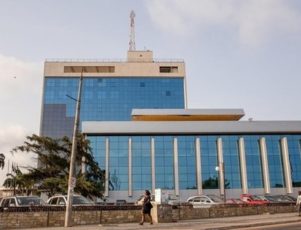
ACCRA (Reuters) – Ghana’s presidency appointed Abdul Issahaku as governor of the central bank on Monday, promoting the deputy governor to replace Henry Kofi Wampah, who is ending his four-year term early, a statement said.
The bank has worked to reduce inflation that has been persistently above government targets, just one of the problems facing a country following an International Monetary Fund aid programme to stabilise its economy.
(Reporting by Kwasi Kpodo; Writing by Matthew Mpoke Bigg; Editing by Kevin Liffey)
GENEVA/JOHANNESBURG (Reuters) – South Africa is considering imposing emergency tariffs on some iron and steel imports, it said in a filing to the World Trade Organization published on Monday.
South Africa’s steel industry body requested the temporary trade barrier because a surge in import volumes had caused the industry “serious injury” in the form of lower sales, output, market share and capacity utilisation, the filing said.
It blamed a global steel glut and measures by other countries to protect their steelmakers, as well as new investments by current steel importers, which meant South Africa could expect further increases of imports, the filing said.
The analysis was based on data from ArcelorMittal South Africa, which accounts for 70 percent of local production of the affected goods.
South Africa’s steel sector is facing catastrophe and ArcelorMittal may have to close down if the government does not act soon, labour union Solidarity said.
“If there are no concrete plans on the table to assist the struggling steel industry by the end of April, the primary steel industry in South Africa will perish,” said Solidarity’s steel spokesman Marius Croucamp. Another steelmaker, Evraz Highveld Steel and Vanadium, shut its doors in February, shedding around 2,200 jobs in the process. South African trade authorities indicated earlier that they would decide in June whether to aggressively protect steel manufacturers, Solidarity said, but this would be much too late according to the union. ArcelorMittal last month said it would raise steel prices from April as it tries to stabilise its business after heavy losses due to competition from cheap imports. South Africa last year slapped a 10 percent tariff on imported steel, but the emergency tariff, which would not apply to imports of stainless steel or silicon electrical steel, would provide much greater protection.
(Reporting by Tom Miles and TJ Strydom; editing by John Stonestreet)
MIT brings MENA’s smartest minds together for a universally beneficial competition.
On April 14, the smartest technology-oriented minds from the Middle East and North Africa (MENA) will meet in the Kingdom of Saudi Arabia for the third and final round of the MIT Enterprise Forum Pan Arab competition. Organized by the renowned Massachusetts Institute of Technology (MIT), this forum brings together innovative minds from 21 Arab countries to change the way we think, learn and access services.
In its 9th year, this competition brings together MENA’s smartest innovators in four tracks: ideas, social entrepreneurship, start-ups and The Silicon Valley Program. This year, more than 5,000 applications were received from 21 countries in French, English and Arabic. All finalist teams will receive top tier coaching from leaders in their respective fields; networking opportunities with budding and well-known specialists and the opportunity to learn from others in their category. The top three finalists will receive, in order, US$15,000, US$10,000 and US$5,000 to turn their ideas into tangible reality.
Ideas Track
20 teams are short-listed for the “ideas” track. In order to be eligible, candidates must form a team of at least two people including at least one Arab national; are not required to have a working prototype of their invention; are forbidden from having any current sales; and are not required to be registered or incorporated in any way, but are required to incorporate a company in one of the Arab countries in order to win prize money; applicants may not have received any previous funding for their idea; and the idea can be in any industry–technology, food security, health delivery or otherwise.
Since the goal of this competition is to bring fresh ideas into the global marketplace, much of the judging criteria for this track is based on the feasibility of an idea. Teams are judged on three criteria.
Experience: the value each member adds to the team and the relevance of each team member to the incubation and development of the idea
Innovation: the creativity of the idea and whether or not it improves upon an existing solution/business process or introduces a new solution to a current challenge in any field
Scalability: the relevance of the idea to the global marketplace is judged on whether markets outside of team’s community would find the product useful. At a minimum, teams are expected to be relevant on a national scale, and should be replicable on a global scale.
Social Entrepreneurship Track
The Social Entrepreneurship track is similarly judged for eligibility. Teams must have a minimum of two members with at least one Arab national, the team must have a registered social enterprise either for or non-profit, the core product/service must address a specific social challenge faced by marginalized/disadvantaged peoples, and the enterprise can be in any industry.
The 20 finalist teams are judged on similar criteria as above, but with different details.
Innovation: the product/service must provide a new way to tackle the specific social challenge the team is addressing
Scalability: the social enterprise should not be limited to a local market, but should be scalable to the national level at a minimum. Preferably, the model could be expanded and replicated as the enterprise grows, where relevant.
Social Impact: the team will be judged on the efficacy of the project, and the extent to which it benefits the targeted population
Financial Sustainability: the team must prove that their enterprise is financially sustainable in the long-term for both for-profit and non-profit enterprises
Startups Track
30 teams will be selected for the second and final round of the Startups Track competition. These teams must be comprised of a minimum of two members, one of whom must be Arab, must have a working prototype of their startup, must already generate more than $500,000 in revenue, must have been in operation for no more than 5 years, must be legally registered in any Arab country and the start-up may be in any industry.
The teams will be judged on the following:
Team: judges score teams based on their individual experience, the value added by each person and the relevance of each role
Innovation: the start-up will be assessed for creativity, and whether it replicates an existing product/service
Scalability: the start-up must be relevant outside of the local context and should be easily replicable in other relevant fields, regardless of location.
The Silicon Valley Program
Unlike the above tracks, the Silicon Valley Program competition will finish in September, when finalists receive a much more comprehensive and hands on package than the other finalists. The Silicon Valley Program brings entrepreneurs from 20 start-ups to Silicon Valley (in northern California, United States) for a week-long immersive program. Finalists will attend and participate in conferences and workshops with some of Silicon Valley’s most successful start-ups and learn how to successfully “pitch” ideas to funders. Mentors include current industry leaders as well as members of the Arab diaspora who are better able to speak to the specific challenges entrepreneurs from the MENA region face.
This program accepts a higher-level of start-up teams than the other tracks. Start-ups must have been in operation for more than two years, must have global or regional reach/presence, must have successfully completed one round of fundraising and must have more than $500,000 in revenue per annum.
The Rising Tide
Competitions like this provide an incredible opportunity for young, successful and intelligent people to gather and share ideas. Not only do they have the potential to receive funding to scale up their operations to the global level, but they receive invaluable exposure and mentorship opportunities. Previous winners include Visualizing Impact, a Lebanese social enterprise that operates a citizen data laboratory to share science, design and technology data for social justice outside of formal channels; Kotobna, an Egyptian team that provides alternate means for young Arab authors to publish and monetize their written work and Screen DY, a Moroccan team that created a platform for users to quickly build complex, culturally relevant apps for all mobile technology platforms.
This competition is an important hallmark for young Arab entrepreneurs. Benefitting from the experience of others while gaining exposure to other like-minded people can invaluably change the way people in the MENA region and beyond access knowledge, share information and obtain products.
CAIRO (Reuters) – Egypt’s General Prosecution is investigating around 15 exchange bureaus after the central bank reported them for hoarding dollars and contributing to Egypt’s currency crisis, two prosecution sources told Reuters on Sunday.
Central Bank Governor Tarek Amer is battling against a black market which is sucking up hard currency liquidity from the banking sector and hurting the pound, which has weakened to record lows of 10 per dollar versus an official rate fixed at 8.78 per dollar.
Amer met the general prosecutor on Saturday and requested an investigation be opened targeting around 15 exchange bureaus which he accused of fuelling a dollar crisis, prosecution sources said.
“Based on his request the prosecution … requested from the unit in charge of public funds to investigate these (bureaus),” one prosecution source said.
“(Amer) accused them of causing the dollar crisis by hoarding dollars and refusing to sell, which caused a rise in the price of the dollar,” he said.
Market sources say traders at exchange bureaus often do not sell at official rates, saying they do not have the dollars to sell. They then offer dollars at higher rates, unofficially, outside the exchange bureaus.
The central bank does not have an official spokesperson and officials are not available for comment.
Egypt, which relies heavily on imports, has been facing a dollar shortage since a popular uprising in 2011 drove away foreign investors and tourists, both major sources of hard currency.
The country’s foreign reserves had tumbled to around $16.5 billion in February from $36 billion in 2011.
On March 14 the central bank devalued the pound to 8.85 per dollar from 7.73 and announced it would adopt a more flexible exchange rate. Two days later it strengthened it to 8.78 per dollar and has held to that rate since.
Bankers and traders on the black market say the devaluation is failing to narrow the gap between official and unofficial rates because the demand for hard currency is high and the banks do not have the dollars to meet it.
In previous attempts from the central bank to narrow the gap between official and unofficial rates, officials from the central bank met with exchange bureaus and agreed on a range to curb prices on the parallel market.
In February, the central bank revoked the licences of four exchange bureaus after the first meeting failed to cap the price of the dollar at 8.6 per dollar.
(Reporting by Asma Alsharif, Ahmed Hassan; editing by Jason Neely)
With international sanctions lifted, a burgeoning industry looks beyond its domestic market of 20 million gamers.
Iran, known mostly in the West for its grim political and religious restrictions, has a burgeoning video game industry that is poised for growth as international sanctions are lifted in the wake of the international nuclear deal with Iran.
Iran has about 20 million video gamers, which represents about a quarter of the total population, according to the Iran Computer and Video Games Foundation. It’s notable that 60 percent of Iran’s population of 80 million is under 30 years of age.
With more than 38 million Internet users, more than half of them gamers, Iran “is the largest growing video games market in the Middle East,” the foundation said.
Games feature missile strikes
Iran’s video game industry is best known in the West for propaganda-driven warfare games such as Missile Strike, a 2015 release in which the Iranians break through Israel’s air defense system and launch missile strikes on Israeli targets, and Attack on Tel-Aviv, a 2011 release that simulates an Iranian military mission to the Israeli capital.
Iranian developers have said they created these games in response to a Battlefield 3, a game that simulates an invasion by United States forces in Tehran to search for the leader of a terrorist group and to look for nuclear weapons. Battlefield 3 was developed in Sweden and published in California.
“The reason we explicitly depict an attack on Israel is that they too are explicitly depicting attacks (on Tehran) in Battlefield,’’ Missile Strike developer Mehdi Atash Jaam said.
Popular games draw on Iranian mythology
Such militaristic games attract funding from conservative elements in the country. However, by many accounts, the most popular video games in Iran draw on the country’s rich history and culture rather than its contemporary international posturing.
For example, the popular Garshasp: The Monster Slayer, is drawn from Persian mythology. In Garshasp, released in 2010, the mythical hero with a hand blade fights in a series of epic battles against the evil Deevs who are trying to create an empire.
The game, created at a cost of $400,000 has sold more than 300,000 copies domestically.
A highly acclaimed 2014 release, Parvaneh: Legacy of the Light’s Guardians, features indigenous Iranian culture and promotes an Islamic lifestyle. It sold 85,000 copies in its initial release.
Most gamers are under 24
Clearly, there is an appetite for video games in Iran, especially among young people who make up such a large share of the total population. A survey by Techcrunch found that 67 percent of video gamers on mobile devices were under 24 and 80 percent were unmarried. Two-thirds play mobile games several times a day with the highest interest in action and strategy games followed by sports, racing and puzzles.
Since video game production began in Iran almost a decade ago, nearly 100 game studios have been established.
However, international sanctions have hurt Iran’s fledgling video gaming industry.
Developers have been unable to license their work and have limited ability to market it internationally.
Pirated games undermine domestic developers
While their games are relatively inexpensive, less than $10, the Iranian developers are often undercut by pirated versions of Western-produced games that have better production values yet cost only a few dollars.
When the prices are similar for one product developed by dozens of people at a cost of millions of dollars while another is developed at much lower cost by a small Iranian studio, “this makes for unfair competition,” said Mehrdad Ashtiani, production deputy at Iran Computer and Video Games Foundation.
Foundation provides funding and support
The foundation was established in 2007 with a gold of fostering the video game industry by providing funds and helping developers navigate government censorship restrictions.
Games such as Garshasp might not have been made but for foundation assistance.
The foundation also established a system for rating content and age appropriateness of digital content, including video games.
In January, the Iranian video game industry got some good news. United States and European officials lifted some of the harsher economic sanctions, which should open Iran to more investment from technology companies and video game publishers.
JOHANNESBURG (Reuters) – South Africa’s new vehicle sales fell by 14 percent year-on-year to 47,631 units in March, data from the trade and industry department showed on Friday.
Exports slipped 18.5 percent to 27,714 units compared with the same month last year, the department said.
(Reporting by Mfuneko Toyana; Editing by Tiisetso Motsoeneng)
NAIROBI (Reuters) – Kenya’s economic growth is expected to accelerate both this year and next, helped by low oil prices, improved agricultural output, a supportive monetary policy and infrastructure investments, the World Bank said on Thursday.
However, the bank also warned of possible risks, stemming partly from uncertainty over Kenya’s presidential, parliamentary and regional government elections scheduled for August 2017.
“These (risks) include the possibility that investors could defer investment decisions until after the elections, that election-related expenditure could result in a cutback in infrastructure spending and that security remains a threat, not just in Kenya, but globally,” it said in a report on Kenya.
Other risks to the outlook include subdued prices of coffee and tea, key hard currency earners, the World Bank added.
Kenya’s gross domestic product will increase by 5.9 percent in 2016 and by 6 percent in 2017, above an estimated 5.6 percent expansion last year, the bank said.
The east African nation’s government expects the economy to grow by 6.0 to 6.5 percent in 2016.
The World Bank cited the benefits of cheaper oil, good weather that is supporting farming, an appropriate monetary policy stance and sustained investments in roads and railways.
But while Kenya’s economy is faring better than others on the continent, it is still struggling to create enough jobs, which means a large section of the population is not enjoying the benefits of the economic expansion, the bank said.
Most of the jobs being created are of low productivity in the informal services sector, the World Bank said.
In the next decade, nine million young people are expected to join the labour market, with most of them getting work in small businesses due to a scarcity of formal sector jobs, it added.
“Formal firms will not create jobs for all young Kenyans,” the bank said in its twice-yearly Kenya Economic Update.
The World Bank said in another report in early March that while Kenya’s economic growth in the past decade may be remarkable by Kenyan standards, it was not even close to stellar when viewed from a broader perspective.
(By George Obulutsa. Editing by Duncan Miriri and Gareth Jones)