Business
Category

Ghana delays Eurobond it expected to launch on Friday

Comments (0) Africa, Business, Latest Updates from Reuters

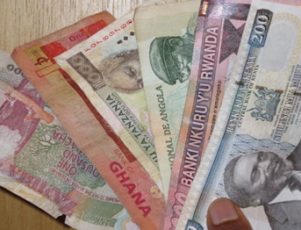
Ghana money

ACCRA (Reuters) – Ghana has postponed a Eurobond sale of up to $1.5 billion it had expected to launch on Friday amid a rise in borrowing costs for emerging market nations, a senior government official said.

Analysts said the delay, following roadshows in London and the United States, was probably a response to the prospect of having to pay higher yields after concerns about China’s economy and a possible U.S. rate rise roiled global markets.

Eurobonds issued by other commodity-exporting African countries have sold off sharply in recent weeks as metals prices have plunged.

Ghana’s planned issuance was mainly to refinance debt. The country is heeding an International Monetary Fund programme to stabilize its economy in the face of a fiscal crisis that includes a debt to GDP ratio around 70 percent.

Senior Ghanaian financial policymakers have concluded a roadshow in London and U.S. cities and are returning to Accra. Officials said the launch could still happen in the near future.

“What it means is that we are not closing the book (launching the Eurobond) today,” said the official, who declined to be named. “But we are still live in the market and could seal a deal anytime we deem fit.”

A finance ministry statement said Ghana continues to consider the bond issue subject to market conditions. Another senior official told Reuters there was significant interest in the bond but the yields were not attractive.

“The reason why the deal is not announced yet, I suspect, is that the government was surprised that the cost of funding was still elevated relative to their expectations,” said a London-based fund manager.

Investors were demanding a high premium despite a World Bank guarantee for the bond of $400 million and the government appeared to be considering cutting the bond to $1 billion or lower to get the desired pricing, the manager said.

The manager said Ghana wanted to pay a 9.5 percent yield for the bond, while a source involved in book running for the launch said the market was demanding closer to 11 percent.

Angola on Wednesday cancelled plans for a $1.5 billion Eurobond due to challenging economic conditions and has not set a new time frame for the issue.

GROWTH SLOWS SHARPLY

For years, Ghana had one of the strongest economies in sub-Saharan Africa thanks to exports of gold, cocoa and oil. But growth has slowed sharply in the last two years due to a fall in global commodity prices and economic instability.

The government forecasts GDP growth at 3.5 percent this year and is under pressure to boost the economy ahead of what is expected to be a tight election battle in 2016, when President John Mahama will run for a second term.

“The Eurobond is critical in helping to anchor stability in foreign exchange rates and for government to refinance existing Eurobond issues,” said Sampson Akligoh, managing director of InvestCorp investment bank, which is based in Ghana.

The cedis gained slightly on Friday against the dollar but a trader said sentiment could turn bearish next week if the bond was not launched, given the market expected inflows from it and a $1.8 billion cocoa loan.

The yield on Ghana’s outstanding 7.87 percent Eurobond due 2023 has surged to record highs above 11.3 percent, according to Tradeweb data.

The average yield premium investors demand to hold emerging sovereign dollar bonds over U.S Treasuries soared almost 100 basis points in the third quarter. It now stands at 470 bps, close to 6-1/2 year highs hit at the end of last month, according to JPMorgan’s EMBi Global index.

But the average premium demanded of African sovereigns rose by an even greater 160 basis points in the third quarter and stands at 520 bps over U.S. Treasuries on the EMBIG index, while Ghana’s premium has jumped by 200 bps in this period to 914 bps.

(By Matthew Mpoke Bigg and Kwasi Kpodo, Reuters)

Read more

South Africa’s Brait sells Steinhoff stake for $1 bil to pay debt

Comments (0) Africa, Business, Latest Updates from Reuters

Steinhoff-International-Holdings-Logo-EPS-vector-image

JOHANNESBURG (Reuters) – South African investment firm Brait SE sold its stake in Steinhoff International for about 16 billion rand ($1 billion) and will use most of the proceeds to pay off debt, it said Friday.

Brait, which earlier this year sold its stake in low-end retailer Pepkor to Steinhoff for a combination of cash and a minority stake in the furniture retailer, said it would up its stake in British supermarket chain Iceland Foods.

After netting 15 billion in cash from the sale of its Pepkor shares, Brait has been on a buying-spree, lapping up gym chain Virgin Active and Britain’s clothing retailer New Look.

But the Pepkor deal, one of the largest in South Africa, also left it with 200 million Steinhoff shares.

“Brait’s minority shareholding in Steinhoff was not aligned with the company’s strategy of acquiring majority stakes in sizeable unlisted companies,” the investment house said.

The company plans to use the bulk of the money to pay off 14.2 billion rand debt. Brait also said it would pay 172 million pounds ($262 million) to raise its stake to 57 percent from 19 percent in Iceland Foods.

Brait said it would fund the Iceland Foods transaction from the 350 million pounds raised in a convertible bond issue earlier this month.

($1 = 0.6567 pounds)

($1 = 13.8925 rand)

Read more

World Bank approves $500 mil loan for Tunisia

Comments (0) Africa, Business, Latest Updates from Reuters

TUNIS (Reuters) – The World Bank has approved a $500 million loan for Tunisia to help finance economic reforms and face the consequences of two big militant attacks targeting its tourism industry.

The bank said on Friday the operation would aid restructuring of state banks and administration as a way to help economic growth.

The North African state has mostly completed its democratic transition since the 2011 uprising that ousted Zine El Abidine Ben Ali. But international lenders want to see more economic reforms to help reduce the deficit and high public spending.

Read more

Orange in final talks to sell Kenyan mobile stake

Comments (0) Africa, Business, Latest Updates from Reuters

NAIROBI (Reuters) – France’s Orange SA is in the final round of negotiations with an unidentified party to sell its 70 percent stake in Orange Kenya, Kenya’s finance minister said.

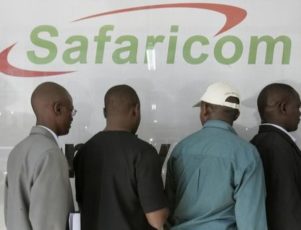
Orange is the latest international operator to quit Kenya, where Safaricom, part owned by Vodafone, has 67 percent of Kenya’s 36 million mobile users.

“(Orange) wants to exit so they are selling their 70 percent,” Finance Minister Henry Rotich, who oversees the government’s 30 percent shareholding in Orange Kenya, told Reuters. “They are in final negotiations.”

Without naming the other party, Rotich said he expected the transaction to be completed “very soon”, adding that it could be completed before the end of year.

Orange paid $390 million for its stake in 2007, aiming to capitalise on what were fast growth rates in the sector. Its plan was to make the firm, then known as Telkom Kenya, profitable and then to take it public in five years.

Orange was not immediately available for a comment.

Faith Mwangi, a research analyst at Standard Investment Bank, said Orange Kenya has struggled in recent years despite enjoying a monopoly in fixed-line telephones.

“They essentially failed to innovate,” she said, adding Orange’s strategy of offering cheaper calls had helped it claw back some market share in recent years.

Orange increased its users to 4.0 million in the quarter ended June from 3.7 million in the previous quarter, industry regulator Communications Authority of Kenya said.

“They have been consistently gaining market share,” Mwangi said.

One of Safaricom’s main advantages has been the development of its pioneering M-Pesa mobile money system, which allows users of even the most basic mobile phones to make payments. Rival offerings have yet to break Safaricom’s dominance.

Kenya has two other telecom operators, India’s Bharti Airtel and Finserve, which is owned by one of the country’s biggest banks’ Equity. India’s Essar Telecoms sold its Kenyan business, Yu, last year after it failed to make it profitable.

Read more

Africa and the Middle East: Going Mobile

Comments (0) Business, Featured, Middle East

ME mobile

By Enu Afolayan, Contributor

Going mobile. That’s the tune businesses, and marketers, are singing in the Middle East and Africa as the end of 2015 nears. If you don’t have a plan or haven’t started one, for the mobile marketplace, then you are at risk at being a generation behind the competition. You’re still driving a moped while everyone else is passing you by in their sleek, new electric cars that are almost driving themselves. Moreover, they are working on an app for that.

The people of the MEA market are snatching up mobile devices at a rapid rate and are second only to the Asia-Pacific market as the largest users of mobile phones. According to eMarketer, an independent market research company, 606 million people in the region have at least one mobile phone. They expect an increase to over 789 million in 2019. That’s a lot of phones. That’s a lot of people with phones who use mobile services and are increasingly buying goods and other services with them.

(more…)

Read more

Mauritius MCB Group full-year pretax profit up 26 pct

Comments (0) Africa, Business, Latest Updates from Reuters

PORT LOUIS (Reuters) – Mauritius Commercial Bank Group’s (MCB) pretax profit for the full year to June rose 26 percent to 6.90 billion rupees ($195.19 million) on the back of higher net interest income, fees and commissions, it said on Tuesday.

MCB, the biggest bank by market value in East Africa and the Indian Ocean region, said that net interest income increased by 12 percent to 8.15 billion rupees in spite of pressures on margins posed by excess liquidity and restrained demand for credit locally amidst subdued private investment.

In a statement, MCB said loan book growth was supported by its international financing activities.

Net fee and commission income rose 17 percent to 3.36 billion rupees, driven by growth in revenues from regional trade finance, wealth management and card business activities.

“We are confident to grow the business further, which should result in higher profits for FY 2015/16,” the statement said.

Earnings per share rose to 24.04 rupees from 18.34 rupees.

Shares at MCB Group closed lower at 206.50 rupees from 207 rupees before the results were released.


Read more

ICCO to move to Abidjan, seeks new Executive Director

Comments (0) Africa, Business, Latest Updates from Reuters, UK

LONDON (Reuters) – The International Cocoa Organization said it will begin moving its headquarters from London to Abidjan, the commercial capital of Ivory Coast, later this week following an improvement in the security situation in the world’s top producer.

The ICCO originally agreed to relocate from London in 2002 but civil unrest disrupted the process which was subsequently suspended. The relocation will begin on Oct. 1 and should be completed at the latest by March 31, 2017.

The inter-governmental body, which has been based in London since its founding in 1973, originally sought to stabilise global prices through operating buffer stocks but has more recently provided statistical data and supported projects to develop cocoa production and trade.

The ICCO also said Executive Director Jean-Marc Anga had launched the process of recruiting his successor. He has been in the role since 2010.

The organisation aims to elect a new Executive Director at a council meeting in September 2016, a spokesman said.

Read more

The Fraught Four: China’s Economic Crash Has Serious Consequences for Four Southern African Nations

Comments (0) Africa, Business, Featured

Africa-China-trade-007

By Enu Afolayan, Contributor

China is a superpower. If there was any lingering doubt as to this, it should have been erased as the widespread fall-out from China’s recent economic crash became evident. For Sub-Saharan Africa in particular, the impact of the crash was particularly harsh.

The stock market crash on August 24th had several immediate consequences: the yuan was devalued, there was a huge injection of capital into the Chinese economy to support financial markets and the risk of a decrease in Chinese tourism worried many nations.

China is the number one trading partner for most African countries. It has more than $20billion USD in investments in addition to billions in development aid. China is one of the biggest customers for Africa’s robust resource-selling market, particularly for mined minerals and crude oil. The devaluation of the yuan against the dollar will likely result in less demand for African goods as the purchasing power of the yuan plummets, thus increasing the relative price for Chinese consumers. For South Africa, Angola, Zambia and Sierra Leone in particular, China’s economic troubles may be manifested in crippling ways.

(more…)

Read more

Novartis launches chronic disease programme for poor countries

Comments (0) Africa, Business, Latest Updates from Reuters

ZURICH (Reuters) – Drugmaker Novartis AG has begun a programme in Kenya, Ethiopia and Vietnam to supply 15 low-cost medicines to fight chronic diseases like diabetes and high blood pressure.

The Swiss-based pharmaceuticals group said on Thursday its Novartis Access scheme would supply drugs for just $1 per treatment per month to governments, aid groups and others for a range of conditions that also includes cardiovascular and respiratory disease.

The drug list include Novartis’s valsartan for hypertension, vildagliptin for diabetes, and generics from its Sandoz division including tamoxifen for breast cancer. The company aims eventually to expand the scheme to 30 developing countries.

Responding to past criticism of the industry over the cost of medicines in low-income countries, many firms including Novartis, Roche and GlaxoSmithKline already provide drugs at lower prices than in the developed world.

Novartis chose Kenya, Ethiopia and Vietnam for their “great but diverse access challenges” and because it already has a strong presence or ties to non-governmental organisations there.

“This will allow us to support the delivery of medicine by building awareness of key non-communicable diseases and strengthening healthcare system capabilities in these diseases, including diagnosis and treatment,” Novartis said.

It did not immediately return phone calls seeking details.

The United Nations has highlighted concerns over the developing world’s ability to cope with escalating chronic disease, citing data showing about 85 percent of premature deaths from non-communicable diseases occur in developing countries.

Four-fifths of the world’s 350 million diabetes sufferers are in developing nations, and the U.N. estimates more than 40 percent of adults in many African countries have high blood pressure.

Other companies have also publicised similar efforts.

Amid pressure on the pharmaceuticals industry to do more, GlaxoSmithKline in 2009 agreed to slash drug costs for poor countries. Novartis’s cross-town rival, Roche, is working with the government in Ivory Coast to provide medicines for breast cancer and hepatitis.

(By John Miller, Reuters)

Read more

Starbucks’ partner sees potential for 200 S. African cafes in five years

Comments (0) Africa, Business, Latest Updates from Reuters

JOHANNESBURG (Reuters) – Starbucks’ local partner sees potential for more than 200 of the U.S. chain’s coffee shops in South Africa within five years, it said on Wednesday, as it prepares to open the country’s first Starbucks’ outlet next year.

Starbucks signed an agreement with Taste Holdings in July that licensed the South African restaurant operator to develop and run Starbucks-branded coffee shops in Africa’s most advanced economy.

The first store is expected in Gauteng province, the region that includes Johannesburg, within the first half of 2016, Taste said in a statement.

“Market analysis has identified a conservative market opportunity of more than 150 outlets in South Africa today. We foresee this growing to more than 200 in five years,” Taste said.

Taste, which also operates Domino’s Pizza outlets in South Africa, said it would start with at least 12 outlets in the next year before expanding further.

Global restaurant brands are increasingly investing in Africa to join established international players such as McDonald’s Corp in tapping a growing middle class.

Starbucks’ entry into South Africa will pit it against established brands such as unlisted Cape Town-based Vida e Caffè, a local firm with more than 60 outlets.


Read more