Governance-linked financing: beyond the standard budget loan
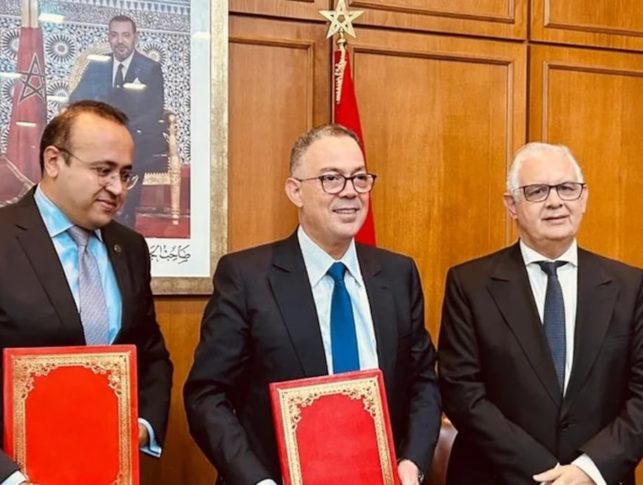
Morocco and the African Development Bank (AfDB) signed a €434.4 million financing agreement on 13 November 2026 in Rabat, formalising the third phase of the Economic Governance and Climate Change Resilience Support Programme, known as PGRCC-Phase III. The signing brought together Fouzi Lekjaa, Morocco’s Minister of Economy, Finance and Public Performance, and Achraf Hassan Tarsim, the AfDB’s Country Manager for Morocco. According to African Leadership Magazine, the programme “aims to accelerate the structural transformation of the Moroccan economy” while helping the country withstand external and climate-related shocks.
What distinguishes PGRCC-Phase III from a conventional sector or infrastructure loan is its design logic. Rather than financing a single project, it conditions disbursements on institutional reform milestones, linking AfDB capital to measurable governance outcomes. The operation sits within AfDB’s Global Energy and Fertiliser Crisis Response Framework, a facility designed to deliver counter-cyclical support tied to structural change, not simply to ease fiscal stress.
This approach reflects a broader evolution in development finance across the continent. Earlier budget support operations often focused on stabilising public accounts after external shocks. PGRCC-Phase III treats governance as infrastructure in its own right: an asset that must be built and maintained if Morocco’s economy is to attract the private capital required to meet its social and climate commitments.
Two components: state reform and climate-energy governance
The programme rests on two distinct components. The first focuses on public sector capacity. It aims to restructure the portfolio of state-owned enterprises and modernise the country’s public-private partnership (PPP) framework. The programme also targets improvements to the broader business climate, with the objective of creating conditions that draw private investors into sectors where state incumbency has historically constrained competition. Small and medium-sized enterprises are an explicit target: by reducing administrative bottlenecks and deepening their access to global value chains, Moroccan policymakers hope to channel the reform dividends into the part of the economy where job creation is fastest.
The second component addresses climate and energy governance. It aims to modernise the regulatory frameworks governing the water and electricity sectors and integrate climate considerations more systematically into public investment decisions. The programme also supports Morocco’s transition to lower-carbon energy. The country faces acute and growing water stress linked to recurrent drought cycles, and its electricity system must absorb a rising share of renewable generation while maintaining reliable supply. Governance weaknesses in either sector would directly undermine both climate targets and business competitiveness, making this component as much a matter of economic risk management as environmental policy.
Together, the two components represent a coherent theory of change. The state steps back from areas where the private sector can perform better, while simultaneously strengthening the regulatory capacity it needs to manage climate risk. That combination is what gives PGRCC-Phase III its structural significance for Morocco’s economic model.
Morocco’s reform delivery under AfDB conditionality
The measure of success will not be the €434.4 million itself but whether the reforms it supports produce a discernible shift in investment conditions on the ground. Morocco has made significant commitments in green hydrogen and renewable energy infrastructure, but converting those commitments into bankable projects requires a predictable PPP regime and transparent public contracting. These are precisely the gaps PGRCC-Phase III is designed to close, as reported by AllAfrica in its analysis of the programme’s governance priorities.
Lekjaa’s ministry will need to demonstrate that PPP modernisation translates into faster project approval cycles and stronger contractual protections for private partners. For SMEs, the signal will come through fewer regulatory barriers in export procedures and better access to financing instruments linked to value-chain participation. Neither outcome is automatic, but the conditionality structure built into the AfDB agreement creates a formal accountability mechanism that makes backsliding more visible to external observers.
The AfDB’s decision to proceed with a third phase of the same programme is itself notable. Multilateral lenders do not typically continue governance-support series without evidence of progress on earlier commitments. That progression from phase one to phase three implies a track record of delivery in Rabat, even if the ambition of this latest phase is substantially higher than its predecessors.
A template worth watching beyond Morocco’s borders
Morocco’s experience has potential relevance for African governments facing similar configurations of climate exposure, fiscal constraint and investment shortfall. The governance-linked financing model piloted through PGRCC-Phase III applies in principle to any economy where public enterprise reform and PPP development intersect with climate risk management as joint priorities. Countries across North and West Africa face comparable institutional challenges, and how Morocco implements this phase will offer practical lessons about sequencing and regulatory capacity that neighbouring governments and development partners will watch closely.
The agreement also points to a direction of travel for AfDB’s own portfolio. The bank has been moving towards operations that shape incentive structures and institutional frameworks rather than simply channelling capital into discrete physical assets. If PGRCC-Phase III succeeds in producing a more competitive business environment and a more resilient climate governance architecture in Morocco, it will strengthen the case for scaling this approach across AfDB’s continental portfolio.
For now, the work is in Rabat. The agreement is signed, but the milestones that will determine whether the financing delivers its intended effects lie ahead: in regulatory reforms and tender procedures, in water sector decisions that rarely attract headlines but ultimately determine whether institutional change translates into economic growth. That implementation challenge, backed by €434.4 million in AfDB support, may prove to be one of the more consequential bets Morocco’s economic leadership has placed this decade.