
Author

South Africa’s rand firmer, but will struggle to sustain gains

Comments (0) Africa, Business, Latest Updates from Reuters

JOHANNESBURG (Reuters) – South Africa’s rand was a tad firmer against the dollar on Wednesday, in a market anticipating an interest rate hike as the central bank fights inflation pressures.

But analysts said the rand was not likely to gain on a sustainable basis, being at the mercy of general risk aversion as investors worry about the impact of slowing growth in China.

At 0651 GMT the rand was trading at 16.4050 versus the dollar, up 0.09 percent compared with where it ended Tuesday trade.

Just one month into 2016, the local currency has already weakened nearly 6 percent against the greenback, dragged down by concerns over sluggish domestic growth and a slowdown in the world’s second biggest economy.

“Aside from domestic factors, the rand will continue to be vulnerable until markets in China calm down,” NKC African Economics said in a note outlining short-term risks to the domestic currency.

“Higher local interest rates will not remedy this situation even if the central bank hikes significantly in the first quarter of 2016 as the rand remains at the mercy of broader emerging market sentiment.”

South African stocks looked likely to start slightly firmer, with the Top-40 futures index ALSIH6 up 0.36 percent prior to the start of trade at 0700 GMT.

On the debt market, the yield for the 2026 benchmark government bond eased 2 basis points to 9.635 percent.


(Reporting by Stella Mapenzauswa; Editing by Ed Stoddard)

Read more

Mozambique’s Nyusi fires deputy central bank governor

Comments (0) Africa, Latest Updates from Reuters, Politics

MAPUTO (Reuters) – Mozambican President Filipe Nyusi has fired the central bank’s deputy governor António Pinto de Abreu, the president’s office said on Tuesday, without giving a reason.

The sacking of de Abreu, who has been deputy governor of the Bank of Mozambique since Dec. 2010, comes ahead of its annual meeting later this week.


(Reporting by Manuel Mucari; Writing by Stella Mapenzauswa; Editing by James Macharia)

Read more

Nigerian minister tells MTN to drop lawsuit over fine

Comments (0) Africa, Business, Latest Updates from Reuters

By Julia Payne

ABUJA (Reuters) – South African cellphone operator MTN should drop its legal action over a $3.9 billion fine imposed in Nigeria to help facilitate talks on a possible settlement, the Nigerian telecommunications minister said on Tuesday.

The Nigerian Communications Commission (NCC) slapped a $5.2 billion fine on MTN in October for failing to disconnect users with unregistered SIM cards but after weeks of negotiations reduced it by 25 percent.

MTN, which makes about 37 percent of its revenue from Nigeria, then filed a suit in the West African country questioning NCC’s legal grounds for imposing the penalty.

“I’m not aware of any out-of-the-court settlement,” telecoms minister Adebayo Shittu told reporters.

Shittu said President Muhammadu Buhari will have the final decision on the matter, adding that MTN might be advised to withdraw the court case filed against the fine.

“If they withdraw it creates a better environment, an environment where there is no stress or pressure on either side,” he said.

A judge in Lagos, Nigeria’s commercial capital, last week gave the company until March 18 to try to reach a settlement with the Nigerian authorities over the fine. The prospect of a lower fine boosted MTN shares.

The fine equates to more than twice MTN’s annual average capital spending over the past five years.

Nigeria has been trying to halt the widespread use of unregistered SIM cards amid worries these are being used for criminal activity, including by the militant Islamist group Boko Haram.


(Writing by Ulf Laessing and Chijioke Ohuocha; Editing by Kevin Liffey and Keith Weir)

Read more

Bank of Ghana keeps benchmark interest rate at 26%

Comments (0) Africa, Business, Latest Updates from Reuters

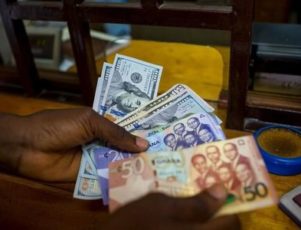
ACCRA (Reuters) – Ghana’s central bank kept its benchmark policy rate at 26 percent on Monday citing moderation in the pace of consumer inflation, its governor Henry Kofi Wampah said.

The West African nation is under a three-year aid program with the International Monetary Fund (IMF) to support an economy dogged by high fiscal deficits and public debt, with consumer inflation consistently above government target.

The Bank of Ghana had set the current rate in November, its highest level in 12 years.

“The current tight monetary stance, supported by the continuing fiscal consolidation and improvement in the energy situation have led to a low risk in the outlook,” Wampah told journalists.

Ghana’s consumer inflation rose marginally to 17.7 percent, one of the highest in the West African region but Wampah said the central bank’s monetary tightening in recent months could limit any further rise.

“Going forward, the committee expects the slower pace of price changes to continue and steer inflation down towards the medium target band of eight percent, plus or minus two percent,” Wampah said.

Ghana’s economy is expected to pick up speed this year, even as the government abides by IMF-set spending limits, and Wampah said the bank had begun its zero financing of the budget deficit limit placed on it under the aid deal.

The country is preparing to hold presidential and parliamentary elections in November which are expected to produce a tight race between President John Mahama and Nana Akufo Addo of the main opposition New Patriotic Party, partly due to economic concerns.


(Reporting by Kwasi Kpodo; Editing by Edward McAllister and Dominic Evans)

Read more

Ivory Coast rains don’t end cocoa farmers’ worries

Comments (0) Africa, Business, Latest Updates from Reuters

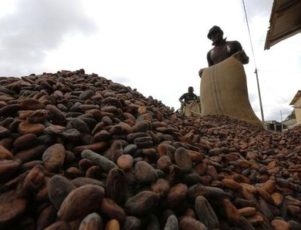
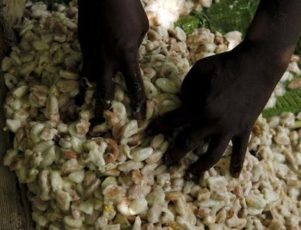
ABIDJAN (Reuters) – Rain that has fallen in many of Ivory Coast’s cocoa growing regions will aid the April-to-September mid-crop but damage caused by the Harmattan wind remained a concern for some, farmers said on Monday.

The Harmattan is a wind that usually blows from the Sahara during December to March. At its peak it can destroy cocoa pods and sap soil moisture, making beans smaller. Ivory Coast is also in its dry season from mid-November to March.

Farmers said their eyes were on the April-to-September mid-crop since most of the main cocoa crop was complete.

In the western region of Soubre, at the heart of the cocoa belt, an analyst reported 37 millimetres of rainfall in the spell, compared with none last week.

Salame Kone, who farms in the outskirts of Soubre, said farmers were pleased with the rainfall this week and hoped it would continue so the mid-crop would start well. But the main crop had ended poorly, he said, adding:

“There are few pods on the trees. The flowers of the main crop weakened a great deal.”

In the eastern region of Abengourou, known for the good quality of its beans, farmers reported one good downpour followed by the return of the Harmattan dry wind.

N’Dri Kouao, who farms near Niable, said little of the main cocoa crop remained and predicted that, if the weather persisted, the mid-crop would disappoint.

“The rain is good but the return of Harmattan worries us because it is drying up the leaves and the flowers,” said Kouao.

Similar growing conditions were reported in the western region of Duekoue.

In the centre-western region Daloa, which produces a quarter of Ivory Coast’s national output, farmers reported no rain, adding that persistent drought had weakened trees.

Farmer Albert N’Zue said the mid-crop may be small in the first three months because of the weather conditions.

“Many trees will not endure for a long time if it doesn’t rain soon,” said N’Zue.

Downpours were reported in southern regions of Divo and Aboisso.


(Reporting by Loucoumane Coulibaly; Editing by Keith Weir)

Read more

South Africa’s Amplats sees FY profit plunging on impairments

Comments (0) Africa, Business, Latest Updates from Reuters

JOHANNESBURG (Reuters) – South Africa’s Anglo American Platinum Ltd (Amplats) on Monday flagged a sharp fall in full-year earnings due to impairments, write-downs and restructuring costs in bid to survive plunging in commodity prices.

Headline earnings per share, the main gauge of profit that strips off certain one-off items, is expected to be down to between 25 cents and 55 cents compared with earnings of 301 cents a year earlier.

Amplats, a division of Anglo American Plc, is undergoing tough cost cutting to deal with plunging prices and low demand for its precious metals and the effects of a crippling five-month strike in 2014 at its biggest operation.

The top platinum producer said the fall in profits was due to efforts to make the business more efficient, cash generative and lean by reorganising operations and structure.

Anglo American, the world’s fifth-biggest miner by market value, is on a drive to sell more assets and whittle its business down to three divisions to cope with sharp fall in commodity prices.

Amplats said headline earnings per share would have risen to 412 cents if it had excluded the impact of the restructuring costs, a loan to its joint-venture partner Atlatsa and the increase in inventory.


(Reporting by Zandi Shabalala; Editing by Gopakumar Warrier)

Read more

South Africa’s MTN aims to settle Nigerian fine out of court, shares jump

Comments (0) Africa, Business, Latest Updates from Reuters

JOHANNESBURG (Reuters) – A judge has given South African telecoms company MTN Group until March to try to reach a settlement with the Nigerian authorities over a disputed $3.9 billion fine, sending its shares 8 percent higher.

The Nigerian Communications Commission (NCC) imposed the penalty on MTN last year for failing to disconnect users with unregistered SIM cards.

Nigeria has been trying to halt the widespread use of such SIM cards amid worries these are being used for criminal activity, including by the militant Islamist group Boko Haram.

MTN has been lobbying against the fine and has already seen it cut from an initial figure of $5.2 billion.

The judge at the Federal High Court in the Nigerian city of Lagos on Friday adjourned the case until March 18 to allow the parties to try to reach an agreement, MTN said in a statement.

The prospect of a lower fine boosted MTN shares.

Dobek Pater, the managing director of research group Africa Analysis, estimated that a fine that could satisfy both parties would between $1 and 2 billion.

MTN, which is led by Executive Chairman Phuthuma Nhleko makes about 37 percent of its revenue from Nigeria, and the current fine equates to more than twice its annual average capital spending over the past five years.

Nhleko was put in charge for up to six months in November to help to steer the company through the crisis.

The group is also fighting allegations for not paying tax in Cameroon..


(Reporting by Thekiso Anthony Lefifi; Editing by Keith Weir)

Read more

Zimbabwe gets $200 mil Afreximbank loan to import maize

Comments (0) Africa, Business, Latest Updates from Reuters

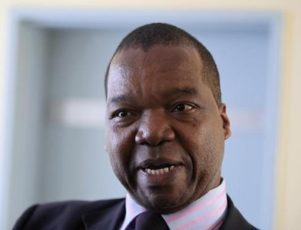
HARARE (Reuters) – Zimbabwe has secured a $200 million loan from Africa Export and Import Bank (Afreximbank) to import maize following a drought that will see 10 percent of the population facing hunger, the central bank governor said on state radio on Friday.

The Southern African nation of 13 million people said early this month it planned to import up to 700,000 tonnes of the staple maize this year to avert hunger as the El Nino weather pattern brings poor rains and affects crops.

“We have arranged a facility of $200 million from Afreximbank and we will be importing from anywhere in the world,” John Mangudya was quoted saying by state radio.

He did not say how much the country would import.

Mangudya said Zimbabwe had 250,000 tonnes in its strategic reserves, adding that the country had enough maize to last until September. Private millers have previously said maize stocks would not last beyond June.

The United Nations World Food Programme said some 14 million people face hunger in Southern Africa because of a drought that has been exacerbated by an El Nino weather pattern.

Zimbabwe’s annual maize consumption is 1.5 million tonnes but the 2015 harvest was half that following another drought.

Agriculture is critical to Zimbabwe’s economy, generating 30 percent of export earnings and contributing 19 percent to GDP, while 70 percent of the population still survives on farming.


(Reporting by MacDonald Dzirutwe; Editing by James Macharia)

Read more

Ivory Coast set for GDP growth of 9.8% in 2016

Comments (0) Africa, Business, Latest Updates from Reuters

ABIDJAN (Reuters) – Ivory Coast’s economy will grow by 9.8 percent this year, up from 9.5 percent in 2015, Budget Minister Abdourahmane Cisse said during a news conference on Thursday.

The world’s top cocoa grower, and French-speaking West Africa’s largest economy, has averaged growth of around 9 percent over the past four years, according to the government, as its economy has rebounded from a decade of political turmoil and civil war. The International Monetary Fund last year predicted average growth of 8.4 percent in 2015 and 2016.


(Reporting by Loucoumane Coulibaly; Writing by Joe Bavier)

Read more

Kenya’s current account deficit to fall: central bank

Comments (0) Africa, Business, Latest Updates from Reuters

NAIROBI (Reuters) – Kenya’s current account deficit will fall in 2015 and 2016 and the country’s economy will be supported by macroeconomic stability and low oil prices, its central bank governor said on Thursday.

Patrick Njoroge said the current account deficit was forecast to fall to 8.5 percent of gross domestic product in 2015, from 10.4 percent the year before, and narrow further in 2016.

The currency of the East African country is expected to remain stable after losing 11 percent of its value against the dollar in 2015, he told a news conference.

“We are now closer to the fundamentals,” he said, citing the narrowing current account deficit.

The central bank kept its benchmark lending rate at 11.5 percent on Wednesday, saying its current stance was adequate to dampen inflation.

Njoroge said that high commercial bank lending rates, at above 17 percent in December, were “troubling” but that liquidity was now evenly distributed among banks after getting skewed following the collapse of one bank.

Njoroge said he was open to “real” dialogue with shareholders of Imperial Bank – under receivership since October – and reiterated the fate of the bank will be clearer in March.


(Reporting by Duncan Miriri; Writing by George Obulutsa; editing by Edith Honan and Toby Chopra)

Read more