
Business
Category

Nigerian interbank rate eases on liquidity boost

Comments (0) Africa, Business, Latest Updates from Reuters

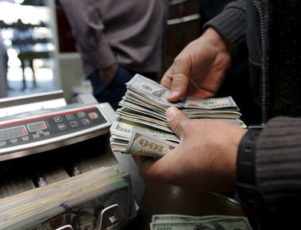
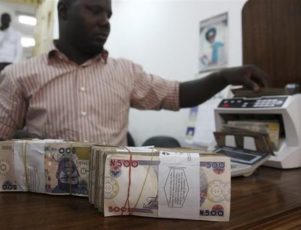
LAGOS (Reuters) – Nigeria’s overnight lending rate eased marginally to 0.75 percent on Wednesday from 1 percent in the last five weeks after the central bank refunded cash set aside by banks to buy dollars.

Traders said the impact of the refund and anticipated injection of additional cash from November budgetary allocations to states and local government also helped to reduce cost of borrowing among banks.

However, the secured open buy-back (OBB) — the rate at which lenders can borrow from the interbank market using treasury bills as collateral — held flat at 0.5 percent it has traded in the last five weeks, far below the central bank’s benchmark rate.

Traders said about 300 billion naira additional funds are expected from the budget disbursal before the close of business on Wednesday.

They said although market liquidity dropped to around 230.5 billion naira on Wednesday from 400 billion naira on Friday, it was expected to rise again helped by the refunds and possible budget disbursals.

“We expect the cost of borrowing to stay flat for the rest of the year as most businesses wind down and tidy their books for the financial year ending,” another dealer said.

The Nigerian money market reopens next Tuesday.


(Reporting by Oludare Mayowa; Editing by Raissa Kasolowsky)

Read more

France’s Total eyes fuel stations in Angola, signs MOU

Comments (0) Africa, Business, Latest Updates from Reuters

LUANDA (Reuters) – France’s Total has signed an memorandum of understanding with Angola’s Sonangol, a first step to opening fuel stations in the southern African nation, Total told Reuters on Wednesday.

Angola, the continent’s second biggest oil exporter, said in October it is reorganising its oil sector and state-owned Sonangol, but details about the changes have been sparse.

Total, the largest foreign oil company producing in Angola, said the MOU was signed by chief executive Patrick Pouyanné on Monday and paves the way to a network of Total-branded stations in Angola.

“In a first phase, products would be obtained through Sonangol,” said a Total spokesman.

Sonangol has a refinery in Luanda that produces 56,000 barrels per day.

The state-owned company said in a separate statement the agreement could represent an investment of hundreds of millions of dollars, with benefits both immediate and long term.

“This action, via a consolidated partnership between the two companies, embodies the government’s strategy to liberalise trade in the sector,” Sonangol said.

Total said it will give more detail once the shareholder agreement with Sonangol is signed.

Angola’s finances have suffered as a result of a sharp slide in oil prices since mid-2014 as oil output represents 40 percent of its gross domestic product.

Sonangol is under pressure to show how it is boosting the downstream potential in Angola, which is a major producer of crude, but does not refine enough to meet its own fuel demand.


(Reporting by Herculano Coroado; Writing by TJ Strydom, editing by William Hardy)

Read more

Nigeria orders MTN to pay $3.9 bil fine by Dec 31

Comments (0) Africa, Business, Latest Updates from Reuters

ABUJA (Reuters) – South African mobile phone operator MTN will have to pay a $3.9 billion fine imposed by Nigeria for failing to disconnect users with unregistered SIM cards by Dec. 31, a source in the Nigerian telecommunications regulator said on Wednesday.

Nigeria’s telecoms regulator had cut the fine from an initial $5.2 billion after weeks of lobbying by Africa’s biggest mobile phone company to get it reduced.

“Appropriate action will be taken,” should MTN fail to meet the deadline, the source said, asking not to be named and giving no further details.

MTN said this month it would challenge the decision in court.

Nigeria has been pushing telecoms firms to verify the identity of subscribers amid worries unregistered SIM cards were being used for criminal activity in a country facing the insurgency of militant Islamist group Boko Haram.

The fine came months after Muhammadu Buhari swept to power in Africa’s biggest economy following a campaign in which he promised tougher regulation and a fight against corruption.


(Reporting by Felix Onuah; Writing by Ulf Laessing, editing by William Hardy/Keith Weir)

Read more

Most of Zambia plunged into blackout

Comments (0) Africa, Business, Latest Updates from Reuters

LUSAKA (Reuters) – Zambia was plunged into a blackout on Tuesday affecting almost the whole of the country, the state power utility Zesco Ltd said.

“Almost the whole country except for Southern and Western province has experienced a power failure but we are yet to establish what has caused it,” Zesco spokeswoman Bessie Banda told Reuters.

Most of Zambia was affected by a power blackout on Dec. 11 because of a technical fault and supply was restored only the following day.

The southern African country, the continent’s second biggest copper producer, has been grappling with power shortages related to a searing drought as levels in the Kariba dam, which provides much of the nation’s electricity, drop.

Zambia’s Konkola Copper Mines (KCM), owned by Vedanta Resources, said after the Dec. 11 blackout it would suffer slight output losses.

An electricity shortage and weaker copper prices due to slower growth by top consumer China have threatened output and jobs in the mining industry, with the slow-down putting Zambia’s currency on the back foot against the dollar.


(Reporting by Chris Mfula; Writing by Ed Stoddard and Richard Balmforth; Editing by Kevin Liffey)

Read more

Bargain buying lifts South Africa’s stocks, rand weak

Comments (0) Africa, Business, Latest Updates from Reuters

JOHANNESBURG (Reuters) – South African stocks rose to a more than two-week high on Tuesday, bolstered by bargain hunters and a recovery in oil prices from its lowest level in more than a decade, while the rand dipped in holiday-thinned trade.

The benchmark Top-40 index rose 1.2 percent to 44,900.59, while the broader All-Share index rose by the same margin to 49,780.33.

“What we are seeing is a bit of buying before the close of the quarter,” said Sanlam Private Investments’ portfolio manager David Peacock. “Some stocks were oversold, so now we are seeing some nibbling [back].”

A recovery in oil prices from 11-year lows as investors unwounded some of their bearish bets on the battered commodity also helped boost stocks such as petrochemicals company Sasol, which rose by 2.61 percent to 393 rand.

Other gainers included Africa’s largest mobile operator MTN, which gained 4.53 percent to 141.16 rand, while its rival, Vodacom added 2.34 percent to 151.72 rand.

Among the losers was Tiger Brands, which fell 1.81 percent to 318.00 rand.

Trade was light, with 153 million shares changing hands on the stock market, according to preliminary bourse data, well below the average of 183 million shares.

On the forex market, the rand weakened in shallow, range-bound trade following its brief relief rally ahead of the holiday season.

Trade is expected to be subdued for the remainder of the year as most domestic market players are on holiday, and with no major economic news to provide direction for the rand.

By 1523 GMT the rand had weakened 0.49 percent to 15.1700 per dollar compared to 15.1030, where it closed overnight in New York.

“We expect the rand to hover around R15/$ for the rest of the year,” said NKC African Economics analyst Bart Stemmet. “We see risks to the rand at its current levels to be balanced.”

Government bonds were weaker, with the benchmark paper due in 2026 adding 9 basis points to 9.445 percent.


(Reporting by Nqobile Dludla and Thekiso Lefifi; Editing by Ed Stoddard)

Read more

Egypt’s central bank tightens import controls to boost local production

Comments (0) Business, Latest Updates from Reuters, Middle East

CAIRO (Reuters) – Egypt’s central bank will tighten import regulations from January in a bid to support local manufacturing and better preserve its dwindling foreign currency reserves.

Egypt, which depends on imports, has faced a currency crisis since a 2011 uprising drove foreign investors and tourists away. Hard currency reserves have more than halved $16.4 billion since then.

The decision excludes imports of medicine, foods, and other essential goods such as wheat.

The central bank said it aimed to “strengthen the national economy and promote local products, enhancing their competitiveness against foreign products,” in a statement on Tuesday.

Egyptian manufacturers have been pushing for stricter regulations to stop importers putting artificially low values on customs bills to avoid duties, a widespread practice that makes it difficult for local products to compete on price.

Egypt had imports worth $60.8 billion in 2014/15, compared with exports worth $22.1 billion, said Beltone Financial economist Ziad Waleed.

“They are just fine-tuning the present regulations amid the foreign currency shortage. This definitely could increase the pressure on importers,” he said.

The statement said that banks should obtain documents for imports directly from foreign banks, instead of obtaining them from the clients as is the practice currently. This is to stop any manipulation of receipts by importers, the Egyptian customs authority said on Tuesday.

Importers will also have to provide 100 percent of the cash deposit on letters of credit for imports instead of the current 50 percent.

“The central bank is trying to use all available measures to try to limit imports and this could limit the import of luxury goods, but it is not the key solution that would solve the foreign currency shortage,” Waleed said.

Egypt’s central bank has been rationing dollars and keeping the currency artificially strong at 7.7301 through weekly dollar auctions, giving priority to imports of essential goods.


(Reporting by Asma Alsharif and Ehab Farouk, editing by Louise Heavens)

Read more

Zambia to introduce sliding mineral royalty tax in 2016

Comments (0) Africa, Business, Latest Updates from Reuters

LUSAKA (Reuters) – Zambia, Africa’s second largest copper producer, will in the first quarter next year introduce a new sliding mineral royalty tax that will be adjusted depending on metal prices, a government spokesman said on Tuesday.

Zambian royalty taxes will range between 3 percent and 9 percent depending on the global price of metals, presidential spokesman Amos Chanda said.


(Reporting by Chris Mfula; Editing by Joe Brock)

Read more

Is Donald Trump alienating the Middle East?

Comments (0) Business, Featured, Middle East, Politics

trump middle east

Taking a look at Donald Trump and his recent outbursts that might alienate him with the Muslim world.

Donald Trump is making a lot of headlines these days and while they haven’t all been flattering, the 69-year-old business mogul seems unfazed that his brass manners have created such media furor. He is not a repentant person and has shown that he thrives in the media’s spotlight. He is often seen using loud words and confrontational rhetoric that that has helped him create both more supporters and more opponents, effectively polarizing the public, and whether for better or worse, he has been getting lots of media attention during his election campaign.

In a recent interview with Joe Scarborough on MSNBC’s “Morning Joe”, multi billionaire and presidential candidate Donald Trump made it clear that he would not be adverse to more surveillance of mosques in the US or even looking into closing some of them down. He believes a lot of the radicalization takes place in these mosques and that hatred towards America emanates from these houses of Muslim worship.

While these actions might alienate him to Muslims in general, they are nevertheless measures aimed at US citizens on US soil and as such they are not targeting the Muslim world in general. However, when he wants to ban all Muslims from entering the US, he’s sending a clear message to the international community as well. Adding to that his recent comments about Saudi Arabia being on par with China and other countries which he deems are cheating the US and one can understand why he might seem confrontational from a more international perspective.

Media feud with Alwaleed bin Talal

In a recent media spat, which was born after Trump had the idea to ban Muslims entering the US, Saudi Prince Alwaleed bin Talal let the presidential hopeful know what he thought of him when he tweeted the following: “You are a disgrace not only to the GOP [the Republican Party] but to all America. Withdraw from the US presidential race as you will never win”.

Donald Trump responded with accusations that Alwaleed bin Talal wants to control the US government with his daddy’s money and also called him “dopey”, which will surely not serve to lessen the tension between the two.

While Alwaleed bin Talal does not represent a united Muslim world, he is a well-known business magnate and philanthropist, ranking 34th on Forbes List of the richest people in the world in 2015. He has an estimated net worth of 28 Billion USD, dwarfing Donald Trump’s net worth and recently made headlines when he let the world know he’s donating his fortune to charity.

For the average voter in the US though, Alwaleed bin Talal is not exactly a household name and banning Muslims is not a problem. Among the American public Trump has the majority backing his proposal among Republicans, with a large estimated one third minority among Democrats backing him as well.

trump middle eastTrump and the international business world

The big question for business mogul-come-presidential nominee is not just about winning or losing the presidency. As a business man and a professional he must also contend with the lost business and brand value he is suffering from his remarks in the parts of the world he has been seen as demeaning.

The evidence seems to suggest he is already losing business in the millions from former partners in the Middle East as the Landmark Group is cutting its ties with the Trump Organization and will no longer carry home decor products from the company that is headed by Donald Trump.

What he is losing in business and brand value in the Middle East, he is most likely making back in campaign funding however, which has increased as he rides the wave of fear of Muslims and terrorism that has enthralled certain American voters.

Read more

Nigeria to review mining licences as part of industry overhaul

Comments (0) Africa, Business, Latest Updates from Reuters

ABUJA (Reuters) – Nigeria will review all its mining licences as its wants to overhaul a largely unproductive sector dominated by artisan miners, the mining ministry said on Monday.

The West African nation wants to lower dependency on oil production as crude prices tumble and boost output of solid minerals that contribute only 0.34 percent to GDP, according to official data.

Africa’s largest economy has some gold and iron deposits but little seismic data exists as the government has focused on oil exploration in the past decades.

To make a sector 80 percent dominated by artisan miners more efficient, mining minister Kayode Fayemi said all licences would be reviewed by March 1, according to a statement.

“We will work with stakeholders to review existing licenses and bring them up to date where there are issues,” he said in the statement, his first policy comments since taking office last month. “The period from today to 1st March 2016 should be considered an amnesty period to allow regularisation of papers.”

He said Nigeria had 44 known minerals including gold, iron ore, bitumen, zinc, tin and coal but authorities needed to get better data before deciding on a policy focus.

Nigeria has attracted few foreign investors to the mining sector due to a lack of roads, corruption and weak regulation.


(Writing by Ulf Laessing; Editing by David Evans)

Read more

Nigeria’s Kaduna refinery restarts

Comments (0) Africa, Business, Latest Updates from Reuters

CAIRO (Reuters) – Nigeria has restarted its northern Kaduna refinery, an official at state oil firm NNPC said on Monday after a pipeline pumping crude to the plant resumed operations.

The refinery, which has a capacity of 110,000 barrels a day, resumed on Saturday, said Ohi Alegbe, a spokesman for NNPC. He gave no production data.

Nigeria’s four ageing oil refineries produced nothing in October, despite a goal from the state company to produce 30 percent of its own gasoline in 2016.

Despite exporting 2 million barrels per day (bpd) of crude oil, Nigeria is almost wholly reliant on imported gasoline, kerosene and other petroleum products.


(Reporting by Ulf Laessing; Editing by David Goodman)

Read more