Author

Nigeria, Angola seek World Bank help as oil revenues slide

Comments (1) Africa, Latest Updates from Reuters, Politics

LAGOS/LUANDA (Reuters) – Nigeria and Angola, Africa’s two biggest oil producers, are both in talks with the World Bank about support to help cope with low crude prices, weakening currencies and strained public finances.

Nigeria has held exploratory talks with the World Bank onborrowing to help fund a record budget in 2016 but has notapplied for any emergency loans, Finance Minister Kemi Adeosunsaid on Sunday.

Angola also held talks with the World Bank between Jan.25-29 about securing funding support in a deal that would seeAfrica’s second biggest oil producer implement unspecifiedreforms, the state news agency reported.

The World Bank and other institutions like the InternationalMonetary Fund have recommended that Nigeria and Angola devaluetheir currencies which both trade officially at huge premiumsto the secondary market. Devaluations could form part of loan deals, two bankingsources said on Monday. Nigerian President Muhammadu Buhari isagainst devaluing the naira.

The naira trades at around 197 against the dollarofficially compared to street rates as weak as 305, whileAngola’s kwanza is worth 155/$ but changes hands at morethan 400 against the greenback on the secondary market.

Nigeria is planning to borrow as much as $5 billion to helpfund a budget deficit due to a slump in vital oil revenues, ofwhich $4 billion might come from international institutions andthe rest from Eurobonds, Adeosun had said earlier this month.

“We have held exploratory talks with the World Bank. We havenot applied for emergency loans,” she told Reuters on Sunday.

Borrowing from international institutions such as the WorldBank would be a cost-effective way to raise money to fund theincreased capital expenditure in the 2016 budget, she said.

World Bank spokesman David Theis said the multilateral lender was in discussions with Nigeria to provide Development Policy Operation funding, which can take the form of a loan, grant or credit.

“Our support will be for a program of policy reform,” Theis said in an e-mailed statement, adding that the proposal will be submitted to the World Bank’s board of directors later this year.

The Financial Times had earlier reported that the WestAfrican nation had asked the World Bank and the AfricanDevelopment Bank for $3.5 billion in emergency loans.

In a written statement, Adeosun’s ministry also saidAfrica’s biggest economy was looking at “options” to borrow fromthe African Development Bank and export credit agencies such asChina Exim Bank “due to their concessionary rates of interest”.

Nigeria expects a budget deficit of 3 trillion naira in2016, up from 2.2 trillion naira previously estimated, as aslump in oil revenues has eroded public finances and hit itscurrency.

Oil exporters worldwide are experiencing similar fiscal strains amid surging crude output and slumping demand. The World Bank and International Monetary Fund are now consulting with Azerbaijan regarding its financing needs.


(By Alexis Akwagyiram and Herculano Coroado. Additional reporting by David Lawder in Washington; Writing by Joe Brock and Ulf Laessing; Editing by Toby Chopra, Bernard Orr)

Read more

Sasol to start drilling in new Mozambique oil and gas fields

Comments (0) Africa, Business, Latest Updates from Reuters

JOHANNESBURG (Reuters) – South Africa’s Sasol has received the green light from Mozambique to develop more oil and gas fields in the southern African state, the company said on Monday, without disclosing how much the project will cost.

Mozambique is sitting on huge gas reserves and developing liquefied natural gas export projects is expected to bring tens of billions of dollars to the impoverished state.

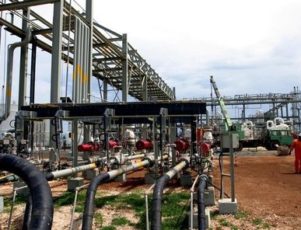
The petrochemicals giant, which makes 40 percent of its revenue from oil, said the project, about 600 km (372 miles) north of the capital Maputo, will be rolled out in stages. The first phase will include an oil, liquefied petroleum gas and gas project adjacent to its Pande and Temane fields.

Natural gas from Pande and Temane fields, in which Sasol holds a majority stake, is currently produced and processed at a central facility before being transported on an 865 km pipeline to gas markets in Mozambique and South Africa.

Sasol President and Chief Executive David Constable said the project was a “major milestone in further developing natural resources, which will significantly benefit Southern Africa.”

Gas projects being developed by Italy’s Eni and U.S. energy firm Anadarko will be given the final go-ahead by the end of this year, the state-run National Hydrocarbon Company (ENH) said on Sunday.


(Reporting by Peroshni Govender; Editing by James Macharia)

Read more

Ugandan inflation eases to 7.6% year-on-year in January

Comments (0) Africa, Business, Latest Updates from Reuters

KAMPALA (Reuters) – Uganda’s inflation eased to 7.6 percent year-on-year in January from a revised 8.4 percent a month earlier, helped by a slowdown in food inflation, the statistics office said on Monday.

The Uganda Bureau of Statistics (UBOS) said annual food inflation had slowed to 12.7 percent in January, from 13.8 percent in December.

Core inflation – which excludes food, fuel, electricity and metered water – decreased to 7.1 percent in January from 7.6 percent in December, UBOS said in a news conference.

On a monthly basis, headline prices rose 0.1 percent in January after rising 0.2 percent in December.

David Bagambe, a trader at Diamond Trust Bank, said that, despite the decrease in inflation, the central bank was unlikely to start easing its policy stance because it needed to maintain high yields on its debt instruments to manage liquidity.

“For now, the central bank is more concerned about the huge amount of liquidity in the system than the small changes in inflation,” he said.


(Reporting by Elias Biryabarema; Editing by Kevin Liffey)


Read more

Egypt’s NBE bank sold $2.5 bil in 3 months to cover imports

Comments (0) Business, Latest Updates from Reuters, Middle East

SHARM AL-SHEIKH, Egypt (Reuters) – Egypt’s biggest lender, the state-owned National Bank of Egypt, provided more than $2.5 billion to cover import payments in the last three months as the country faces a currency crisis, Chairman Hisham Okasha told Reuters in an interview.

Egypt, which depends heavily on imports, has been suffering from a worsening dollar crunch since a 2011 uprising drove away foreign investors and tourists, both major sources of hard currency.

In its latest effort to curb dollar spending on imports, Egypt announced on Sunday it would raise tariff rates on a series of goods from Feb. 1.

“During November, December and January we opened letters of credit worth more than $2.5 billion to meet import payments,” Okasha told Reuters on the sidelines of a banking conference in Sharm al-Sheikh.

In December, the central bank said it sold $7.6 billion in previous weeks to help importers pay for goods. It was not clear whether NBE’s dollar injection was part of the central bank’s $7.6 billion.

No comparative figures for letters of credit opened were immediately available as banks are not required to disclose them.

The central bank has been keeping the pound artificially strong at 7.7301 pounds to the dollar, burning through its reserves which tumbled to around $16.4 billion in December from $36 billion in 2011.

In order to fight a black market the central bank imposed a cap of $50,000 a month on dollar deposits at banks, making it harder for importers to open letters of credit and clear cargoes.

It later raised the cap to $250,000 but only on specific imports of essential goods, capital machinery and manufacturing components and medicines.

Okasha also said his bank aims to increase its deposits and loans portfolio by around 15 percent by the end of 2015/16.

The bank’s loans portfolio was around 140 billion pounds in June 2015, while deposits were 447 billion pounds.

“Deposits reached more than 485 billion pounds by the end of December 2015 while loans reached around 178 billion pounds,” Okasha said.


(Reporting by Ehab Farouk; Writing by Asma Alsharif; Editing by Raissa Kasolowsky)

Read more

East African Breweries to make more cheap beer as taxes rise

Comments (0) Africa, Business, Latest Updates from Reuters

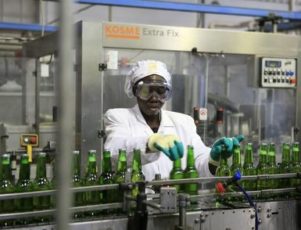
NAIROBI (Reuters) – Kenya’s East African Breweries Ltd (EABL) expects a hike in beer excise duty to hit demand in its home market in the coming months and will raise output of a lower-taxed cheap brand in an attempt to offset the impact, its CEO said on Friday.

Last month, Kenya lifted the excise tax by 43 percent to 100 shillings ($0.9785) per liter of beer, driving up retail prices by at least 20 shillings per bottle.

“Kenyan consumers are incredibly price sensitive so moving up by 20 shillings is a big deal,” said Charles Ireland, group CEO of EABL, which is controlled by Britain’s Diageo.

The hike in excise duty, designed to shore up government revenues, was the first one in four years.

“I would prefer that we saw a more regular increase which was smaller rather than an irregular increase, which is bigger, because I think the impact for consumers and the trade would be more manageable,” Ireland said.

EABL plans to boost the output of its cheaper Senator Keg beer, which is taxed at a rate of 10 shillings per litre, to offset the impact of the taxes on mainstream and premium beers.

Sales of Senator Keg, which is dispensed in mugs from barrels in bars, recovered during the company’s fiscal first half to December, after the government rowed back on a 2013 decision to tax it at the same rate as mainstream beers such as Tusker.

“We have got some additional capacity coming online so we will be able to sell more Senator into the market in the (fiscal) second half,” Ireland said.

Beer exports into South Sudan, which plummeted 74 percent in the first half due to civil conflict, were not expected to rebound soon, the chief executive said.

“The outlook is bleak. I don’t think that South Sudan will improve in the short-term,” he said.

EABL boosted its interim dividend by a third, as net debt fell and the company generated more cash, and Ireland said it would keep rewarding shareholders if profit growth was maintained.

First-half profit after tax from operations rose 16 percent as sales grew and net finance costs dropped by 38 percent.

“I hope it will continue, and if it does, we will be kind of looking to make sure our shareholders benefit from that performance,” Ireland said.

“We are getting into a decent shape from a balance sheet perspective.”

($1 = 102.2000 Kenyan shillings)


(By Duncan Miriri. Editing by Mark Potter)

Read more

Tanzania finalises land deal for delayed LNG project

Comments (0) Africa, Business, Latest Updates from Reuters

DAR ES SALAAM (Reuters) – Tanzania said on Friday it had finalised a land acquisition for the site of a planned liquefied natural gas (LNG) plant and was now working to compensate and resettle villagers to move forward on a long-delayed project.

Tanzania’s natural gas reserves are estimated at more than 55 trillion cubic feet (tcf) and the central bank believes 2 percentage points would be added to annual economic growth of 7 percent simply by starting work on the huge plant that would draw in billions of dollars of investment.

BG Group, being acquired by Royal Dutch Shell, along with Statoil, Exxon Mobil and Ophir Energy plan to build the onshore LNG export terminal in partnership with the state-run Tanzania Petroleum Development Corporation (TPDC). They aim to start it up in the early 2020s.

But their final investment decision has in part been held up by delays in finalising issues related to the site.

“After securing the title deed, the law requires the owner to pay compensation to the relevant parties based on a valuation done by the chief government valuer,” TPDC said in a statement.

TPDC now owns title deed for some 2,071.705 hectares of land that have been set aside for the construction of the planned two-train LNG terminal at Likong’o village in the southern Tanzanian town of Lindi, which is located close to large offshore gas finds.

Another 17,000 hectares of land around the site for the proposed LNG terminal has been allocated for an industrial park.

The land was bought from large landowners and some individual villagers.

Tanzania’s new president, John Magufuli, has promised more urgency in decision-making, responding to a frequent complaint from businesses. One example has been delays in finalising a site for the multi-billion dollar LNG plant that will exploit huge offshore gas finds.

Oil companies were unable to gain access to the site until the land purchase, analysts say.

“The next key thing to watch is how quickly a host government agreement is executed between the Tanzanian government, TPDC and IOCs (international oil companies),” Ahmed Salim, senior associate at consultancy Teneo Intelligence, said in a note to clients.

East Africa is a new hotspot in hydrocarbon exploration after substantial deposits of crude oil were found in Uganda and major gas reserves discovered in Tanzania and Mozambique.

Mozambique’s plans to build an LNG plant have moved more swiftly. With other LNG projects moving ahead around the world, the best deals for long term gas sales contracts will likely be secured by those who come on stream first, analysts say.


(Reporting by Fumbuka Ng’wanakilala; Editing by Drazen Jorgic and Mark Potter)

Read more

Moody’s says yuan use may benefit Zimbabwe, sees limitations

Comments (0) Africa, Business, Latest Updates from Reuters

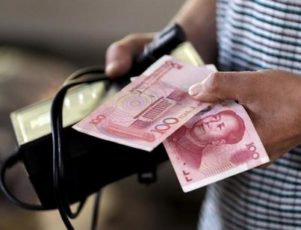
HARARE (Reuters) – Moody’s said on Thursday plans by Zimbabwe to increase the circulation of the Chinese yuan could lift investment from the world’s second largest economy but may not be enough to strengthen investor confidence and improve competitiveness.

Zimbabwe abandoned its currency in 2009 after inflation reached 500 billion percent and adopted foreign currencies, anchored by the United States dollar, to tame runaway consumer prices and start an economic recovery.

The U.S. dollar is widely used, along with the rand currency of neighbouring South Africa and the finance minister and central bank governor said last month Zimbabwe would now increase the use of the yuan.

“The renminbi’s use will likely facilitate greater levels of foreign direct investment from and bilateral trade with China by reducing transaction costs and exchange rate risk,” Moody’s said in a report on Zimbabwe.

China has in the last few years invested more than $1 billion in Zimbabwe, becoming the largest investor after the Southern African nation was shunned by the West over its human rights record.

Moody’s, which has never rated Zimbabwe, said widespread use of the yuan could be limited by a population which has more confidence in the U.S. and is suspicious of other currencies after the traumatic experience with the Zimbabwe dollar.


(Reporting by MacDonald Dzirutwe; Editing by James Macharia)

Read more

South African mines post lowest annual death toll of 77

Comments (0) Africa, Business, Latest Updates from Reuters

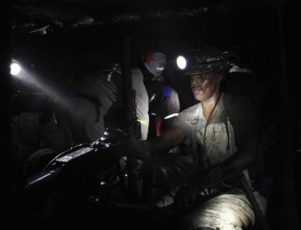
PRETORIA (Reuters) – South Africa’s mines minister Mosebenzi Zwane said on Thursday that 77 workers were killed in mining accidents in 2015, the lowest number on record and down from 84 in 2014.

South Africa’s mines are the deepest and among the most dangerous in the world but industry fatalities have been falling, a trend rooted in improved safety practices and a shrinking labour force as production declines.


(Reporting by Tiisetso Motsoeneng; Writing by Ed Stoddard; Editing by James Macharia)

Read more

Platinum producer Lonmin cuts jobs and costs

Comments (0) Africa, Business, Latest Updates from Reuters

JOHANNESBURG (Reuters) – Lonmin said on Thursday it would continue to review its services and reduce costs, mainly through job cuts, as the sliding price of platinum bites further.

The company said labour costs fell 194 million rand ($11.8 million) in the last three months of 2015 after it shed 5,077 jobs, or 84.6 percent of its planned reduction in headcount.

“Progress continues with the restructuring programme due to the new benchmarked operating model and removal of high-cost production to ensure the business remains viable,” Lonmin said in a statement.

It is targeting savings of 700 million rand in 2016.

Hurt by a 2014 strike, rising costs and a plunging platinum price, Lonmin raised $400 million through a cash call in December which failed to find favour with shareholders and priced shares at about a penny each.

Some of the proceeds of the rights issue were used to pay down debt, leaving the company with $69 million in cash at end of December.

The miner said production of refined platinum reached 171,441 ounces in the three months to the end of December, up 22.6 percent from a year earlier.

The price of platinum has been on the decline for about five years. It fell 26 percent last year and is trading at less than half its 2011 peak.

Shares in Lonmin have lost nearly all of their value over the last year. It was the worst-hit of three top platinum miners by the 2014 five-month labour stoppage.

Lonmin maintained its full-year production guidance of 700,000 platinum ounces and its capital expenditure plan of $132 million despite projecting sustained weaker metal prices.

($1 = 16.3897 rand)


(Reporting by Zandi Shabalala; editing by David Clarke and Jason Neely)

Read more

Ghana producer inflation jumps to 10.5% in December

Comments (0) Africa, Business, Latest Updates from Reuters

ACCRA (Reuters) – Ghana’s producer price inflation rose sharply to 10.5 percent in December from 3 percent the month before, the statistics office said on Wednesday.

The West African country is under a three-year International Monetary Fund aid programme to address financial problems that include high budget deficits and consumer inflation persistently above government targets.


(Reporting by Kwasi Kpodo; Editing by Emma Farge)

Read more