
Africa’s agricultural sector is undergoing a profound transformation. Digital tools, innovative startups and new investment models are changing how farmers produce, manage and sell their crops. In this context, the Grand Salon de l’Agribusiness et du Digital en Afrique (GSAD Africa) has become a key platform bringing together the actors shaping the future of agriculture on the continent.
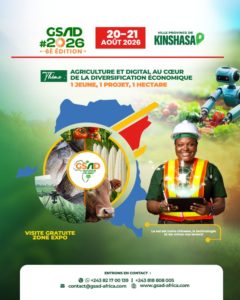
The next major session will take place 20–21 August 2026 in Kinshasa, Democratic Republic of Congo. This edition is expected to attract a wide range of participants from across Africa and beyond, including entrepreneurs, farmers, agribusiness companies, investors, policymakers, researchers and technology experts.
Kinshasa, one of Africa’s largest cities and an important economic hub in Central Africa, provides a strategic location for discussions on agricultural development and digital transformation. The event aims to highlight the opportunities offered by technology to improve agricultural productivity, strengthen food security and develop competitive agricultural value chains.
 The GSAD Africa sessions are known for their strong focus on collaboration. By bringing together public institutions, private companies and startups, the event creates a space where ideas, partnerships and investment opportunities can emerge. Young innovators developing AgriTech solutions will have the opportunity to present their projects alongside established agribusiness leaders.
International organizations, development institutions and financial actors are also expected to participate, reflecting the growing global interest in African agriculture as a sector with enormous economic potential.
A dynamic program for innovation, startups and investment
Over two days, the Kinshasa edition of GSAD Africa will feature a rich and dynamic program designed to encourage dialogue and collaboration.
The event will include conferences and roundtable discussions focused on major themes shaping the future of agriculture. Topics are expected to include digital platforms for agricultural markets, the role of artificial intelligence and satellite data in crop monitoring, climate-resilient agriculture, and innovative financing models for farmers and agricultural entrepreneurs.
Another highlight of the program will be the startup and innovation sessions. These sessions will showcase young African entrepreneurs developing technological solutions for agriculture, from mobile applications providing market information to digital tools for farm management, traceability and logistics.
Pitch sessions will give startups the opportunity to present their projects to investors, accelerators and potential partners. For many early-stage companies, this type of exposure can be crucial for securing funding and building strategic collaborations.
The exhibition space will also allow companies and organizations to present new agricultural technologies, digital services and innovative equipment. Participants will be able to discover tools designed to improve productivity, reduce post-harvest losses and strengthen agricultural supply chains.
Networking will play a central role throughout the event. Informal meetings, business sessions and collaborative workshops will help participants connect, exchange ideas and explore potential partnerships.
How to participate
Participation in the GSAD Africa Kinshasa session (20–21 August 2026) is open to entrepreneurs, investors, farmers, researchers, students and professionals interested in agribusiness and digital innovation.
Registration details, partnership opportunities and program updates are available through the official GSAD Africa platform and event organizers. Early registration is recommended, as the event is expected to attract a large number of participants from across the African agribusiness ecosystem.
With its focus on innovation, entrepreneurship and investment, the Kinshasa session of GSAD Africa promises to be one of the key gatherings for anyone interested in the future of agriculture on the continent.
Photos : facebook.com/GSAD2024





 “With the Responsible Mining Alliance, we wanted to show that you can do mining differently,” declared Romain Girbal in February 2016 when asked about the philosophy of AMR on French business channel BFM. With this credo in mind, the two young French entrepreneurs set up shop in Guinea, persuaded of the enormous potential of mining in this emerging country. The Responsible Mining Alliance now holds a bauxite mining permit in Boké, in the northwest of the country.
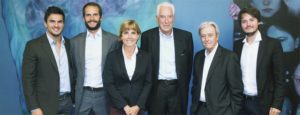 The high standards Girbal has set for his project have attracted outside attention as well: in January 2016, Xavier Niel, the famous French billionaire and boss of telecom operator Free, decided to invest in the Responsible Mining Alliance via his personal holding company NJJ Capital. This was a big publicity win for the young mining company, and other well-known investors and partners have since joined the adventure. These include Anne Lauvergeon, ex-CEO of Areva; Edouard Louis-Dreyfus, head of Louis Dreyfus Shipowners; Alain Mallart, head of Energipole; and Daniel Lebard, head of ISPG. Not to mention Arnaud Montebourg, the former French Minister of the Economy, who worked his network to support the young French entrepreneurs’ project. In addition, the well-known French business journal