
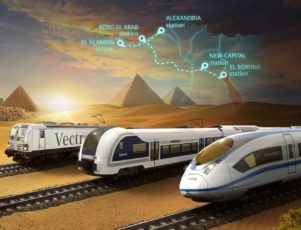
Egyptian Passengers will soon be able to travel through their country aboard a high-speed train. Indeed, the German group Siemens deals to construct 2,000 kilometers of high-speed rail lines across Egypt. The project aims to connect 60 cities by train, at speeds of up to 250 kilometers per hour.
Rail travel is the most important method of passenger transportation in Egypt with 800 million passenger miles annually. Most of the network connects the densely populated urban areas of the Nile delta with Cairo and Alexandria as switching points. Train fares in commuter trains and 3rd class passenger trains are subsidized by the government as a social service.
Egyptian rail before
The history of Egypt under British rule lasted from 1882 to 1956 (the Suez Crisis), and we all know that Britain was a huge promoter of rail infrastructure: witness the 60, 000 km of line in India. The British introduced rail to Egypt in 1854. Egypt has less than 20% of India’s rail length, yet it will soon have a rail network availability that any country would be proud of.
The development
Between September 2021 and May of 2022, the German industrial group Siemens Mobility deals to construct 2,000 kilometers of high-speed rail lines across Egypt. The deal is worth over €8 billion and includes 41 high-speed trains, 94 regional trains, and 41 freight trains. It will connect 60 cities by train, at speeds of up to 250 kilometers per hour, providing rail access to around 90% of the population. The maximum speed is 250 km / h but the operational speed of electric express trains is 230 km / h. The safety and speed factors offer any business transporting goods huge incentives to switch from road to rail as their network of choice.
The network from Abu Simbel to Cairo
Egypt will have the largest and most modern high-speed rail network in the Southern hemisphere! The City of the Dead, Cairo Necropolis, will soon be bustling with activity. The second stretch of track will connect Cairo with Abu Simbel.
Trains offer many advantages over other forms of travel. The check-in times are almost non-existent when compared with the two hours required on flights. Given a maximum speed of 250 km/h, that means that one could travel a distance of almost 1000 km in just over four hours! Baggage limits are generous, and the comfort factor on trains is a huge bonus.
Travelling through the desert at speed in an air-conditioned carriage gives one an opportunity to see a huge area of the country, an advantage not possible when flying commercially. When people choose to travel by express train rather than by car, it reduces traffic congestion. Trains also have a very good safety record, and the impact on the environment is less damaging to the environment than road travel. In addition, the new lines will aid in the economic development of existing and previously inaccessible towns.
Other benefits of the network
The benefits are not all about travel – over 500 new jobs will be created, and construction and technical staff from Siemens and associated companies will train staff from Orascom and other Arab contractors. The benefits to the nation of skilled technicians cannot be understated. Over 90% of the Egyptian population will soon have access to fast, cheap, and safe transport! That statistic is something for Egyptians to feel proud of, and it is a figure unmatched anywhere in Africa, and indeed even by several developed western countries.
Egypt presently has a population of almost 110 million, giving a population density of over 100 per square kilometer, which gives rise to frequent traffic jams and much pollution. An estimated 30 million passengers will travel annually on the new line that reduces travel time by 50%. It is hoped that volume of freight by rail will increase from the present 5% to 15%.
The modernization of public rail travel in Egypt is on the fast track!
Photo : travelandleisure.com
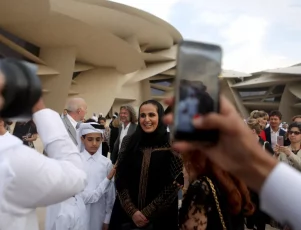

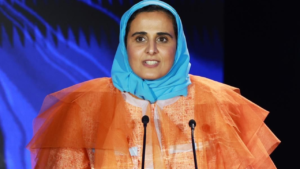 Sheikha Al-Mayassa has said that their goal is to develop a cultural ecosystem in Qatar that encompasses museums, exhibition galleries, an ambitious public art program, schools, film, photography and performing arts festivals, events, spaces for emerging creatives and fashion professionals and of design. She said, “We know that culture and the creative industries are key drivers of economic growth, both in Qatar and globally. And another of our priorities, closely related to the development of a cultural ecosystem, is to help introduce Qatar to other nations and cultures and to welcome people from those countries. We encourage creativity and intercultural understanding.”
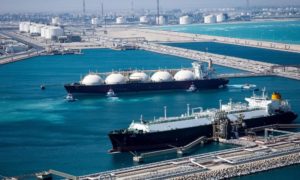 North Field South is aiming to use the highest standards of extraction to reduce the greenhouse gas emissions associated with the project. The processing plant will be connected to Qatar’s electricity grid, meaning it will be powered in-part by renewable energy, mostly from the 800MW Al Kharsaah solar plant and the QatarEnergy solar plant currently under construction. Along with this, native CO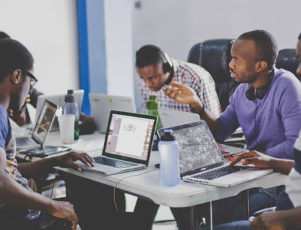
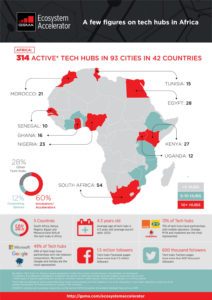 It is easy to conclude that the continent is already a hotbed for tech startups, especially as economic forecasts predict a record year for tech in Africa in 2022, with the possibility of total investments into startups reaching more than $7 billion. But while there is more money flowing into more companies than ever before, Africa’s record of scaling up these companies or even sustaining them, is poor.

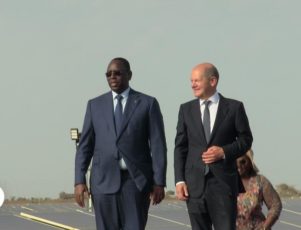
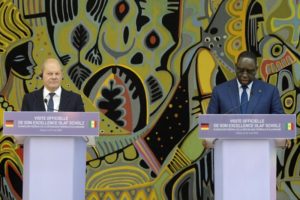 The first major barrier for gas exports to Germany is the lack of infrastructure. Energy development projects are capital-intensive and generally require private-public partnerships. Sultan Wali, Ethiopia’s energy minister said that “African governments cannot carry out these projects alone.” Ndiarka Mbodji, the French-Senegalese founder of Berlin-based Kowry Energy echoed this, saying, “They need financial support from Germany and other rich western countries. Africa holds the key to resolving Europe’s energy crisis. And if we look at Africa’s resources, for example gas, you cannot underestimate its importance.”
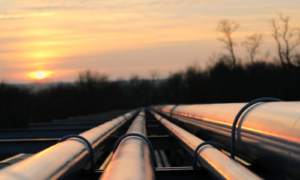 The
The 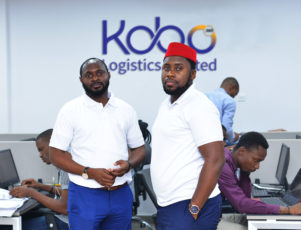
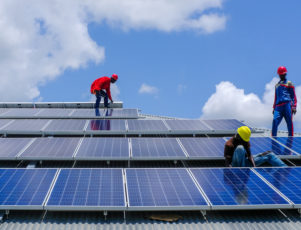
 This aggregation of projects reduces the risk to investors, as well as the transaction costs of investing in multiple projects, and can help counter investment barriers that would prevent these projects from being financed. A recent report from the UNDP and Climate Bonds has shown that financial aggregation has untapped potential in bringing financing to small-scale clean energy projects. Eduardo Appleyard, CAP project coordinator says, “while the market is still nascent, financial aggregation could one day be a game-changer for distributed renewable energy companies…through this process we want to spark a conversation about financial aggregation grounded in real-life examples to help demonstrate its potential and better understand market barriers and opportunities.”
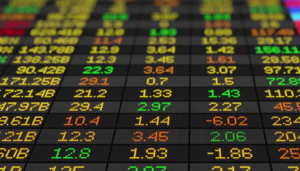 AFEX Commodities Exchange Limited provides commodity brokerage services. The company has been developing a viable commodities exchange and supply chain infrastructure to support agricultural products since 2014, and it reached $31 million in revenue in 2020.